


Distribution and abundance of Tuckerella japonica (Acari: Tuckerellidae) in tea gardens in Türkiye
Özen Yazıcı, Burcu  1
and Akyazı, Rana
2
1Institute of Science, Ordu University, Ordu, Türkiye & Ordu University, Faculty of Agriculture, Plant Protection Department, Ordu, Türkiye.
2✉ Ordu University, Faculty of Agriculture, Plant Protection Department, Ordu, Türkiye.
2026 - Volume: 66 Issue: 4 pages: 1098-1108
https://doi.org/10.24349/6uwv-tbl0Original research
Keywords
Abstract
Introduction
Tea (Camellia sinensis (L.) O. Kuntze) is an important commercial crop in the family Theaceae (Stevens et al. 2004). Global tea production exceeds \15 billion annually, while the worldwide tea trade is valued at around \7.4 billion, emphasizing tea's significance as a major source of export revenue. Additionally, tea cultivation offers valuable employment opportunities in rural areas, enabling households and communities to enhance their food security and nutritional status. Smallholder farmers account for 60% of global tea production (FAO 2024).
Tea cultivation is economically viable in nearly 30 countries around the world, including Türkiye (Buçan 2014). Türkiye ranks fifth in global tea production, with an annual production of about 1.4 million tons. Although it occupies only about 1.5% of the world's tea cultivation area, Türkiye contributes more than 4% of global tea production (FAO 2024). During the 2024-2025 period, Türkiye exported about 8.9 thousand tons of tea. The revenue from these exports reached approximately \27 million in 2024 and decreased by 26% in 2025, reaching nearly \20 million (TURKSTAT 2025).
In Türkiye, Rize province dominates tea cultivation, accounting for about 67% of the cultivated area (531 thousand decares (da)). It is followed by Trabzon with 19% (153 thousand da), Artvin with 12% (92 thousand da), and smaller areas in Giresun and Ordu. This distribution is reflected in the tea production, with Rize producing about 64% of the national production (927 thousand tons), followed by Trabzon with 23% (331 thousand tons) and Artvin with 11% (156 thousand tons) (TURKSTAT 2025).
Türkiye is mainly self-sufficient in tea production. However, when there is a domestic surplus, it is crucial to maintain enough quantity and quality of tea to quickly meet foreign market demand. Therefore, it is necessary to reach production levels capable of satisfying international demand (TEPGE 2024). Timely and adequate actions must also be taken to address any factors that could affect tea quality and yield.
Several factors affect the yield and quality of tea, with plant pests being a major concern. Tea is cultivated worldwide, particularly in equatorial and near-equatorial regions, where favorable climatic conditions make the crop susceptible to various pests. One such pest is Tuckerella japonica Ehara (Trombidiformes: Tuckerellidae), a mite strongly associated with tea (Beard et al. 2013). It is typically found in protected crevices or areas created by bark splitting on the stem of tea and feeds in these areas (Childers et al. 2016).
Although Ozman-Sullivan et al. (2006, 2007) surveyed mite species in tea gardens in the Black Sea Region of Türkiye, they did not report the presence of T. japonica. Later, Beard et al. (2013), based on specimens deposited in the United States National Museum (USNM) collection, examined material of T. japonica collected by Ozman-Sullivan in Türkiye, including Tea Research Institute, Pazar, Zorlu village, Hopa, and Sümeryalı (examined material: 3 females and 3 protonymphs). Additionally, Diler et al. (2022) reported 11 adult females identified only as Tuckerella sp. from Rize, Türkiye. Initial research suggests that comprehensive studies on T. japonica in Türkiye are lacking.
Furthermore, there are few studies on T. japonica worldwide. Among them, Beard et al. (2013) stated that the species has spread widely across tea-cultivation regions due to certain cultural practices in tea production. The authors also provided information on the species' global distribution and some taxonomic characteristics. Zhang and Henderson (2013) discussed the distribution routes of T. japonica in tea-cultivation areas worldwide. In Alabama, Georgia, and South Carolina (USA), Childers et al. (2016) found that T. japonica could be collected from tea plants year-round. Achor et al. (2017) reported that T. japonica feeds on plant cells beneath the periderm tissue of 1- to 3-year-old tea shoots. Childers et al. (2018) provided information on the mouthpart structure, feeding habits, and territorial behavior of the species on C. sinensis. Recently, Özen-Yazıcı and Akyazı (2026) studied the population dynamics and overwintering stage of T. japonica and examined its susceptibility to different tea cultivars in Rize, Türkiye. In a subsequent study, they investigated the effects of T. japonica feeding on the physicochemical properties of fresh tea leaves and observed cellular-level damage in the stems (Özen and Akyazı 2026).
Despite these recent studies, detailed information on the distribution and abundance of T. japonica in tea gardens in Türkiye remains limited, and studies on this species are still scarce worldwide. Therefore, this study aimed to evaluate the distribution and abundance of T. japonica in tea-growing areas of Türkiye's Eastern Black Sea Region from 2021 to 2023.
Material and methods
Sampling area and survey studies
To assess the distribution and abundance of T. japonica in tea cultivation areas of Türkiye (Eastern Black Sea Region) (Figure 1), surveys were carried out in the provinces of Artvin, Giresun, Ordu, Rize, and Trabzon from 2021 to 2023.
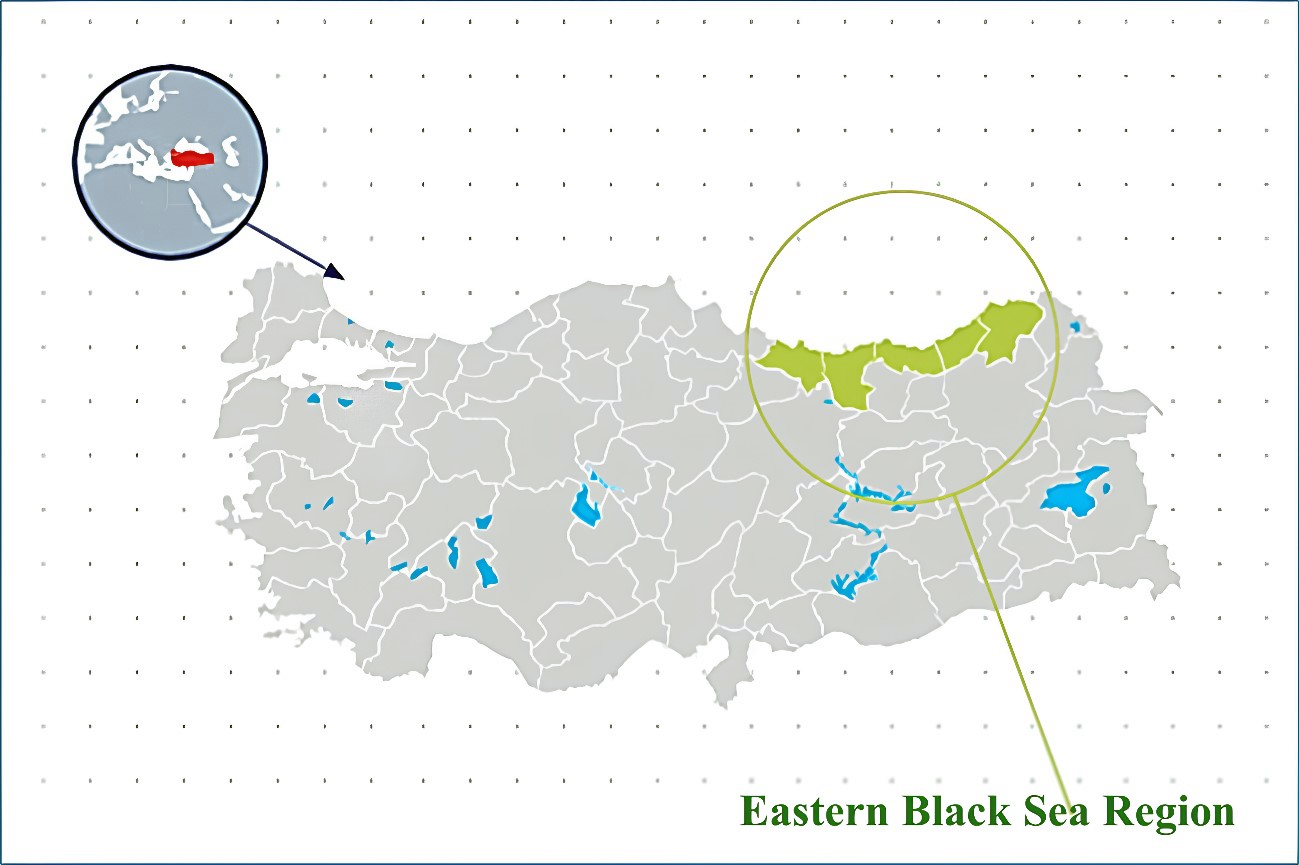
The sampling areas were determined based on the tea-growing areas and production quantities in the Eastern Black Sea Region, Türkiye. According to this, sampling studies were conducted in twelve districts of Rize province, eight districts of Giresun province, seven districts of Trabzon province, four districts of Artvin province, and one district of Ordu province. In total, 205 tea gardens were sampled across 32 districts in five provinces (Figures 2 and S1-S5, Table S1).
The coordinates of each sampling location were determined and recorded with the Global Positioning System (GPS) device (Garmin eTrex 30). Sampled localities were marked on the Türkiye map using Google Earth (Figures 2 and S1-S5).
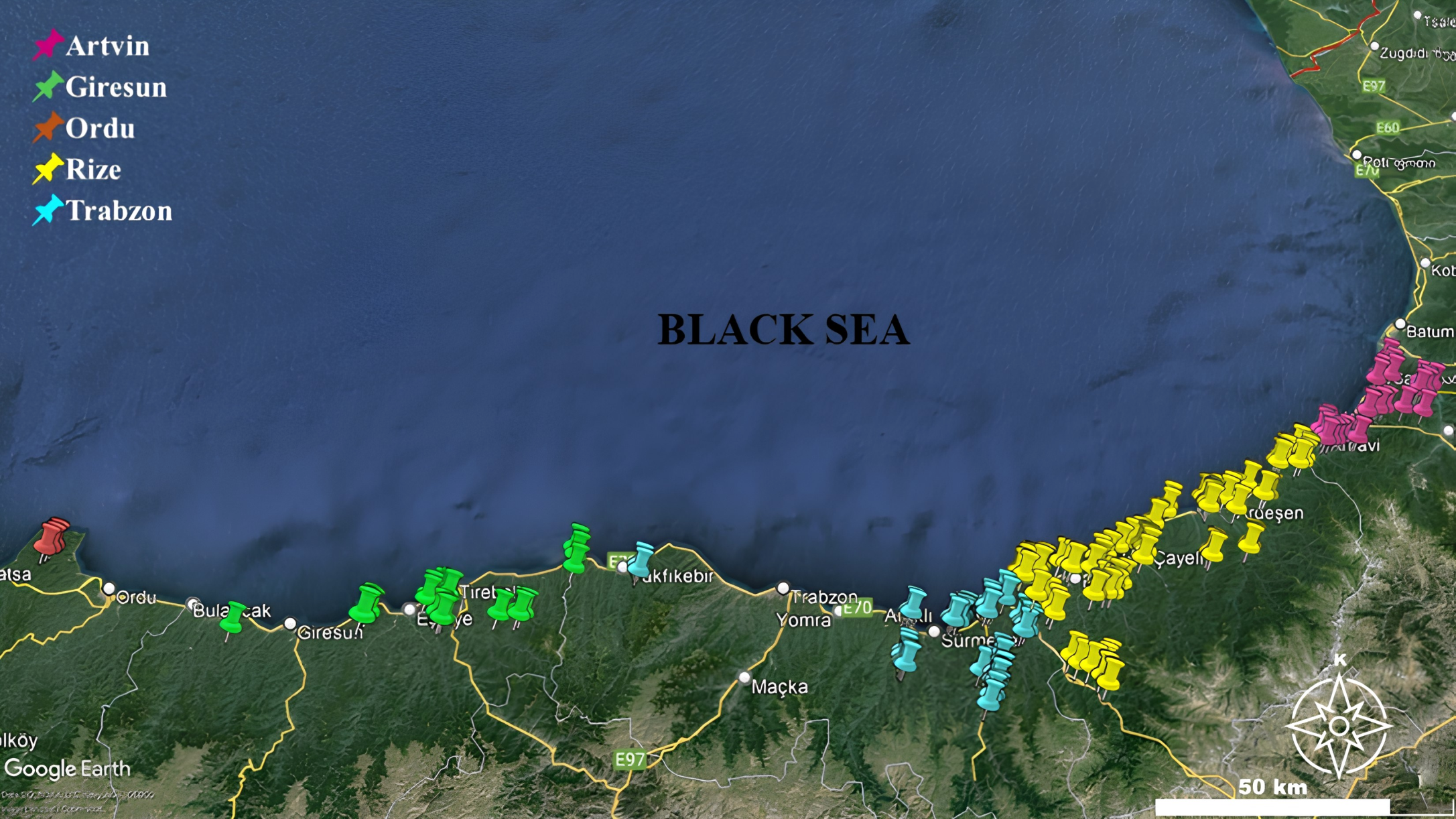
A total of 103 gardens were sampled in 12 districts in Rize province: 17 in the central district, 11 in Çayeli, 11 in Pazar, 10 in Fındıklı, 10 in İkizdere, 9 in Ardeşen, 9 in Güneysu, 8 in İyidere, 5 in Çamlıhemşin, 5 in Hemşin, 4 in Derepazarı, and 4 in Kalkandere (Figures 2 and S1, Table S1). In Trabzon province, 41 gardens were sampled in seven districts: 8 in Of, 7 in Araklı, 7 in Sürmene, 6 in Çaykara, 6 in Dernekpazarı, 5 in Hayrat, and 2 in Vakfıkebir (Figures 2 and S2, Table S1). Thirty-five gardens were sampled in four districts in Artvin province: 13 in Arhavi, 8 in Borçka, 5 in Hopa, and 9 in Kemalpaşa (Figures 2 and S3, Table S1). In Giresun, 21 gardens were sampled in eight districts: 2 in Bulancak, 3 in Çanakçı, 1 in Espiye, 3 in Eynesil, 1 in Görele, 3 in Güce, 3 in Keşap, and 5 in Tirebolu (Figures 2 and S4, Table S1). All five tea gardens located in the Perşembe district of Ordu province were sampled (Figures 2 and S5, Table S1).
From each tea garden at each sampling point, 45 shoots (each 15 cm long), 60 leaf samples, 25 flowers (if present), and 25 fruits (if present) were collected from the lower, middle, and upper levels of the plants, using lateral shoots.
Leaf samples were neatly stacked in paper bags, all facing the same direction, and then placed inside polyethylene bags. Similarly, the sampled shoots, flowers, and fruit were stored separately in paper bags before being placed into polyethylene bags. Each sample was labeled and kept in a refrigerator at +4 °C during the examination.
Collection, preservation, mounting, and identification of mites
To determine the distribution of T. japonica in tea gardens in the Eastern Black Sea Region, leaf, stem, flower, and fruit samples were examined under a stereomicroscope (Leica S8 APO, Heerbrugg, Switzerland), and mites were collected using a 5/0 sable brush (Ecevit 1976). The number of T. japonica found on each plant part was recorded as the active stages (larvae, nymphs, and adults) and eggs.
However, when mite density on plant parts was high, infested plant parts were placed in a jar filled to three-quarters capacity with water, and 3 mL of detergent (Cetaline™) was added. The samples were kept in the sealed jar for 1–2 hours and shaken three times for a few seconds. This allowed the mites to separate from the plant parts. The detergent solution containing the mites was then filtered through a 325-mesh sieve, removing the detergent and retaining the mites on the sieve. Subsequently, the mites were rinsed under running water nine times for five seconds each to remove the detergent completely. After rinsing, the mites retained on the sieve were collected and transferred to Eppendorf tubes containing 70% ethyl alcohol (Faraji et al. 2004).
Until slide preparation, all collected mites were stored in Eppendorf tubes containing alcohol. For taxonomic observation, mite specimens were cleared in lactophenol and mounted on microscopic slides using Hoyer's medium (Ecevit 1976; Krantz and Walter 2009). Species identifications were performed under a phase-contrast microscope (Leica DM2500, Heerbrugg, Switzerland) using identification keys and specialized literature (Miller 1964; Ehara 1975; Corpuz-Raros 1989, 2001; Meyer and Ueckermann 1997; Beard and Walter 2005; Beard et al. 2013; Zhang and Henderson 2013; Childers et al. 2018; Khadem and Asadi 2018). The identifications were confirmed by Prof. Dr. Edward A. Ueckermann (North-West University, Unit for Environmental Sciences and Management, South Africa) and Dr. Jennifer J. Beard (Queensland Museum, Queensland, Australia).
Data analysis
Sampling was conducted between 2021 and 2023 to document the occurrence and infestation levels of T. japonica in tea plantations. The study was designed as a faunistic and distributional survey and was not structured to assess interannual variation or to allow balanced statistical comparisons among provinces. Therefore, data were pooled across years prior to analysis and are presented descriptively, as annual sample sizes were not suitable for inferential evaluation of temporal differences.
Population density and infestation parameters were calculated as follows: the number of mites per plant part (e.g. leaf, fruit, or flower) or per centimeter of stem in infested gardens was determined, along with the infestation rate of T. japonica in tea gardens. These parameters were assessed separately using the formulas provided below.
\[\text {Average number of mites per plant part } = \frac{\text {Total number of mites per plant part} }{\text {Total number of plant parts examined} } (1)\]
\[\text { Average number of mites (mites/cm of stem) } = \frac{\text {Total number of mites per stem} }{\text {Total stem length examined (cm)} } (2)\]
\[\text { Infestation Rate (%) }=\frac{\text { Number of mite-infested gardens } }{\text { Total number of sampled gardens } } × 100 (3)\]
Results
Distribution of T. japonica in the Eastern Black Sea Region, Türkiye
Tuckerella japonica was found in tea gardens across the Eastern Black Sea Region of Türkiye, with an overall infestation rate of 29.76% (61 of 205 gardens). The highest rates were observed in Rize and Artvin, while Giresun and Trabzon showed lower infestation, and no mites were detected in Ordu (Table 1).
Download as
Province
Sampled Garden (n)
Mite-Infested Garden (n)
Infestation Rate (%)
Artvin
35
13
37.14
Giresun
21
1
4.76
Ordu
5
0
0
Rize
103
40
38.83
Trabzon
41
7
17.07
Total
205
61
29.76
In Rize province, T. japonica was present in a considerable number of districts, with an overall infestation rate of 38.83% (Table 1). However, the distribution was not uniform across the province. Infestation was particularly prominent in İyidere (87.50%), as well as in the central district (70.59%) and Pazar (63.64%), whereas Çayeli (54.55%), Ardeşen (44.44%), and Fındıklı (40.00%) showed comparatively moderate levels. In contrast, no mites were detected in Çamlıhemşin, Derepazarı, Güneysu, Hemşin, İkizdere, and Kalkandere (Table 2).
Download as
District
Sampled Garden (n)
Mite-Infested Garden (n)
Infestation Rate (%)
Ardeşen
9
4
44.44
Çamlıhemşin
5
0
0
Çayeli
11
6
54.55
Derepazarı
4
0
0
Fındıklı
10
4
40
Güneysu
9
0
0
Hemşin
5
0
0
İkizdere
10
0
0
İyidere
8
7
87.5
Kalkandere
4
0
0
Central
17
12
70.59
Pazar
11
7
63.64
Total
103
40
38.83
In Artvin province, T. japonica was detected in 13 of 35 sampled gardens, corresponding to an overall infestation rate of 37.14% (Table 1). However, its distribution was not uniform across districts. The highest infestation rate was recorded in Kemalpaşa (77.78%), indicating a notably high local prevalence, followed by Hopa (60%) and Arhavi (23.08%). In contrast, no mite was observed in Borçka, despite the examination of 8 gardens (Table 3).
Download as
District
Sampled Garden (n)
Mite-Infested Garden (n)
Infestation Rate (%)
Arhavi
13
3
23.08
Borçka
8
0
0
Hopa
5
3
60
Kemalpaşa
9
7
77.78
Total
35
13
37.14
In Trabzon, T. japonica was detected in a relatively small proportion of the surveyed tea gardens (17.07%) (Table 1). Its presence was limited to Of (50%) and Sürmene (42.86%), whereas no mites were recorded in the other sampled districts (Table 4).
Download as
District
Sampled Garden (n)
Mite-Infested Garden (n)
Infestation Rate (%)
Araklı
7
0
0
Çaykara
6
0
0
Dernekpazarı
6
0
0
Hayrat
5
0
0
Of
8
4
50
Sürmene
7
3
42.86
Vakfıkebir
2
0
0
Total
41
7
17.07
Tuckerella japonica was found in only 1 of the 21 gardens (4.76%) sampled across 8 districts of Giresun province. In Ordu province, there are a total of five tea gardens in only Perşembe district, and no mites were detected in these gardens during the survey (Table 1).
Abundance of T. japonica in the Eastern Black Sea Region, Türkiye
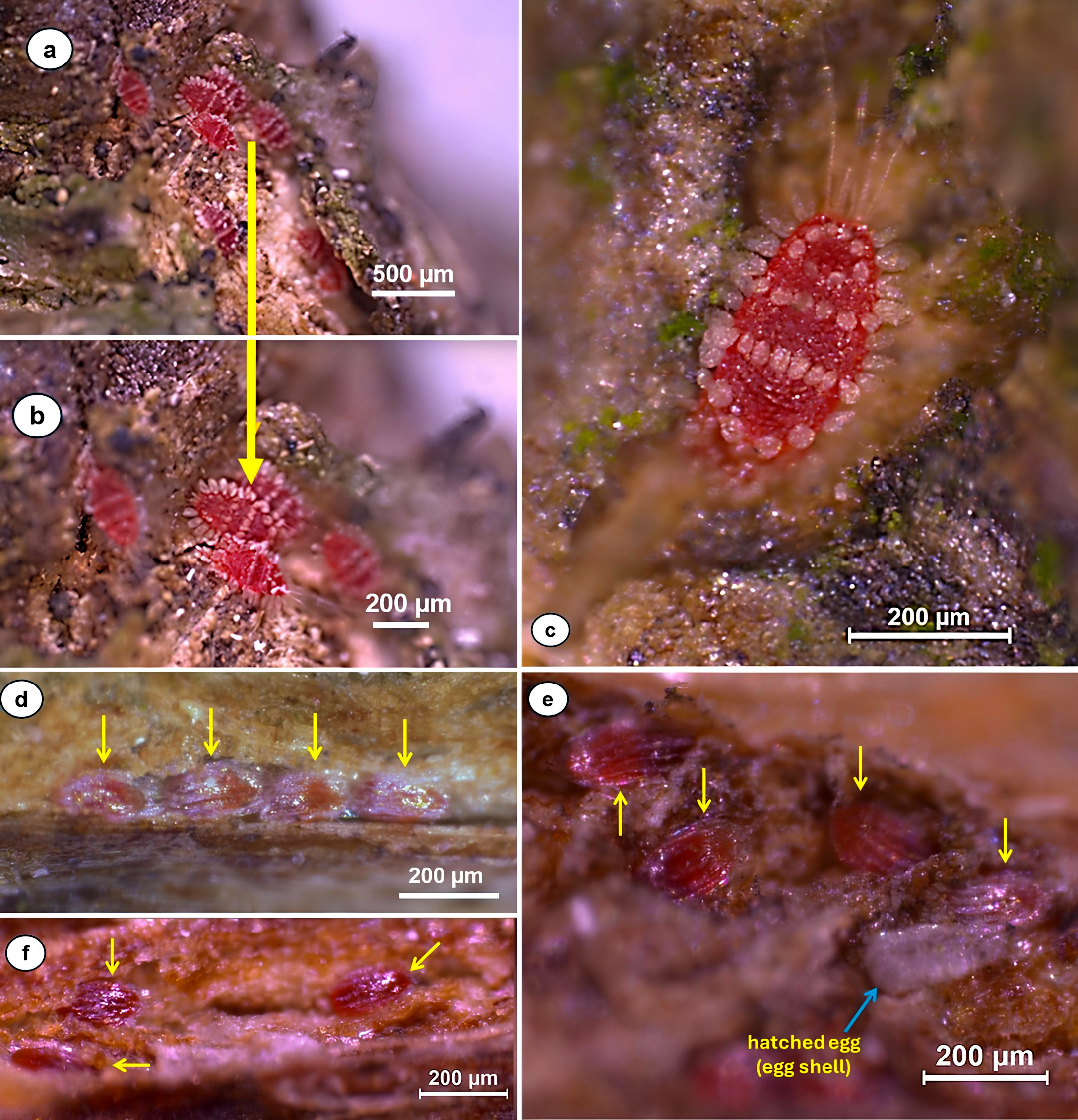
During the study, a total of 8,065 individuals of T. japonica representing various developmental stages were collected, most of them from tea stems, especially between the longitudinally split bark (Figure 3). Of these, 6,026 were active stages, and 2,039 were eggs (Table 5).
Download as
Province
Sampled Garden (n)
Egg (n)
Active (n)
Total (Egg+Active) (n)
Total (Egg+Active) (%)
Rize
103
1349
4284
5633
69.85
Artvin
35
370
1076
1446
17.93
Trabzon
41
315
660
975
12.09
Giresun
21
5
6
11
0.14
Ordu
5
-
-
-
-
Total
205
2039
6026
8065
-
The highest number of mites was detected in Rize province [5,633 (69.85%)], followed by Artvin (1,446 mites, 17.93%), Trabzon (975 mites, 12.09%), and Giresun (11 mites, 0.14%). No mites were found in Ordu province (Table 5).
Regarding the active stages, Rize presented the highest number, with 4,284 individuals, followed by Artvin (1,076) and Trabzon (660). The lowest number of active mites was recorded in Giresun, with only six individuals (Table 5).
A similar pattern was observed for egg abundance: Rize recorded the highest number, with 1,349 eggs, followed by Artvin (370) and Trabzon (315), which showed similar values. Giresun again presented the lowest abundance, with only five eggs (Table 5).
The average density of active stages of T. japonica in infested gardens was 0.13 individuals/cm of stem, 0.003 individuals/leaf, and 0.27 individuals/fruit, while the average density of eggs was 0.05 eggs/cm of stem (Table 6). No mites were found on the tea flowers during the study period.
Download as
Province
Active stage density (larvae, nymphs, and adults)
Egg Density
individuals/cm of stem
individuals/leaf
individuals/fruit
eggs/cm of stem
eggs/leaf
eggs/fruit
Artvin
0.11
0
0.39
0.04
0
0
Giresun
0.01
0
0
0.01
0
0
Ordu
0
0
0
0
0
0
Rize
0.14
0.004
0.38
0.05
0
0
Trabzon
0.14
0
0.01
0.07
0
0
General Density
0.13
0.003
0.27
0.05
0
0
The provinces with the highest densities of active mites on stems were Rize and Trabzon, each with 0.14 active mites/cm of stem. Artvin followed with 0.11 active mites/cm of stem, while Giresun had 0.01 active mites/cm of stem. No mites were detected on the stems in Ordu (Table 6).
Rize was the only province with active mites found on leaves, showing a density of 0.004 active mites per leaf (Table 6).
The highest density of active mites on fruit was found in Artvin, with 0.39 mites/fruit, followed by Rize (0.38 mites/fruit) and Trabzon (0.01 mites/fruit). No mites were found on fruit in Giresun or Ordu (Table 6).
Mite eggs were collected only from stems in Trabzon (0.07 eggs/cm of stem), Rize (0.05 eggs/cm of stem), Artvin (0.04 eggs/cm of stem), and Giresun (0.01 eggs/cm of stem). No eggs were found in Ordu or on other plant parts (Table 6).
Discussion
Members of the family Tuckerellidae (Tetranychoidea) are phytophagous mites of increasing agricultural and quarantine concern due to their association with economically important crops (Khadem and Asadi 2018; da Silva Brito et al. 2023). Although the family comprises a single genus, Tuckerella, species have been reported from stems, fruits, leaves, and aerial roots of several host plants (Corpuz-Raros 2001; Childers et al. 2016). However, they predominantly feed on stems (Corpuz-Raros 1989; Meyer and Ueckermann 1997), where feeding may result in tissue damage (Achor et al. 2017; Özen and Akyazı 2026) and can also alter the physicochemical content of fresh tea leaves (Özen and Akyazı 2026). In the present study, T. japonica was primarily collected from tea stems, specifically within cracks in the bark. Similar results were reported by Childers et al. (2016) and Özen-Yazıcı and Akyazı (2026), who found the species in split areas of the tea stems. Achor et al. (2017) also observed T. japonica feeding on exposed parts of tea stems with longitudinal bark splitting.
The present study demonstrated that T. japonica is widely distributed in tea gardens of the Eastern Black Sea Region of Türkiye, although its occurrence among gardens was patchy. The mite was recorded in almost 30% of the sampled gardens, with the highest infestation levels recorded in Rize and Artvin. In Trabzon, the species was only found in the districts of Of and Sürmene, whereas only one infested garden was recorded in Giresun. No mites were found in Ordu. Several ecological and agronomic factors may explain the apparent absence in Ordu. Tea cultivation in this province is very limited, non-commercial, and occurs in geographically isolated gardens located inland at 476-575 m (Table S1) and far from infested areas. The lack of commercial production and reduced movement of plant material may have restricted the introduction and spread of the mite. Additionally, the higher elevation and inland microclimatic conditions may be less suitable for the establishment and population development of T. japonica. To date, information on T. japonica in Türkiye remains limited. Beard et al. (2013) reported three protonymphs and three adult females collected from C. sinensis in Rize and Artvin in 2005. The same authors suggested that certain cultural practices associated with tea cultivation may have contributed to T. japonica's spread widely throughout the world's tea gardens.
Currently, T. japonica has been recorded on C. sinensis in Japan, the USA, China, and Türkiye. The record from China is based on the proposed synonymy of Tuckerella xinglongensis Lin & Fu with T. japonica by Beard et al. (2013), although this interpretation was later rejected by Zhang and Henderson (2013). Childers et al. (2016) documented the occurrence of T. japonica on different varieties and hybrids of Camellia sinensis and C. assamica in the USA. These authors also mentioned that the mite can be found year-round in tea gardens.
In addition to tea, T. japonica has been reported from several economically important and ornamental hosts, including Camellia japonica, C. sasanqua, kiwifruit, persimmon, blueberry, and other host plants in Asia, Oceania, Europe, and the Americas (Beard et al. 2013; Zhang and Henderson 2013). In contrast, the only host recorded so far in Türkiye is C. sinensis. This may reflect differences in host availability, cultivation practices, or insufficient sampling in alternative hosts in the country.
Additionally, several hosts of T. japonica, including kiwifruit, blueberry, and persimmon, are economically important crops. In the Eastern Black Sea Region of Türkiye, kiwifruit is promoted as an additional source of income alongside tea and hazelnut production, while persimmon is also cultivated in northern Türkiye (Özcan 2018). The widespread occurrence of T. japonica in the Eastern Black Sea Region highlights the need to evaluate its potential to colonize other cultivated hosts under local conditions.
The study also determined that the mean densities of T. japonica in infested tea gardens in the Eastern Black Sea Region were low (0.13 active stages/cm of stem, 0.003 active stages/leaf, 0.27 active stages/fruit, and 0.05 eggs/cm of stem); however, no damage threshold is available for comparison. Nevertheless, the detection of both active stages and eggs indicates that the species can reproduce and persist under local agroecological conditions. Densities on stems and fruits were numerically higher than on leaves; however, they are expressed in different units and are therefore not directly comparable. Although current population levels do not appear to indicate severe infestation, these findings suggest potential for population increase under favorable environmental conditions. In the absence of comparable quantitative studies, these results provide a baseline for future monitoring and risk assessment in tea production systems.
In conclusion, T. japonica is frequently found on tea stems, particularly within bark cracks, where its small size and cryptic habits make detection difficult. Consequently, its presence and potential importance in tea is often underestimated. Our study provides important findings for improving the sampling and detection of this mite and for better determining its presence and abundance in tea production systems.
Acknowledgements
This research was supported by the Ordu University Scientific Research Projects Coordination Unit (ODUBAP; Project No. B-2211). It is part of the master's thesis of the first author. It was partially presented as an oral presentation at the ISPEC 11th International Conference on Agriculture, Animal Sciences and Rural Development (3–5 March 2023, Muş, Türkiye) and published as an abstract in the book of abstracts. We thank the Provincial Directorates of Agriculture and Forestry of Rize, Artvin, Trabzon, Giresun, and Ordu (Türkiye), and ÇAYKUR Atatürk Tea and Horticulture Research Institute (Rize, Türkiye) for their support during the field studies, and the tea growers for allowing sampling in their gardens. We also thank Prof. Dr. Edward A. Ueckermann (North-West University, South Africa) and Dr. Jennifer J. Beard (Queensland Museum, Australia) for confirming the identification of Tuckerella japonica. The authors are grateful to Ordu University Statistical Consultancy Application and Research Center (ODISMER) and Dr. Erdinç Yücesoy for their help in the data analysis. Finally, we sincerely thank anonymous reviewers and the editor for their thorough review and constructive comments, which helped us improve the manuscript.
acarologia_4926_supplementary_Table_S1.xls
acarologia_4926_supplementary_Figures.pdf
References
- Achor D.S., Childers C.C., Rogers M.E. 2017. Cellular injury to 1-to 3+-year-old stems of Camellia sinensis by Tuckerella japonica. Exp. Appl. Acarol., 73(3): 339-351. https://doi.org/10.1007/s10493-017-0181-3
- Beard J.J., Ochoa R., Childers C.C., Bauchan G.R., Shepard M. 2013. Travelling with tea: a Tuckerella's tale. Exp. Appl. Acarol., 59: 177-202. https://doi.org/10.1007/s10493-012-9627-9
- Beard J.J., Walter D.E. 2005. A new species of Tuckerella (Prostigmata: Tetranychoidea; Tuckerellidae) from Australia with description of all stages and a discussion of the tritonymphal stage. Acarologia, 45(1): 49-60.
- Buçan Ö. 2014. Seasonal changes of macro and micro elements in tea soils [Master's thesis]. Rize: Recep Tayyip Erdoğan University, Institute of Science. pp. 107.
- Childers C.C., de Lillo E., Bauchan G.R., Rogers M.E., Ochoa R., Robinson C. 2018. External morphology of the mouthparts and observations on behavior of Tuckerella japonica on Camellia sinensis in the continental USA. Exp. Appl. Acarol., 74(1): 55-71. https://doi.org/10.1007/s10493-017-0204-0
- Childers C.C., Ebert T.A., Rogers M.E., Shepard M. 2016. The occurrence and distribution of Tuckerella japonica (Trombidiformes: Tuckerellidae) on tea bushes, Camellia sinensis and C. assamica, in Alabama, Georgia and South Carolina, USA. Exp. Appl. Acarol., 69(4): 479-486. https://doi.org/10.1007/s10493-016-0055-0
- Corpuz-Raros L.A. 1989. Review of Philippine Tuckerella (Tuckerellidae, Trombidiformes). Philipp. Entomol., 7(6): 557-560. https://doi.org/10.59852/TPE-A274V7I6
- Corpuz-Raros L.A. 2001. Tuckerella filipina, a new species of Tuckerellidae (Trombidiformes) from the Philippines. Int. J. Acarol., 27(1): 71-74. https://doi.org/10.1080/01647950108684229
- da Silva Brito E.A., de Castro I.S., Vinhas N.A.N., Santana R.D.R., Pinheiro G.M., Ferla N.J. 2023. Damage caused by Tuckerella ornata (Trombidiformes: Tuckerellidae) on cocoa fruits (Theobroma cacao) in the Amazon region, state of Para, Brazil. Syst. Appl. Acarol., 28(1): 11-19. https://doi.org/10.11158/saa.28.1.2
- Diler H., Saçtı Z., Yücel C., Barış A. 2022. Survey of mite species of tea plantations in Rize. Plant Prot. Bull., 62(3): 37-49. https://doi.org/10.16955/bitkorb.1112756
- Ecevit O. 1976. Collecting, Storing and Mounting of the members of Acarina on Microslides. Erzurum: Atatürk University Press.
- Ehara S. 1975. Description of a new species of Tuckerella from Japan (Acarina: Tuckerellidae). Int. J. Acarol., 1(2): 1-5. https://doi.org/10.1080/01647957508683741
- FAO 2024. Food and agriculture data [Internet]. Available from: http://faostat.fao.org/ (Accessed 31 March 2024)
- Faraji F., Bruin J., Bakker F. 2004. A new method for mite extraction from leaf samples. Exp. Appl. Acarol., 32: 31-39. https://doi.org/10.1023/B:APPA.0000018227.71296.65
- KAT 2020. Tea production in Turkey [Internet]. Available from: https://www.ka.org.tr/dosyalar/file/Tea_Production_in_Turkey.pdf
- Khadem H.K., Asadi M. 2018. A new species of the genus Tuckerella (Acari: Trombidiformes: Tuckerellidae) from Iran. Acarologia, 58(1): 15-30. https://doi.org/10.24349/acarologia/20184224
- Krantz G.W., Walter D.E. 2009. A manual of acarology. Third Edition. Lubbock: Texas Tech University Press. pp. 807, ISBN 978-0-89672-620-8.
- Meyer M.K.S., Ueckermann E.A. 1997. A review of some species of the families Allochaetophoridae, Linotetranidae and Tuckerellidae (Trombidiformes: Tetranychoidea). Int. J. Acarol., 23(2): 67-92. https://doi.org/10.1080/01647959708683103
- Miller L.W. 1964. A new species of Tuckerella in Tasmania. Pap. Proc. R. Soc. Tasman., 98: 79-84. https://doi.org/10.26749/VULA2393
- Özcan M. 2018. The Problems and future of persimmon (Diospyros kaki L.) Cultivation in Turkey. BSJ Agri., 1(2): 38-43. https://izlik.org/JA74AH29DW
- Özen B., Akyazı R. 2026. Effect of Tuckerella japonica feeding on the physicochemical content and histology of tea plant leaves and stems from various cultivar/clones under laboratory and field conditions. Int. J. Acarol., 52(1): 41-50. https://doi.org/10.1080/01647954.2026.2632968
- Özen-Yazıcı B., Akyazı R. 2026. Population dynamics, overwintering strategy, and cultivar-associated differences of Tuckerella japonica on tea in Türkiye. Exp. Appl. Acarol., 97: 44. https://doi.org/10.1007/s10493-026-01191-2
- Ozman-Sullivan S.K., Öcal H., Mıcık M. 2006. Mites of tea plantations in Türkiye. Proceedings of the VIII. European Congress of Entomology; Izmir, Türkiye. p. 45.
- Ozman-Sullivan S.K., Diler H., Mıcık M. 2007. Distribution of mite species of tea plantations in Türkiye. Proceedings of the XVI International Plant Protection Congress; Glasgow, UK. p. 764-765.
- Stevens P.F., Dressler S., Weitzman A.L. 2004. Theaceae. In: Kubitzki K. (Ed.). Flowering Plants. Dicotyledons: The Families and Genera of Vascular Plants, vol 6. Berlin: Springer. p. 463-471. https://doi.org/10.1007/978-3-662-07257-8_49
- TEPGE 2024. Tea product report 2024 (Çay ürün raporu 2024) [Internet]. Ankara: Republic of Türkiye Ministry of Agriculture and Forestry, General Directorate of Agricultural Reform, Agricultural Economic and Policy Development Institute. No. 397. ISBN 978-625-97549-1-8. Available from: https://arastirma.tarimorman.gov.tr/tepge
- TURKSTAT 2025. Turkish Statistical Institute [Internet]. Available from: https://www.tuik.gov.tr
- Zhang Z.Q., Henderson R.C. 2013. Tuckerella japonica (Trombidiformes: Tuckerellidae) in China and New Zealand: new data and an alternative hypothesis for its route of invasion. Syst. Appl. Acarol., 18(1): 99-104. https://doi.org/10.11158/saa.18.1.11
 to post any comment or correction.


2025-08-22
Date accepted:
2026-10-29
Date published:
2026-11-09
Edited by:
Castro, Elizeu B.

This work is licensed under a Creative Commons Attribution 4.0 International License
2026 Özen Yazıcı, Burcu and Akyazı, Rana
 Download article
Download the citation
RIS with abstract
(Zotero, Endnote, Reference Manager, ProCite, RefWorks, Mendeley)
RIS without abstract
BIB
(Zotero, BibTeX)
TXT
(PubMed, Txt)