


Functional response, numerical response, mutual interference and switching behavior of the predatory mite Euseius scutalis (Acari: Phytoseiidae) fed on Bemisia tabaci (Hemiptera: Aleyrodidae)
Gravandian, Mohammad  1
; Shishehbor, Parviz
2
; Esfandiari, Mehdi
3
and Riahi, Elham
4
1
; Shishehbor, Parviz
2
; Esfandiari, Mehdi
3
and Riahi, Elham
4
1Department of Plant Protection, Faculty of Agriculture, Shahid Chamran University of Ahvaz, Ahvaz, Iran.
2Department of Plant Protection, Faculty of Agriculture, Shahid Chamran University of Ahvaz, Ahvaz, Iran.
3Department of Plant Protection, Faculty of Agriculture, Shahid Chamran University of Ahvaz, Ahvaz, Iran.
4✉ Department of Entomology, Faculty of Agriculture, Tarbiat Modares University, P.O. Box 14115-336, Tehran, Iran.
2026 - Volume: 66 Issue: 3 pages: 737-750
https://doi.org/10.24349/z1rt-4daiOriginal research
Keywords
Abstract
Introduction
Cotton whitefly, Bemisia tabaci Gennadius (Hemiptera: Aleyrodidae), is a major pest of field and glasshouse crops in Iran (Khanjani 2004; Fekrat and Shishehbor 2004) and worldwide (Gerling 1990; Naranjo and Ellsworth 2001; Ren et al. 2008). Bemisia tabaci causes substantial losses through direct sap feeding, the transmission of more than 110 plant viruses, the induction of physiological disorders, and quality reduction due to honeydew secretion (Gerling 1990). The impact of B. tabaci is further intensified by its polyphagous nature, high reproductive rate, dispersal ability, and lack of a resting stage, which enables its population to thrive year-round on a wide range of host plants (Naranjo et al. 2009).
Due to the polyphagous nature of B. tabaci and its high resistance to organophosphorus pesticides, pyrethroids, cyclodiene insecticides, and insect growth regulators (Cahill et al. 1995, 1996; Inak et al. 2025), this pest has rapidly become a significant threat to field and greenhouse crops worldwide (Nomikou et al. 2003). In addition to incurring high costs, the use of chemical pesticides leads to several problems, including the emergence of resistance in pests, loss of natural enemies, outbreaks of secondary pests, and environmental pollution (Desneux et al. 2007). These limitations highlight the need for sustainable and effective alternatives, with biological control being one of the most promising options.
Predatory mites of the family Phytoseiidae are recognized as important natural enemies of insect and mite pests (McMurtry and Croft 1997; McMurtry et al. 2013; Fathipour and Maleknia 2016; Knapp et al. 2018). The predatory mite Euseius scutalis Athias-Henriot (Acari: Phytoseiidae) has been reported as a common phytoseiid mite in the Middle East (Lebanon, Iran, Egypt, Israel, and Jordan) and North Africa, where it inhabits a variety of host plants, including Citrus spp., grapes, cotton, and several species within the genus Gossypium, as well as various trees from different families including Ebenaceae, Euphorbiaceae, Fagaceae, Juglandaceae, Moraceae, and Oleaceae (Porath and Swirski 1965; Swirski 1967; Meyerdirk and Coudriet 1986; Bounfour and McMurtry 1987; Zergani et al. 2023). Field observations indicate that Euseius species, particularly E. scutalis, are significant predators of tetranychid mites, scale insects, and whiteflies (Nomikou et al. 2001; Al-Shammery 2010; Fouly et al. 2013). Its ability to survive on alternative food sources, such as pollen, further enhances its potential as a biocontrol agent (Shishehbor et al. 2022; Zergani et al. 2023).
The effectiveness of a predator is determined not only by its feeding capacity but also by behavioral traits that regulate predator–prey interactions. The functional response, defined as the relationship between predation rate and prey density (Solomon 1949; Holling 1959), and the numerical response, which reflects predator population changes relative to prey density (Hassell 1978), are critical measures of predator efficiency. In addition, mutual interference, where increased predator density reduces individual searching efficiency (Hassell and Varley 1969), and switching behavior, where predators shift feeding to alternative prey as preferred prey decline (van Baalen et al. 2001), are essential for understanding predator stability and effectiveness in complex ecosystems.
In Iran, E. scutalis is one of the most abundant biological control agents associated with spider mite and whitefly populations in various agroecosystems (Daneshvar 1980; Kamali et al. 2001). While several researchers have studied the biological characteristics of E. scutalis feeding on the immature stages of B. tabaci (Meyerdirk and Coudriet 1986; Nomikou et al. 2001; Gravandian et al. 2026), little is known about its functional and numerical responses, mutual interference, and switching behavior when preying on this pest.
The present study aims to address this gap by evaluating the functional and numerical responses, mutual interference, and switching behavior of E. scutalis feeding on the eggs of B. tabaci. The findings will provide insights into the predator's foraging strategy and contribute to the assessment of its potential in biological control programs.
Materials and methods
Whitefly colony
Seeds of cucumber (Cucumis sativus L., cv. Negin) were sown in plastic pots (20 cm diameter, 25 cm height) filled with a mixture of peat moss, compost, and perlite. The plants were maintained in a growth chamber at 25 ± 2 °C, 60 ± 5% relative humidity (RH), and a 16:8 h light:dark cycle. When the plants reached the four-leaf stage, they were transferred to a wooden cage (120 × 60 × 60 cm) under the same laboratory conditions. Adult whiteflies were collected using an aspirator from cucumber plants in the glasshouses of the Faculty of Agriculture, Shahid Chamran University of Ahvaz. Approximately 20–30 adults (both sexes) were confined to the lower surface of cucumber leaves using clip cages. After 24 h, the clip cages were removed, allowing the whiteflies to establish on the plants. Approximately one month later, the whitefly colony was fully established and identified based on morphological characteristics following Bink-Moenen (1983).
Spider mite colony
The strawberry spider mite, Tetranychus turkestani Ugarov & Nikolskii, was originally collected from field bindweed (Convolvulus arvensis L.) near the Faculty of Agriculture at Shahid Chamran University of Ahvaz, Iran. A stock colony of T. turkestani was maintained on cowpea (Vigna unguiculata) plants, which were grown from seeds and transplanted into compost in plastic pots (20 cm diameter) in the acarology laboratory of the Department of Plant Protection at Shahid Chamran University of Ahvaz. Infested plants were kept in wooden-framed rearing cages (120 × 60 × 60 cm) covered with nylon mesh (210 µm aperture). The colony was maintained at 25 ± 5 °C, 50 ± 5% relative humidity (RH), and a 16:8 h light:dark cycle, with illumination provided by fluorescent lamps (4000 lux). Fresh cowpea plants were introduced as needed to sustain the population.
Predatory mite colony
A colony of E. scutalis was obtained in February 2022 from a laboratory-grown culture at the Faculty of Agriculture at Shahid Chamran University of Ahvaz, Iran. The original population was collected in February 2021 from marshmallow plants (Althaea officinalis) infested with T. turkestani near the campus of Shahid Chamran University, Ahvaz, Iran. A specialized rearing unit, described by Walzer and Schausberger (1999), was used to rear E. scutalis in the laboratory. The rearing unit consisted of a Petri dish (9 cm diameter), a green plastic sheet (4 × 4 × 0.1 cm), and a sponge (4 × 4 × 1 cm). The green plastic sheet was placed on a water-soaked sponge located in a semi-filled Petri dish. Tissue paper was used to cover the edges of the plastic sheet, immersing them in the water surrounding the sponge. This technique not only provided the necessary moisture for the mites but also prevented their escape. Date palm pollen (Phoenix dactylifera) was provided as a food source for the predators. E. scutalis individuals were reared on date palm pollen for one month before the experiments began. The Petri dishes containing the E. scutalis colony were maintained in a growth chamber at 25 ± 1 °C, 60 ± 5% relative humidity, and a photoperiod of 16:8 (L:D).
Functional response
In this experiment, we followed the method of Barbosa et al. (2019). To achieve the desired density of B. tabaci eggs, 20 adult whiteflies were transferred from the stock colony into clip cages, which were then attached to the lower surface of a cucumber leaf. After 24 hours, the eggs were counted and adjusted to 5, 10, 20, 30, or 45 per leaf disc (4 × 4 cm) using an entomological pin. To study the functional response of E. scutalis feeding on different densities of B. tabaci eggs, a square piece of cucumber leaf (4 cm in length) harboring varying densities of B. tabaci eggs was placed on a wet layer of fabric (6 cm in diameter) in a Petri dish (9 cm in diameter). The densities of B. tabaci eggs offered to a mated E. scutalis female mite (2-4 days old) were 5, 10, 20, 30, and 45 eggs in each experimental unit. Experiments were replicated 10 times simultaneously for each treatment. After 24 hours, the mites were removed from the experimental unit, and the number of eggs consumed by each female E. scutalis was recorded.
The two-step method of Juliano (2001) was used in the statistical program SAS 9.2 (SAS Institute, 2012) to analyze the data. First, to determine the type of functional response, logistic regression of the proportion of eaten prey (Na ) in relation to initial prey density (N0) was calculated using the following polynomial logistic function:
\[\frac{N_a}{N_0}=\frac{\exp \left(P_0+P_1 N_0+P_2 N_0^2+P_3 N_0^3\right)}{1+\exp \left(P_0+P_1 N_0+P_2 N_0^2+P_3 N_0^3\right)}\]
where P0, P1, P2, and P3 are the constant, linear, quadratic, and cubic parameters to be calculated using the CATMOD procedure. Significant negative or positive linear regression coefficients indicate type II or type III responses, respectively (Juliano 2001). If the cubic term in the above equation is not significant, determining the type of response using this relationship would be problematic, even if the quadratic and linear terms are significant. In such cases, N03, and if necessary the quadratic term (N02), should be removed to simplify the model until a significant term remains, after which the analysis should be repeated (Juliano 2001).
In the second step, a non-linear least squares regression (NLIN procedure) was applied to estimate handling time (Th ) and searching efficiency, or attack rate (a), using Rogers's random predator equation (Rogers 1972) as follows:
\[N_a=N_0\left[1+\exp \left(-\frac{a T P_1}{1+a T_h N_0}\right)\right]\]
where T is the total time available for the predator, a is the attack rate, and Th is the handling time in hours.
Numerical response
The numerical response was assessed under the same experimental conditions as the functional response. A single mated female E. scutalis (2–4 days old) was provided with 5, 10, 20, 30, or 45 B. tabaci eggs on cucumber leaves for 24 h. Predators were then transferred daily to fresh units with the same prey densities for five consecutive days. After each 24 h, the number of eggs laid in the previous unit was counted. Each treatment was replicated 10 times in a completely randomized design. The relationship between prey density and oviposition was analyzed by regression. The efficiency of converting ingested prey into eggs (ECI) was calculated (Omkar and Pervez 2004) as:
\[ECI = \left( \frac{\text{Number of eggs laid} }{\text{Number of preys consumed} } \right) × 100\]
To assess the relationship between ECI for female predators and prey density, the ECI data for E. scutalis were analyzed using regression analysis.
Mutual Interference
To evaluate predator interference, groups of 1, 2, 4, 8, or 16 female predators were offered 250 B. tabaci eggs. Each density treatment was replicated 15 times. After 24 h, the predators were removed, and the number of eggs consumed was recorded. Per capita searching efficiency (b) was estimated following Nicholson (1933):
\[b=\left(\frac{1}{P T}\right) \ln \left(\frac{N_t}{\left(N_t-N_a\right)}\right)\]
Where (Nt ) represents the total number of available prey (250 B. tabaci eggs), (Na ) signifies the total number of prey consumed, (P) indicates the number of predators, and (T) denotes the duration of the experiment.
The relationship between predator densities and searching efficiency was analyzed on a logarithmic scale for E. scutalis (Nicholson 1933). Data points were fitted to a linear regression using the least-squares method, based on the model proposed by Hassell and Varley (1969) as follows:
\[log(b) = logQ - m log(P)\]
Where (a) is the per capita searching efficiency of the predators, (Q) is the pursuit constant, (m) is the mutual interference constant or interference coefficient (slope of the regression line), and (P) is the predator density.
Prey switching
Prey switching was investigated using eggs from B. tabaci and T. turkestani. A single female predator was introduced to an experimental unit containing both types of prey at five different ratios: 5:25, 10:20, 15:15, 20:10, and 25:5 (B. tabaci eggs to T. turkestani eggs). Each treatment was replicated 15 times. After 24 hours, the predators were removed, and the number of each type of prey consumed was counted. Prey switching was assessed using Murdoch's (1969) null model:
\[P_1=\frac{c \times F_1}{\left(1-F_1+\left[c \times F_1\right]\right)}\]
In this equation, (P1) represents the proportion of B. tabaci eggs among all prey consumed (B. tabaci eggs + T. turkestani eggs), (F1) is the proportion of B. tabaci eggs in the environment, and (c) is a parameter defined in the below equation:
\[\frac{N_1}{N_2}=c\left(\frac{E_1}{E_2}\right)\]
Here, (N1/N2) represents the ratio of two prey species present in the environment, while (E1/E2) indicates the ratio of the two prey species that are actually consumed. The constant (c) reflects preference and is defined as the ratio of prey 1 to prey 2 consumed when both are equally abundant. A value of (c = 1) signifies no preference; (c > 1) indicates a preference for prey 1; and (c < 1) suggests a preference for prey 2 (Murdoch 1969). Finally, to test the hypothesis of switching, the observed ratio was compared to the expected ratio based on these parameters.
Data analysis
Data were analyzed using one-way analysis of variance (ANOVA) in IBM SPSS Statistics (version 20). The effects of prey density on the mean daily prey consumption and oviposition of E. scutalis were evaluated using ANOVA. The effects of predator density on per capita searching efficiency, per capita predation rate, and total predation rate were analyzed using the same approach. When significant differences were detected, means were separated using Tukey's honestly significant difference (HSD) test at the 1% significance level (P < 0.01).
Results
Functional response
Download as Means followed by different letters are significantly different (P<0.05, Tukey’s test).
Prey density
Prey consumption
Range
5
0.90± 0.1 b
0-1
10
0.90 ± 0.10 b
0-1
20
1.40±0.16 ab
1-2
30
1.70± 0.21 a
1-3
45
1.80± 0.20 a
1-3
Download as
Full model
Reduced best fit model
Coefficient
Estimate
SE
X2
P value
Coefficient
Estimate
SE
X2
P value
P0
-0.7451
0.8999
0.6856
0.4077
P0
-1.8047
0.2771
42.42
˂ 0.0001
P1
-0.2036
0.1573
1.6747
0.1956
P1
-0.0323
0.0093
11.86
0.0006
P2
0.00695
0.00718
0.9377
0.3229
P3
-0.00008
0.000092
0.7609
0.3831
The functional response of E. scutalis to different prey densities is presented in Figure 1. The linear coefficients of the reduced best fit model was negative and significantly different from 0 (P < 0.0001), suggesting a type II functional response (Table 1). The mean number of B. tabaci eggs consumed by E. scutalis varied with prey density (Table 1). Analysis of variance revealed a significant difference in the number of B. tabaci eggs consumed by E. scutalis (F = 6.920; df = 4, 45; P = 0.0001) (Table 1). The mean number of consumed eggs increased significantly as prey density increased. The functional response was density-dependent and corresponded to Holling's type II response curve (Table 2, Figure 1); average consumption rose from 0.90 eggs per day at a prey density of 5 eggs per leaf to 1.8 eggs at a density of 45 (Table 1, Figure 1).
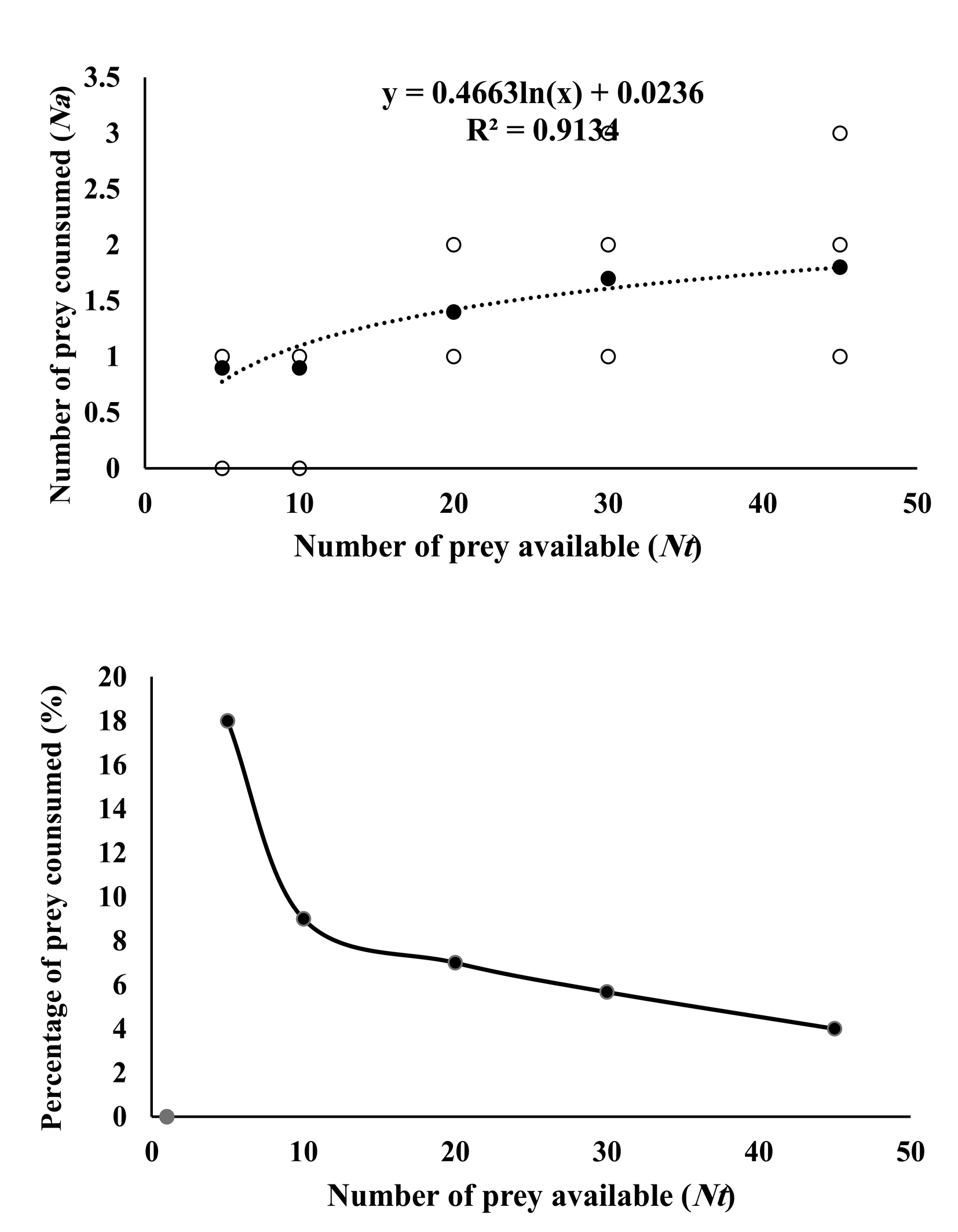
The searching efficiency (a) and handling time (Th ) for E. scutalis feeding on varying densities of B. tabaci eggs were 0.0093 and 11.02, respectively. Consequently, a female E. scutalis could consume a maximum of 2.17 eggs per day (estimated maximum prey consumption = T/Th ), which aligns closely with the observed results (Table 3).
Download as
Functional response type
Parameters
Estimate
Asymptotic SE
Asymptotic 95% CI
(T/Th)
r2
Lower
Upper
II
(a)
0.0093
0.0027
0.0039
0.0148
2.17
0.3415
(Th)
11.02
1.4241
8.1569
13.8836
Numerical response
Download as Means followed by different letters are significantly different (P<0.05, Tukey’s test).
Prey density
Mean (± SE)
Range
5
6.60± 0.43 a
5-9
10
6.80± 0.55 a
3-9
20
6.00± 0.75 a
3-11
30
7.40± 0.43 a
6-10
45
6.80± 0.70 a
3-11
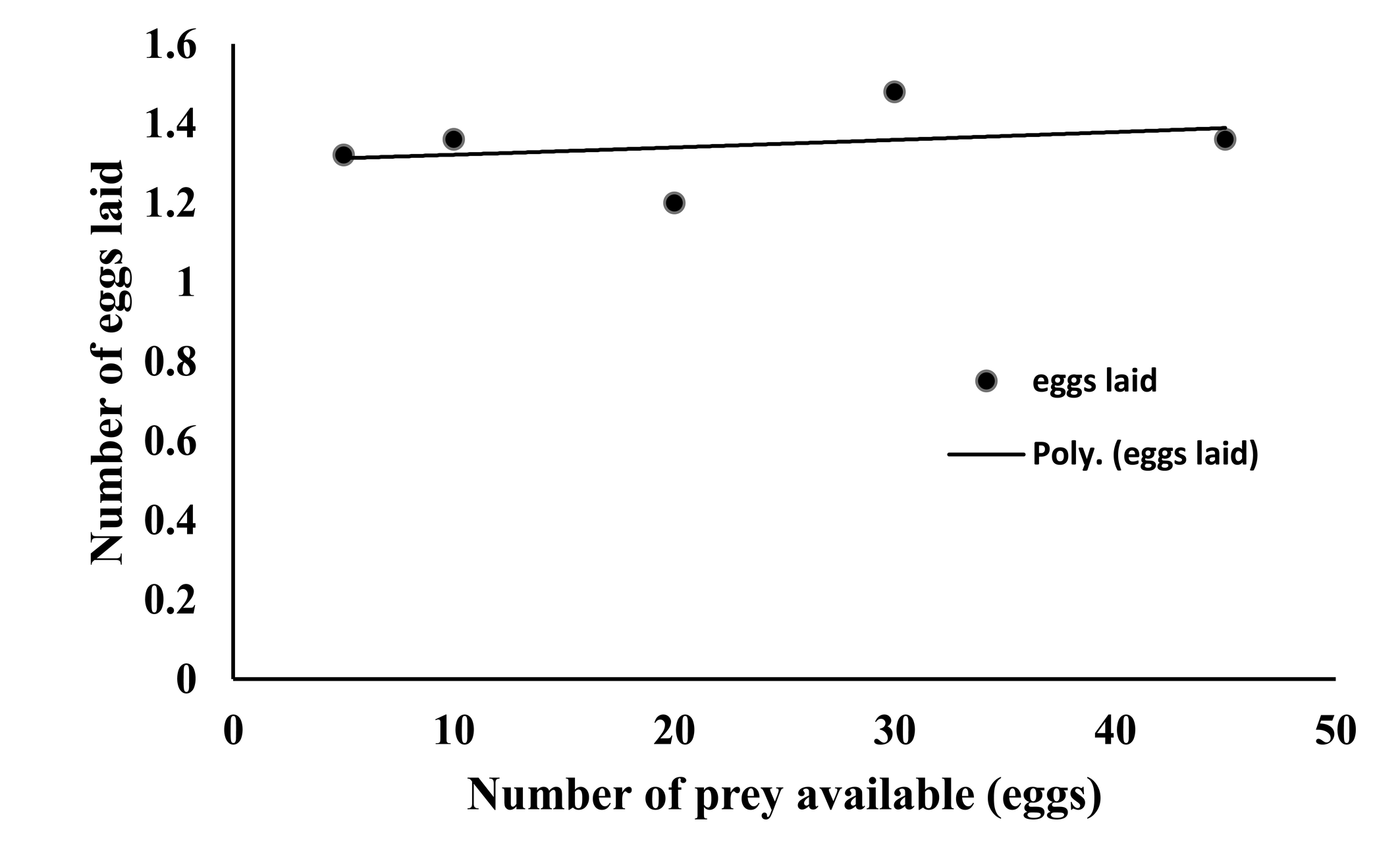
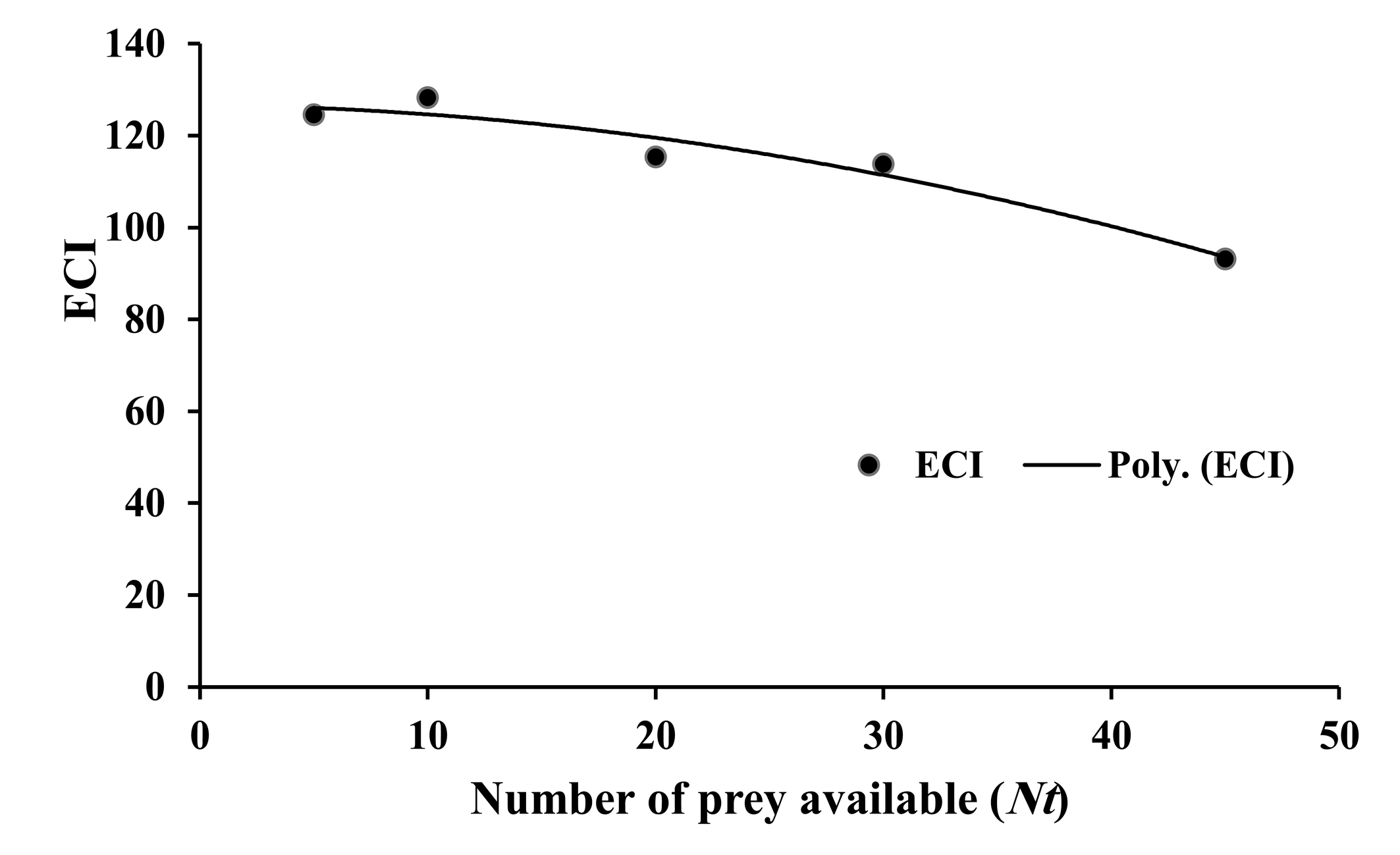
The results of the current study indicated that as prey density increased, the mean number of eggs laid by female E. scutalis mites ranged from 6.60 eggs at a density of 5 B. tabaci eggs to 7.40 eggs at a density of 30 B. tabaci eggs, with no significant difference observed (F 4,45 = 0.736, P < 0.572) (Table 4, and Figure 2). While the oviposition rate of female E. scutalis increased gradually, the ECI decreased with the increasing density of B. tabaci eggs (Figure 3).
Mutual interference
Download as The means with different letters in each column are significantly different (Tukey, P < 0.05).
Predator density
Per capita searching efficiency (±SE)
Per capita predation rate (±SE)
Total predation rate (±SE)
1
0.043 ±0.004 a
2.10 ±0.18 a
2.10 ±0.18 d
2
0.040 ±0.003 a
1.90 ±0.14 ab
3.80 ±0.29 d
4
0.045 ±0.002 a
2.07 ±0.10 a
8.30 ±0.39 c
8
0.036 ±0.002 a
1.56 ±0.08 b
* *12.50 ±0.65 b
16
0.040 ±0.004 a
1.46 ±0.09 b
* *23.30 ±1.44 a
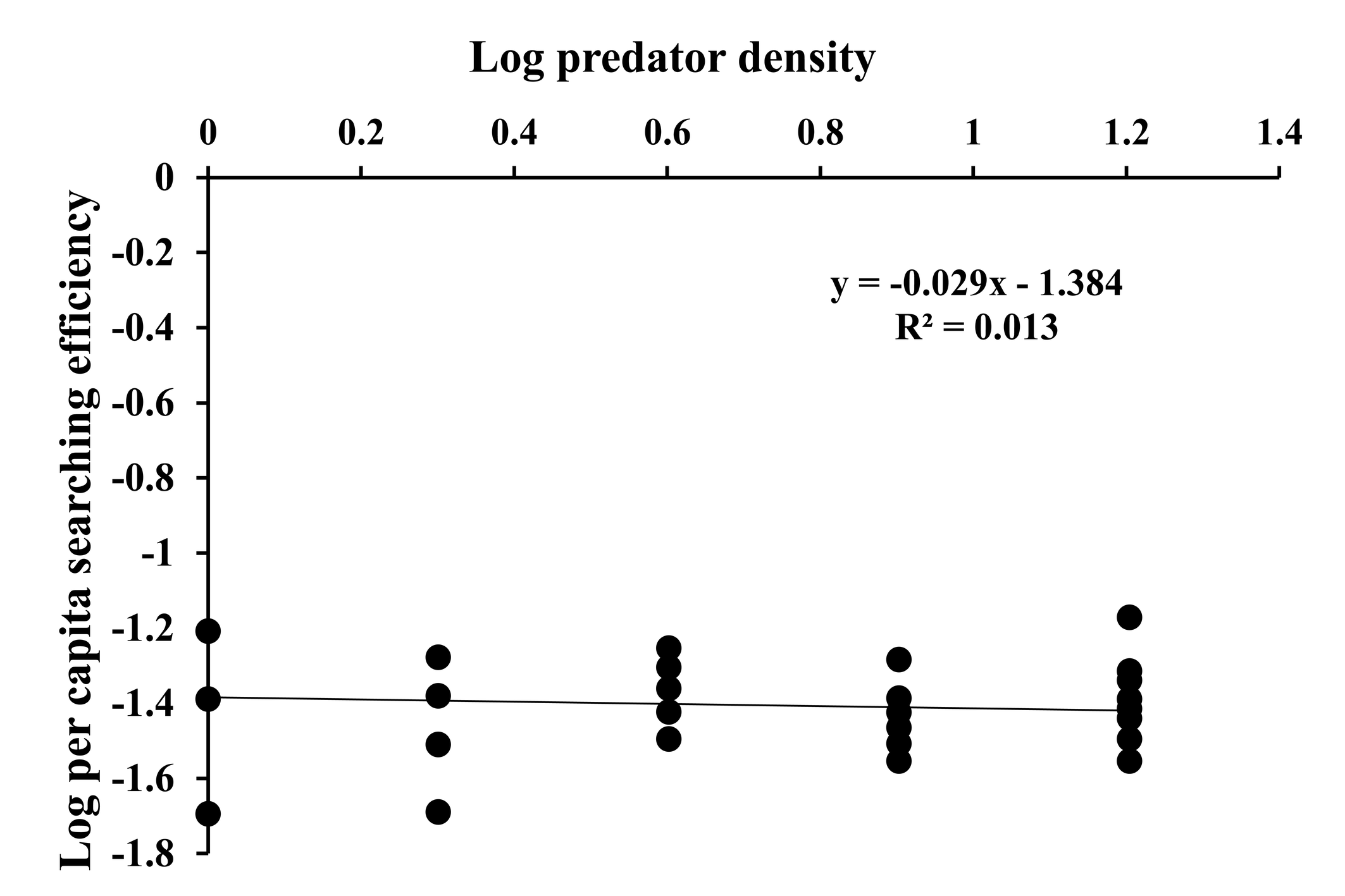
Per capita searching efficiency was not significantly affected by the density of E. scutalis (F4,45 = 1.298, P= 0.285); while per capita predation rate (F4,45 = 5.592, P= 0.001), and total predation rate (F4,45 = 129.510, P < 0.0001) were significantly affected by this parameter (Table 5). However, as predator density increased, the per capita predation rate of E. scutalis decreased significantly, while the total predation rate increased significantly (Table 5). The slope (interference coefficient, m) of the linear regression between the logarithm of per capita searching efficiency of E. scutalis and the logarithm of predator density feeding on B. tabaci eggs was negative (Figure 4). The estimated interference coefficient was 0.029 (Figure 4).
Prey Switching
Download as
Bemisia tabaci eggs to Tetranychus turkestani eggs ratio
Bemisia tabaci eggs consumed
05:025
0.60 ± 0.16
10:20
1.40 ± 0.16
15:15
1.90 ± 0.18
20:10
1.30 ± 0.15
25:5
1.20 ± 0.13
Tetranychus turkestani eggs to Bemisia tabaci eggs ratio
Tetranychus turkestani eggs consumed
05:25
1.60 ± 0.16
10:20
7.40 ± 0.56
15:15
6.30 ± 0.63
20:10
6.90 ± 0.97
25:5
5.50 ± 0.27
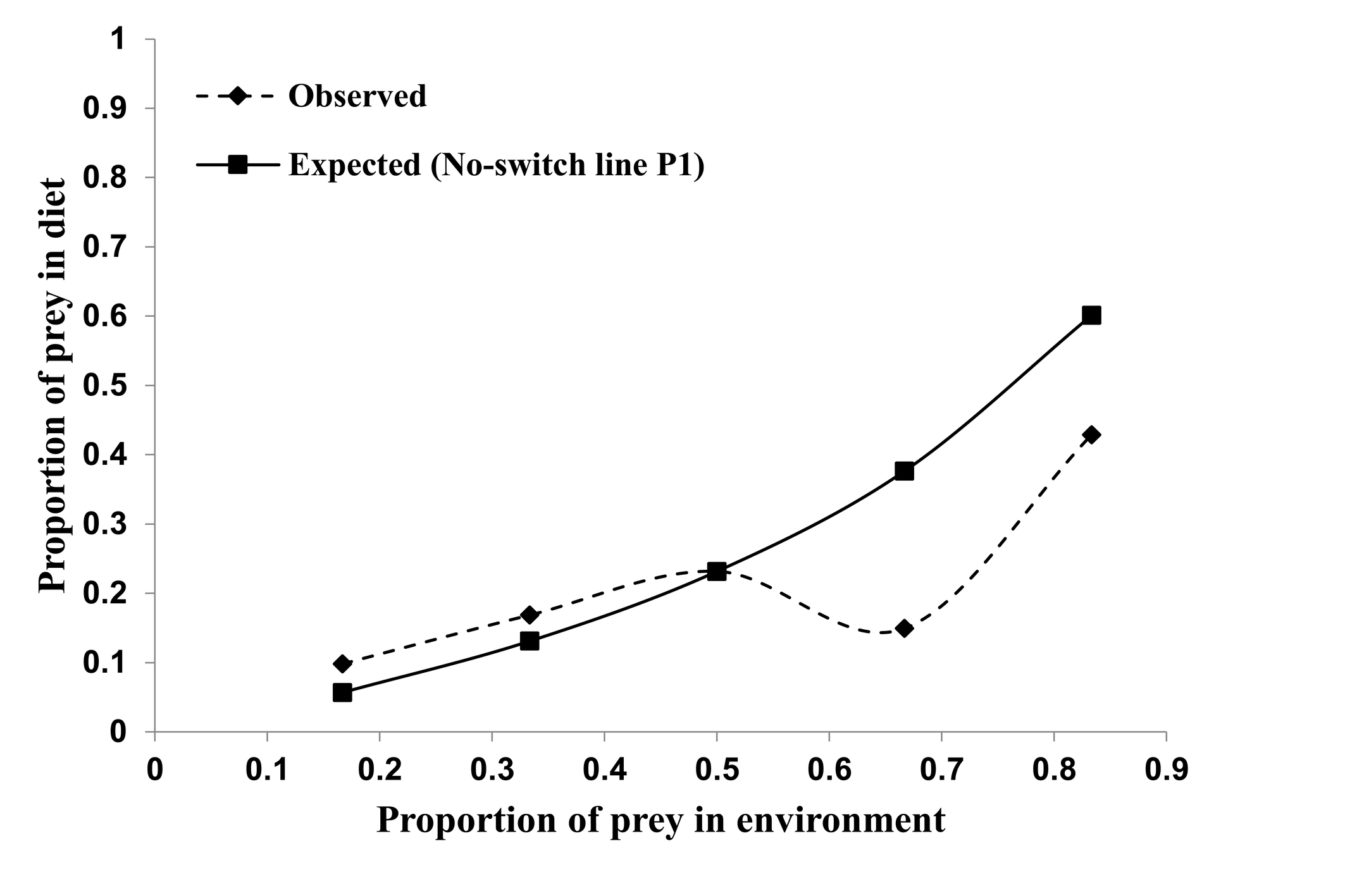
Table 6 shows the mean number of B. tabaci eggs and T. turkestani eggs consumed by E. scutalis at various ratios of the two egg types. In all tested ratios, E. scutalis consumed more T. turkestani eggs than B. tabaci eggs. For instance, when both egg types were offered in equal numbers (15:15), the predation rate on T. turkestani eggs was higher (6.30) compared to B. tabaci eggs (1.90). Even when T. turkestani eggs became scarce and B. tabaci eggs were available in greater numbers, E. scutalis did not switch its feeding preference to B. tabaci. This indicates that E. scutalis exhibited negative switching behavior, consistently preferring T. turkestani eggs across all ratios (Table 6, and Figure 5). The preference coefficients (c) for E. scutalis were obtained using Murdoch's index, yielding values of 3.315 for T. turkestani eggs and 0.330 for B. tabaci eggs. These values were then used to construct Murdoch's no-switch lines.
Discussion
The present study offers new insights into the predatory performance of E. scutalis when feeding on the eggs of B. tabaci under laboratory conditions. The results indicate that the consumption rate of E. scutalis increases with prey density, following a type II functional response pattern as described by Holling's model. This response is characterized by a decelerating rise in prey consumption as prey density increases, a phenomenon commonly observed in many phytoseiid mites. It suggests that at higher densities, the predator's feeding capacity is constrained by handling time rather than prey availability. A type II functional response has also been documented in Amblyseius swirskii Athias-Henriot when feeding on immature stages of B. tabaci (Nawar and Imam 2019), in Amblyseius tamatavensis Blommers when consuming B. tabaci eggs (Barbosa et al. 2019), and again in A. swirskii when fed on B. tabaci eggs (Golshan et al. 2023). In a type II functional response, prey consumption initially increases with prey density but gradually reaches a plateau as prey density increases further.
The decrease in the percentage of prey consumed at higher densities aligns with the saturation effect typically seen in type II predators. As prey density increases, predators spend more time handling prey and less time searching, which results in decreased relative predation efficiency. The observed searching efficiency (α = 0.0093) was somewhat lower than that reported for E. scutalis on spider mites (Abou-Awad et al. 2012), possibly due to differences in prey mobility and surface structure. For instance, B. tabaci eggs are sessile and often embedded in plant tissue, which may limit accessibility and reduce searching efficiency compared to exposed mite eggs. Experimental factors, such as the smooth surface of experimental arenas and the absence of plant trichomes, may have also affected prey-predator encounters in laboratory conditions. In this study, the mean consumption rate of E. scutalis at the highest prey density (45 B. tabaci eggs) was 1.80 eggs, significantly lower than the 7.20 eggs reported for A. tamatavensis consuming B. tabaci eggs (Barbosa et al. 2019) and the 38.50 eggs reported for A. swirskii feeding on B. tabaci eggs (Golshan et al. 2023). These differences in daily consumption rates may be attributed to differences in the ecological lifestyle types and feeding strategies of the phytoseiid species used in different experiments.
Handling time refers to the duration a predator spends identifying, hunting, killing, eating, and engaging in other time-consuming activities (Holling 1966). In the current study, the handling time (Th ) for E. scutalis feeding on B. tabaci eggs was estimated to be 11.02 hours. In contrast, the handling time for A. swirskii on immature stages of B. tabaci was reported as 0.492 hours (Nawar and Imam 2019). In addition, A. tamatavensis exhibited handling times ranging from 0.8994 to 1.6002 hours, depending on the host plant species tested (Barbosa et al. 2019). Furthermore, A. swirskii had a handling time of 0.3534 hours on B. tabaci eggs (Golshan et al. 2023), all of which are significantly shorter than our findings on E. scutalis when feeding on B. tabaci eggs. These differences suggest that the total time needed for A. tamatavensis and A. swirskii to capture, kill, and digest a B. tabaci egg was more than one-eleventh of the time required by E. scutalis. The longer handling time observed for E. scutalis on B. tabaci eggs indicates low prey suitability and suggests that the predator may allocate more time to searching for more suitable alternative prey within the experimental arena.
The numerical response results indicated a gradual increase in the oviposition rate as prey density rose, although these differences were not statistically significant. This weak numerical response implies that egg production in E. scutalis may not be strongly influenced by prey abundance within the tested range. A similar pattern was observed by Patel and Zhang (2017), who reported no noticeable trend in the reproductive rate of N. cucumeris with increasing density of the potato psyllid Bactericera cockerelli (Hem., Triozidae). One possible explanation is that physiological constraints limited the conversion of additional prey intake into increased egg production; however, this hypothesis requires further investigation. Additionally, decline in ECI at higher prey densities may be attributed to the predator's increased energy expenditure on handling and digestion rather than reproduction. These results suggest that increased prey consumption did not translate into a proportional increase in oviposition under the tested conditions (Omkar and Prevez 2004).
Regarding mutual interference, E. scutalis demonstrated a negative relationship between per capita predation rate and predator density, while total predation increased with the number of predators. The estimated interference coefficient (m = 0.029) indicates a mild level of interference, suggesting that E. scutalis individuals can coexist and forage efficiently even with a moderate increase in predator density. Similarly, a decrease in the per capita predation rate has been reported for Scolothrips longicornis Priesner (Thysanoptera: Thripidae) feeding on T. urticae (Pakyari and Fathipour 2009), Neoseiulus californicus (McGregor) and Typhlodromus bagdasarjani Wainstein & Arutunjan feeding on T. urticae (Farazmand et al. 2012), A. swirskii preying on the first and second nymphal instars of glasshouse whitefly, Trialeurodes vaporariorum Westwood (Farhadi et al. 2015), and Phytoseius plumifer (Canestrini & Fanzago) feeding on immature stages of T. urticae (Khodayari et al. 2016) as predator density increased. This reduction in per capita consumption at higher predator densities may arise from disturbance or avoidance behavior among conspecifics, a common phenomenon observed in confined laboratory settings. However, in field or greenhouse conditions where predators have more space to disperse, such interference effects are expected to be less pronounced.
The results of the current study indicate that E. scutalis displays negative switching behavior when presented with varying ratios of B. tabaci and T. turkestani eggs. Specifically, E. scutalis consistently preferred T. turkestani eggs across all examined ratios. This selective predation implies that E. scutalis may recognize or handle mite eggs more effectively than whitefly eggs, potentially due to differences in morphological or chemical cues. Mite eggs are larger, more exposed, and less protected by plant tissues than whitefly eggs, making them easier to detect and manipulate. Additionally, differences in nutritional content may influence this behavior, as mite eggs typically offer higher levels of protein and lipids, which can enhance predator performance and fecundity. No prior studies have reported on the prey-switching behavior of E. scutalis concerning B. tabaci and other prey. However, negative switching behavior has been observed in A. swirskii when feeding on different ratios of immature stages of B. tabaci and T. urticae (Soleymani et al. 2016), in A. swirskii consuming varying ratios of early immature stages of glasshouse whitefly, T. vaporariorum, and the protonymph stages of T. urticae (Heydari et al. 2016), as well as in A. swirskii when feeding on different ratios of first- and second-instar stages of Frankliniella occidentalis (Pergande) (Dalir et al. 2021).
In this study, we examined the functional response, numerical response, mutual interference, and switching behavior of the predatory mite E. scutalis, which plays a vital role in controlling B. tabaci in the Mediterranean region, under laboratory conditions. Our results showed that E. scutalis exhibited a negative switching prey behavior, preferring T. turkestani over B. tabaci at all tested ratios of their eggs. Ultimately, our findings indicated that the Iranian population of E. scutalis has a low preference and performance on B. tabaci eggs, in contrast to the commercially available Israeli population that is often used for biological control of B. tabaci in various crops in Israel (Gerson et al. 2003). Field validation is needed to determine if similar responses occur in natural or greenhouse environments, where factors such as plant architecture, temperature fluctuations, and alternative food sources can influence predator behavior. The preference for T. turkestani eggs over B. tabaci suggests that integrating E. scutalis with complementary predators or providing alternative prey could enhance its biological control potential. Collectively, these findings contribute to a better understanding of the feeding ecology of E. scutalis and its potential role in integrated pest management programs targeting whiteflies and spider mites. These findings provide baseline information on the foraging behavior of E. scutalis under controlled laboratory conditions and should be validated under greenhouse and field conditions before being translated into biological control recommendations.
Acknowledgement
We gratefully acknowledge the financial support provided by the research deputy of Shahid Chamran University of Ahvaz, Iran (Grant no. SCU.AP1403.400).
References
- Al-Shammery K.A. 2010. Different biological aspects of the predacious mite Euseius scutalis (Acari: Gamasida: Phytoseiidae) and the effects due to feeding on three tetranychid mite species in Hail, Saudi Arabia. Asian J. Biol. Sci., 3: 77-80. https://doi.org/10.3923/ajbs.2010.77.84
- Barbosa M.F., Poletti M., Poletti E.C. 2019. Functional response of Amblyseius tamatavensis Blommers (Mesostigmata: Phytoseiidae) to eggs of Bemisia tabaci (Gennadius) (Hemiptera: Aleyrodidae) on five host plants. Biol. Control, 138: 104-113. https://doi.org/10.1016/j.biocontrol.2019.104030
- Bink-Moenen R. M. 1983. Revision of the African whiteflies (Aleyrodidae), mainly based on collection from Tchad. Monografleen van de Nederlandse Entomologische Verenging, 10: 1-211.
- Bounfour M., McMurtry J.A. 1987. Biology and ecology of Euseius scutalis (Acarina: Phytoseiidae). Hilgardia, 55(5): 23. https://doi.org/10.3733/hilg.v55n05p023
- Cahill M., Byrne F. J., Gorman K., Denholm I., Devonshire A. L. 1995. Pyrethroid and organophosphate resistance in the tobacco whitefly Bemisia tabaci (Homoptera: Aleyrodidae). Bull. Entomol. Res., 85: 181-187. https://doi.org/10.1017/S0007485300034258
- Cahill M., Byrne F. J., Gorman K., Denholm I., Devonshire A. L. 1996. Baseline determination and detection of resistance to imidacloprid in Bemisia tabaci (Homoptera: Aleyrodidae). Bull. Entomol. Res., 86: 343- 349. https://doi.org/10.1017/S000748530003491X
- Dalir S., Hajiqanbar H., Fathipour Y., Khanamani M. 2021. A comprehensive picture of foraging strategies of Neoseiulus cucumeris and Amblyseius swirskii on western flower thrips. Pest Manag. Sci., 77(12): 5418-5429. doi: 10.1002/ps.6581. https://doi.org/10.1002/ps.6581
- Daneshvar H. 1980. Some predatory mites from northern and western Iran. Appl. Entomol. Phytopathol., 48: 15-87.
- Desneux N., Decourtye A. Delpuech J. M. 2007. The sublethal effects of pesticides on nenificial arthropods. Annu. Rev. Entomol., 52: 81-106. https://doi.org/10.1146/annurev.ento.52.110405.091440
- Farazmand A., Fathipour Y., Kamali K. 2012. Functional response and mutual interference of Neoseiulus californicus and Typhlodromus bagdasarjani (Acari: Phytoseiidae) on Tetranychus urticae (Acari: Tetranychidae). Int. J. Acarol., 38(5): 369-376. https://doi.org/10.1080/01647954.2012.655310
- Fathipour Y., Maleknia B. 2016. Mite Predators. In: Omkar (Ed), Ecofriendly pest management for food security. San Diego: Academic. P. 329-366. https://doi.org/10.1016/B978-0-12-803265-7.00011-7
- Farhadi R., Allahyari H., Chi, H. 2015. Functional response and mutual interference of Amblyseius swirskii (Acari: Phytoseiidae) on greenhouse whitefly Trialeurodes vaporariorum on cucucmber. Plant Prot., 38 (2): 37-48.
- Fekrat L., Shishehbor P. 2004. Biological characteristics and life table of cotton whitefly, Bemisia tabaci (Gennadius) on aubergine at different constant temperatures. Plant Prot., 27(1): 21-32.
- Fouly A.H., Nassar O.A., Osman M.A. 2013. Biology and life tables of Euseius scutalis (A-H) reared on different kinds of food. J. Entomol., 10: 199-206. https://doi.org/10.3923/je.2013.199.206
- Gerling D. 1990. Whiteflies: their bionomics, pest status and management. UK: Intercept Ltd. pp. 348.
- Gerson U., Smiley R.L., Ochoa R. 2003. Mites (Acari) for pest control. New York: Blackwell Publishing. pp. 539. https://doi.org/10.1002/9780470750995
- Golshan R., Shishehbor P., Esfandiari M. 2023. Biological characteristics, functional and numerical responses of the predatory mite Amblyseius swirskii (Acari: Phytoseiidae) feeding on cotton whitefly, Bemisia tabaci (Hemiptera: Aleyrodidae). J. Entomol. Soc. Iran, 43 (2): 97-111. https://doi.org/10.61186/jesi.43.2.2
- Gravandian M., Shishehbor P., Esfandiari M., Riahi E. 2026. Influence of two different pri-imaginal stages of Bemisia tabaci on development, life table parameters, and predation rate of the predatory mite, Euseius scutalis (Acari: Phytoseiidae). J. Agric. Sci. Technol., 28(2): 401-413.
- Hassell M. P., Varley G. C. 1969. New inductive population model for insect parasites and its bearing on biological control. Nature, 223: 1133-1137. https://doi.org/10.1038/2231133a0
- Hassell M. P. 1978. The dynamics of arthropod predator-prey system. Princeton University Press. Pp. 237. https://doi.org/10.2307/2530127
- Heydari S., Allahyari H., Zahedi Golpaygani A. 2016. Prey preference and switching behavior of Amblyseius swirskii (Acari:Phytoseiidae) on greenhouse whitefly and two-spotted spider mite. J. Plant Prot. Sci., 47 (1): 139-150.
- Holling C. S. 1959. Some characteristics of simple types of predation and parasitism. Can. Ent., 91(07): 385-398. https://doi.org/10.4039/Ent91385-7
- Holling C. S. 1966. Functional response of invertebrate predators to prey density. Mem. Ent. Soc. Can., 98: 5-86. https://doi.org/10.4039/entm9848fv
- Inak A., Demirci B., Erdem E., Randa-Zelyut F., Karanfil A., Yusuf Idan A., Toprak U., Inak E., van Leeuwen T. 2025. Insecticide resistance status and vector potential of Bemisia tabaci poulations on vegetable crops in Turkiye. Crop Prot., 190: 107097. https://doi.org/10.1016/j.cropro.2024.107097
- Juliano S.A. 2001. Nonlinear curve fitting: predation and functional response curves. In: Design and analysis of ecological experiments. Chapman and Hall/CRC. P. 159-182. https://doi.org/10.1093/oso/9780195131871.003.0010
- Kamali K., Ostovan H., Atamehr A. 2001. A catalog of mites and ticks (Acari) of Iran. Iran: Islamic Azad University Scientific Publication Center. pp. 192.
- Khanjani M. 2004. Pests of Iranian crops (insects and mites). Iran: Bu-Ali Sina University Publications. pp.719.
- Khodayari S., Fathipour Y., Sedaratian A. 2016. Prey stage preference, switching and mutual interference of Phytoseius plumifer (Acari: Phytoseiidae) on Tetranychus urticae (Acari: Tetranychidae). Syst. Appl. Acarol., 21(3): 347-355. https://doi.org/10.11158/8543
- Knapp M., van Houten Y., van Baal E., Groot T. 2018. Use of predatory mites in commercial biocontrol: current status and future prospects. Acarologia, 58(Suppl): 72-82. https://doi.org/10.24349/acarologia/20184275
- McMurtry J.A., Croft B.A. 1997. Life-styles of phytoseiid mites and their roles in biological control. Ann. Rev. Ent., 42: 291-321. https://doi.org/10.1146/annurev.ento.42.1.291
- McMurtry J.A., De Moraes G.J., Sourassou N.F. 2013. Revision of the lifestyles of phytoseiid mites (Acari: Phytoseiidae) and implications for biological control strategies. Syst. Appl. Acarol., 18: 297-320. https://doi.org/10.11158/saa.18.4.1
- Meyerdirk D.E., Coudriet D.L. 1986. Evaluation of two biotypes of Euseius scutalis (Acari: Phytoseiidae) as predators of Bemisia tabaci (Homoptera: Aleyrodidae). J. Econ. Ent., 79(3): 659-663. https://doi.org/10.1093/jee/79.3.659
- Murdoch W.W. 1969. Switching in general predators: experiments on predator specificity and stability of prey populations. Ecol. Monogr., 39: 335-354. https://doi.org/10.2307/1942352
- Naranjo S.E., Ellsworth P.C. 2001. Special Issue: Challenges and opportunities for pest management of Bemisia tabaci in the new century. Crop Prot., 20: 707-869. https://doi.org/10.1016/S0261-2194(01)00107-7
- Naranjo S.E., Canas L., Ellsworth P.C. 2009. Mortality and population dynamics of Bemisia tabaci within a multi-crop system. In: Mason P. G., Gillespie D. R., Vincent C. (Eds). Proceedings of the Third International Symposium on Biological Control of Arthropods; New Zealand: Christchurch. P. 202- 207.
- Nawar M.A., Imam I.I. 2019. The effect of different preys on behavior of predatory mite Amblyseius swirskii. Egypt. J. Desert Res., 69: 47- 57. https://doi.org/10.21608/ejdr.2020.18475.1063
- Nomikou M., Janssen A., Schraag R., Sabelis M.W. 2001. Phytoseiid predators as potential biological control agents for Bemisia tabaci. Exp. Appl. Acarol., 25(4): 271-291. https://doi.org/10.1023/A:1017976725685
- Omkar O., Pervez A. 2004. Functional and numerical responses of Propylea dissecta (Mulsant) (Col., Coccinellidae). J. Appl. Entomol., 128: 140-146. https://doi.org/10.1111/j.1439-0418.2004.00824.x
- Pakyari H., Fathipour Y. 2009. Mutual interference of Scolothrips longicornis Priesner (Thysanoptera: Tripidae) on Tetranychus urticae Koch (Acari; Tetranychidae). IOBC/WPRS Bulletin, 50: 65- 68.
- Patel K., Zhang, Z.-Q. 2017. Functional and numerical responses of Amblydromalus limonicus and Neoseiulus cucumeris to eggs and first instar nymph of tomato/potato psyllid (Bactericera cockerelli). Syst. Appl. Acarol., 22(9): 1476-1488. https://doi.org/10.11158/saa.22.9.12
- Porath A., Swirski E. 1965. A survey of phytoseiid mites (Acarina: Phytoseiidae) on citrus, with a description of one new species. Israel Journal of Agricultural Research, 15: 87-100.
- Ren S. X., Wang Z. Z., Qiu B. L., Xiao Y. 2008. The pest status of Bemisia tabaci in China and nonchemical control strategies. Insect Sci., 8 (3): 279-288. https://doi.org/10.1111/j.1744-7917.2001.tb00453.x
- Rogers D. 1972. Random search and insect population models. J. Anim. Ecol., 41: 369-383. https://doi.org/10.2307/3474
- Shishehbor P., Rahmani-Piyani A., Riahi, E. 2022. Effects of different pollen diets in comparison to a natural prey, Tetranychus turkestani (Acari: Tetranychidae), on development, survival, and reproduction of Euseius scutalis (Acari: Phytoseiidae). Syst. Appl. Acarol., 27: 2111- 2122. https://doi.org/10.11158/saa.27.10.19
- Soleymani S., Hakimitabar M., Seiedy M. 2016. Prey preference of predatory mite Amblyseius swirskii (Acari: Phytoseiidae) on Tetranychus urticae (Acari: Tetranychidae) and Bemisia tabaci (Hemiptera: Aleyrodidae). Biocontrol Sci. Technol., 26(4): 562-569. https://doi.org/10.1080/09583157.2015.1133808
- Solomon M. E. 1949. The natural control of animal population. J. Anim. Ecol., 18 (1): 1-35. https://doi.org/10.2307/1578
- Swirski E., Amitai S., Dorzia N. 1967. Laboratory studies on the feeding, development and reproduction of predacious mites Amblyseius rubini Swirski and Amitai and Amblyseius swirskii Athias (Acarina: Phytoseiidae) on various food substances. Israel J. Agric. Res., 17: 101-119.
- van Baalen M., Krivan V., van Rijn P.J.C., Sabelis M.W. 2001. Alternative food, switching predators, and persistence of predator- prey systems. Am. Nat., 157: 1-13. https://doi.org/10.1086/319933
- Walzer A., Schausberger P. 1999. Cannibalism and interspecific predation in the phytoseiid mites Phytoseiulus persimilis and Neoseiulus californicus: predation rates and effects on reproduction and juvenile development. BioControl, 43: 457-468. https://doi.org/10.1023/A:1009980401662
- Zergani A., Shishehbor P., Naser Nakkai F., Riahi E. 2023. Life history traits and population parameters of the predatory mite Euseius scutalis (Acari: Phytoseiidae) fed on Tetranychus turkestani (Acari: tetranychidae) and pollen from three different plants. Acarologia, 63 (3): 945- 954. https://doi.org/10.24349/mrqf-arrz
 to post any comment or correction.


2025-10-29
Date accepted:
2026-08-13
Date published:
2026-08-31
Edited by:
Tsolakis, Haralabos

This work is licensed under a Creative Commons Attribution 4.0 International License
2026 Gravandian, Mohammad; Shishehbor, Parviz; Esfandiari, Mehdi and Riahi, Elham
 Download article
Download the citation
RIS with abstract
(Zotero, Endnote, Reference Manager, ProCite, RefWorks, Mendeley)
RIS without abstract
BIB
(Zotero, BibTeX)
TXT
(PubMed, Txt)