


Acaricidal effects of clove oil-based nanoemulsion on Varroa destructor: colony-level, in silico molecular docking, and ADMET studies
Buluş, İsmail Yaşhan  1
1
1✉ Department of Animal Production and Technologies, Faculty of Applied Sciences, Muş Alparslan University, 49250, Muş, Türkiye.
2026 - Volume: 66 Issue: 3 pages: 653-672
https://doi.org/10.24349/thly-5xgqOriginal research
Keywords
Abstract
Introduction
Honey bees are among the most valuable pollinators worldwide, both ecologically and economically, playing a crucial role in food production and supporting biodiversity through pollination (Warner et al. 2024). In recent years, significant declines in honey bee populations and increased colony losses have been observed globally (Hristov et al. 2020), with Varroa destructor mites identified as a major cause of these losses (Insolia et al. 2022). The high susceptibility of Apis mellifera to Varroa infestation (Traynor et al. 2020) and the development of resistance by mites to commonly used acaricides (Underwood and López-Uribe 2022) limit the effectiveness of current control methods. Although chemical treatments remain widely used for Varroa control (Jack and Ellis 2021), these methods have notable disadvantages, including mite resistance, residue formation in bee products, and disturbances in bee behavior (Mullin et al. 2010). Therefore, the development of more targeted, ecofriendly, and sustainable alternatives is necessary (Noël, Le Conte and Mondet 2020).
The inadequacy of synthetic acaricide-based methods (Tirello et al. 2012) and the environmental risks associated with pesticides have increased interest in naturally derived biopesticides (Attia et al. 2013). Essential oils, used for many years in veterinary medicine and the cosmetics industry due to their antimicrobial, antifungal, antioxidant (Zhang et al. 2016), analgesic, antiseptic (Osanloo et al. 2018), and anti-inflammatory effects, have recently been applied in agricultural pest control for their insecticidal properties (Sengottayan 2013; Pavela 2015). The eco-friendliness, rapid action, and low residue risk of these essential oils offer significant advantages in pest control (Shalaby et al. 2016). Additionally, these compounds have been reported to exhibit repellent, growth inhibitory, and lethal effects on mites and ticks (Papachristos and Stamopoulos 2002; Shalaby et al. 2016).
These plant-derived natural compounds are considered alternatives to synthetic pesticides due to their low toxicity to mammals and humans (Isman, Miresmailli and Machial 2011; Regnault-Roger, Vincent and Arnason 2012). Essential oils affect arthropods through various mechanisms, including inhibiting feeding, suppressing growth and development, and impacting the respiratory and nervous systems (Akhtar and Isman 2004). Lavender, clove, and garlic oils have also been reported as effective against pests such as lice, fleas, and ticks (Candy et al. 2020). Clove oil, in particular, has demonstrated high mortality rates in laboratory studies against V. destructor and has been found safe for bee larvae (Gashout and Guzmán-Novoa 2009).
However, the volatility and stability issues of essential oils can restrict their effectiveness under field conditions. Consequently, the use of innovative carrier systems such as nanoemulsions (NEms) is becoming increasingly important. Nanotechnology-based pesticides provide more effective and targeted applications by increasing the solubility and bioavailability of active ingredients (Manna et al. 2023). NEms, which are generally kinetically stable systems with droplet sizes of 20-200 nm, enhance the effectiveness of active ingredients by protecting them from environmental degradation (Preeti et al. 2023). These systems are also notable for their low cost and suitability for various application methods. Although NEm formulations appear to be a promising alternative for overcoming these limitations, studies on their use against V. destructor are limited. Warner et al. (2024) and Farina et al. (2024) highlighted the lack of research on NEms. Existing studies show that NEm applications are mostly restricted to indirect methods. For example, in the study by Gamal Eldin et al. (2024), thymol NEm was incorporated into a candy cake formulation and administered to bees through feeding.
A review of studies on the control of Varroa mites in the literature shows that traditional application methods, such as cardboard and wood impregnation (Boonmee et al. 2024), gel-based formulations (Bava et al. 2023a), and fumigation techniques (Lin et al. 2020), are mostly preferred in both field applications and laboratory tests (Sammataro et al. 1998; Lindberg, Melathopoulos and Winston 2000). However, studies on NEm-based applications are limited, indicating a significant research gap in this area. Given the advantages of nanoformulations, including high stability, controlled release, and increased biological efficacy, they are considered to offer an innovative approach to Varroa control (Farina et al. 2024). The interactions of essential oil components with insect cuticle proteins play a decisive role in the insecticidal efficacy of these compounds and the NEms developed from them (Abdelgaleil et al. 2024). However, isolating these components and experimentally investigating their effects at the cellular level are costly and labor-intensive processes. In this context, in silico methods such as molecular docking provide a significant alternative by enabling the prediction of ligand-protein interactions quickly, reliably, and at low cost (Karaca et al. 2024).
Molecular docking is a computational technique that predicts interactions between a small molecule (ligand) and a biological macromolecule (protein or DNA) (Trott and Olson 2010). This method evaluates binding affinity through optimization algorithms and energy functions by examining the conformational space of the ligand and its possible placements in the active site of the target protein (Morris et al. 2009). Such computational approaches contribute to a better understanding of biological activity, enable more efficient planning of experimental processes, and support the discovery of new biologically active compounds (Tapera et al. 2024).
One mechanism of action of essential oils is their effect on the nervous system. These compounds inhibit the acetylcholinesterase (AChE) enzyme (Xu et al. 2024). AChE is essential for terminating nerve signals by breaking down acetylcholine during synaptic transmission. Inhibition of this enzyme leads to the accumulation of acetylcholine in the synaptic cleft, resulting in neurotoxic effects such as overstimulation, paralysis, and death (Asnaashari, Jahanban-Esfahlan and Amarowicz 2025). Clove oil has also been reported as an AChE inhibitor (Dalai et al. 2014). This enzyme is present in Varroa mites (Kim et al. 2022), indicating that essential oils can exert neurotoxic effects on pests such as Varroa mite. The olfactory system, important for environmental perception in insects and mites, is another potential target. Odorant-binding proteins (OBPs) are critical for odour perception, transporting hydrophobic odour molecules to receptors (Morfin et al. 2023). Investigating the interaction between essential oil components and these proteins using molecular docking methods helps to understand how these compounds influence pest behavior.
In this study, the effects of clove oil NEms on V. destructor were evaluated under field conditions, and the interactions of the active components with acetylcholinesterase (AChE) and odorant-binding proteins (OBPs) were analyzed using molecular docking methods. This holistic approach aims not only to reveal biological activity but also to provide a more comprehensive understanding of the molecular mechanisms underlying this activity. Moreover, considering that NEm systems can incorporate fixed oils as carrier phases, and that edible or fixed oils are known to exhibit acaricidal activity against various mite species (Takeda et al. 2020; Chromzadeh et al. 2026), this approach may also pave the way for evaluating fixed oils that have not yet been tested against Varroa in honey bees, highlighting the broader significance of the present study.
Materials and methods
Experimental area and colony characteristics
This research was conducted in an open-field apiary owned by the responsible author in Suvaran village, Muş province, Türkiye (38.7714°N, 41.4306°E). The apiary contains 25 Langstroth hives equipped with plastic bottom boards and pollen traps, each with a single brood chamber of nine bee-covered frames. The experimental colonies were established from naturally mated Caucasian F1 hybrid queen bees introduced to the colonies in June 2025 (Günesdogdu, Abaci and Sekeroglu 2022). These colonies exhibited sufficient brood development, with an average of approximately two frames of capped brood per hive. To ensure homogeneity among the experimental units, the colonies were standardized for strength, population size, brood quantity, and food reserves (Bava et al. 2023a). No routine control measures were applied against Varroa infestation, allowing the mite population to develop under natural conditions. The average ambient temperature recorded throughout September was 20.1 °C, within the recommended range of 10–25 °C for essential oil-based Varroa control (Akyol and Özkök 2005). Relative humidity was approximately 50%, below the 60% threshold known to negatively impact the survival of bees infested with V. destructor (Annoscia, Del Piccolo and Nazzi 2012).
Essential oil and chemical characterisation
The clove (Syzygium aromaticum) essential oil used in this study was obtained from a commercial supplier in Izmir, Turkey. The oil was stored at +4 °C in dark, sealed conditions until analysis and formulation. The chemical composition of the essential oil was determined using gas chromatography–mass spectrometry (GC–MS) at Çukurova University Central Research Laboratory (CUMERLAB). Analyses were performed according to methods reported in the literature (Ligor et al. 2014). Separation of volatile components was achieved using a capillary column, and mass spectra were identified by comparison with standard library data (NIST and WILEY).
Nanoemulsion formulation and preparation
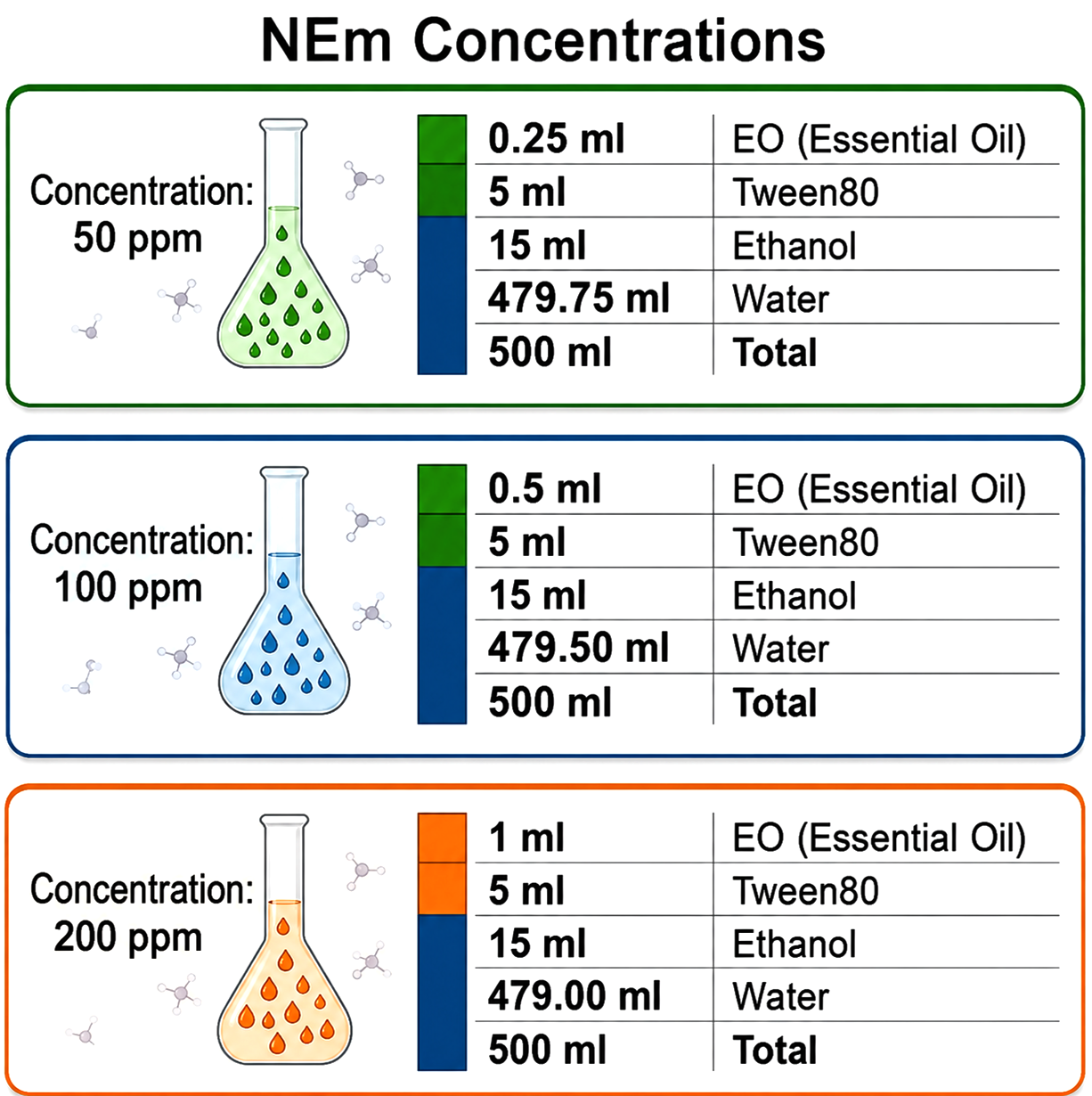
Clove essential oil-based nanoemulsions (NEms) (oil/water type) were prepared by modifying methods reported in the literature (Takadaş et al. 2026). Different concentrations of NEm formulations were prepared, and their composition ratios were shown in Figure 1. Essential oil (0.25, 0.5, and 1 mL), Tween 80 (5 mL) as surfactant, and ethanol (15 mL) as auxiliary surfactant were used in the formulations, and the total volume was adjusted to 500 mL with distilled water. The mixture was stirred under controlled conditions to obtain a homogeneous pre-emulsion. To remove ethanol from the formulation, the mixture was incubated in an oven at 86 °C for 1 hour. This process, carried out above the boiling point of ethanol (78.4 °C), resulted in significant evaporation of the solvent, producing a more stable NEm system (Ozogul et al. 2017). After incubation, the mixture was cooled to room temperature and diluted with distilled water. Pre-homogenization was performed using a mechanical homogenizer (IKA T25 digital ULTRA TURRAX) at 500 rpm for 15 minutes. The emulsion was then processed using an ultrasonic homogenizer (Optic Ivymen System CY-500, Barcelona, Spain) at 500 W power, 20 kHz frequency, and 72% amplitude for 15 minutes. To prevent overheating during the ultrasonic process, samples were kept in an ice bath, and the temperature was maintained at approximately 15 °C.
Physicochemical properties of nanoemulsions
The average droplet diameter of the prepared NEms was determined using a Zetasizer (Malvern Instruments, UK) based on the dynamic light scattering (DLS) principle at the Middle East Technical University (METU) Central Laboratory. Additionally, parameters such as the polydispersity index (PDI) and zeta potential were measured to assess the homogeneity and stability of the system. The physical stability of the NEms was monitored for 14 days. For this purpose, samples were centrifuged at 2000 rpm × g for 30 minutes every two days at different temperatures (4 °C and 45 °C). After each centrifugation, the samples were kept at room temperature (23-24 °C). At the end of the observation period, no phase separation or no oil layer formation was observed, and it was determined that the NEms were physically stable (Çolak et al. 2026).
Experimental design and application methods
The essential oil doses used in the experiment were determined based on values reported in the literature, with some modifications (Gamal Eldin et al. 2024). In this context, clove essential oil was applied at three concentrations: 50, 100, and 200 ppm. The selected application doses were well below the safety limits reported in the literature (2650 mg/kg (ppm)), aiming to provide effective mite control while protecting bee health (Mfarrej and Rara 2019). The experimental colonies were divided into five groups: three treatment groups (15 colonies in total) with essential oil NEm application, a positive control group (5 colonies) with Flumethrin (Bayvarol®, Bayer) application, and a negative control group (5 colonies) with no application. In the positive control group, Flumethrin, a commonly used synthetic acaricide, was applied in accordance with standard beekeeping practices. Essential oil applications were carried out with minor modifications to the method of Damiani et al. (2011). Applications were carried out using a hand sprayer at a dose of 5 mL per frame, resulting in a total of 45 mL per colony per application. All applications were performed five times in total (on days 0, 7, 14, 21, and 28) at 7-day intervals. To accurately evaluate the effectiveness of the applications, control groups were included to differentiate between treatment-related mite mortality and reductions resulting from the bees' natural defense behaviors (such as cleaning and hygiene behavior). The Varroa infestation level in adult worker bees was determined as the number of mites found in a 10 g bee sample, representing approximately 100 worker bees (Karapetkovska-Hristova et al. 2024). For this purpose, the powdered sugar method, which is cheaper and results in greater diagnostic accuracy (Bava et al. 2022), described by Seven-Çakmak et al. (2017) was used. Briefly, approximately 10 g of worker bees were placed in a glass jar with a fine-mesh lid, and 20 g of powdered sugar was added. The jar was gently shaken for 2 minutes to separate the mites from the bees. The jar was then inverted onto a white surface, and the mites were collected and counted along with the spilled sugar. After the procedure, the bees were returned to their colonies. Varroa infestation levels were recorded before each application and on days 0, 7, 14, 21, and 28. Application effectiveness was calculated using the following formulas, based on the method reported by (Güneşdoğdu and Abaci 2025).
\[ \% \text{Infestation (varroa per 10 g of bees)} = \frac{\text{Total number of dropped varroa} × 10}{\text {Net weight of bees}} \] (1)
\[ \% \text{Change in mite population} = \left[\left(\frac{\text{Initial varroa count} - \text{Final varroa count}}{\text {Initial varroa count}}\right)\right] × 100 \] (2)
In addition, white paper coated with petroleum jelly was placed in the pollen drawers to monitor the falling mites, and mite shedding was observed using this method. This approach is considered common and reliable in Varroa monitoring (Calderone and Lin 2003). Mite shedding counts were performed for all groups on days 1, 3, and 5 following each application.
Molecular docking analysis
In this study, the main components of clove essential oil were identified by GC-MS analysis, and the three compounds with the highest concentrations; eugenol, caryophyllene, and humulene were selected for molecular docking studies. As target proteins, acetylcholinesterase (AChE) (PDB ID: 6XYY, Drosophila melanogaster) (Güneşdoğdu and Abacı 2026), an important enzyme in the insect nervous system, and odorant-binding protein (OBP) (PDB ID: 7NZA, Varroa destructor) (Gökalp 2025) were retrieved from the Protein Data Bank (PDB). Since the crystal structure of AChE from Varroa destructor is not currently available, the homologous structure from Drosophila melanogaster was used as a model system for docking analysis. Protein structures were prepared using AutoDock Tools (ADT, version 1.5.7) prior to docking. During this process, crystal water molecules were removed, polar hydrogen atoms were added, and Gasteiger partial charges were assigned. The prepared protein structures were saved in PDBQT format. Ligand structures were obtained from the PubChem database in SDF format and converted to PDB format using BIOVIA Discovery Studio Visualizer 2025 software. Ligands were prepared for docking by defining appropriate torsions and applying energy minimization where necessary. Molecular docking analyses were performed using AutoDock Vina software (Trott and Olson 2010). The Vina scoring function was used in docking calculations, and the receptor structure was kept rigid. The grid box was defined to encompass the active site of the target protein. For Varroa odorant binding protein (7NZA), the grid centre coordinates were set as X: 12, Y: 5.219, Z: 7.7, the grid size was 20 × 20 × 20, and the grid spacing was 0.375 Å. Among the docking parameters, the exhaustiveness value was set to 16, and calculations were performed with multi-core processing support. Multiple binding conformations were generated for each ligand, and the conformation with the lowest binding free energy (ΔG) was considered the most favorable binding mode. Protein-ligand interactions (hydrogen bonds, hydrophobic interactions, and π-interactions) were analyzed in two and three dimensions using BIOVIA Discovery Studio Visualizer 2025 software.
Toxicity prediction analysis
Toxicity prediction analyses were conducted to assess the potential toxic effects of essential fatty acid components. The web-based tools SwissADME (http://www.swissadme.ch/  ) (Daina, Michielin and Zoete 2017) and Deep-PK (https://biosig.lab.uq.edu.au/deeppk/ ) (Myung, de Sá and Ascher 2024) were used to obtain comprehensive predictions from different algorithms and databases.
Protein-Protein Interaction (PPI) network analysis
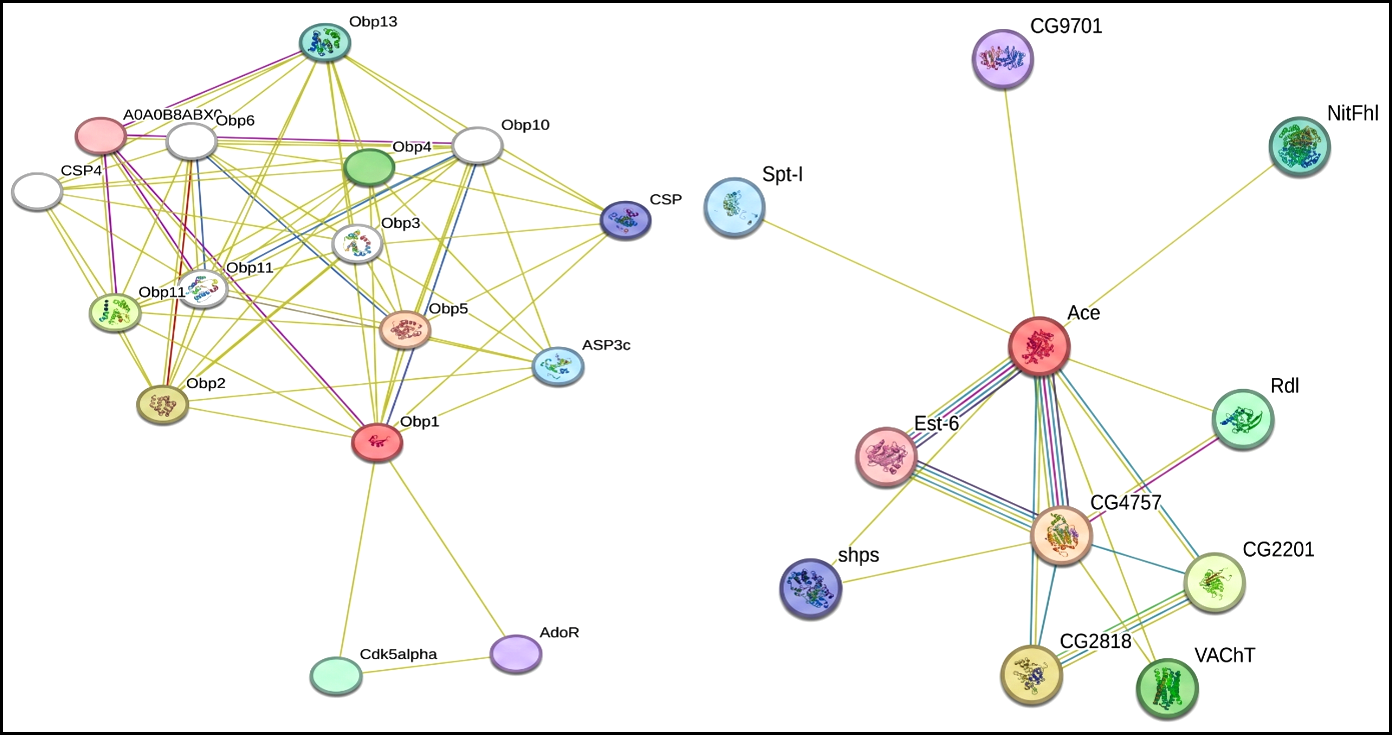
Protein-protein interaction (PPI) analyses were performed using the STRING database (https://string-db.org/ ) to examine the functional relationships of target proteins (Szklarczyk et al. 2023). For AChE, analyses were performed using a high confidence score (≥0.700), with a maximum of 10 interacting proteins included in the first layer to reduce network complexity, and the second layer excluded from the analysis. Experimental data, databases, co-expression, and text mining were used as sources of interaction. Due to the limited data available for Varroa destructor, the analysis was performed specifically for OBP proteins via Drosophila melanogaster homologues. OBP networks were constructed using a moderate confidence score (≥0.400) to reveal possible functional relationships.
Statistical analysis
The normality of the variables examined in the study was assessed using the Kolmogorov-Smirnov test, which indicated that the data were normally distributed (p > 0.05). Two-factor repeated measures analysis of variance (Mixed Design ANOVA) was used to analyse Varroa mite rates measured in four groups at five time points. In the analysis, the group factor was treated as the independent variable (between-subject), and the time factor as the repeated measure (within-subject). The sphericity assumption was evaluated with Mauchly's sphericity test, and the Greenhouse-Geisser correction was applied if this assumption was violated. The Bonferroni multiple comparison test was used for significant main effects and interactions. Descriptive statistics were presented as mean ± standard error (SEM). All statistical analyses were performed using SPSS software (SPSS Inc., Chicago, IL, USA), and graphical visualizations were prepared using the SRplot online platform (Tang et al. 2023).
Results
GC-MS Compounds of clove essential oil
GC-MS analysis of clove essential oil identified five main components. The dominant component was eugenol at 64.55%, followed by caryophyllene at 28.42% and humulene at 5.83%. The other components, caryophyllene oxide (0.87%) and phenol, 4-(2-propenyl)- (0.30%), were present in lower proportions. These results indicate that clove essential oil is rich in phenolic compounds, with eugenol as the main active component (Table 1).
Download as
No
Compounds
%
Retention Time
Retention Index
1
Eugenol
645524
5341373
2061
2
Caryophyllene
284266
3784463
1682
3
Humulene
583961
4057665
1749
4
Caryophyllene oxide
0.87552
5007407
1979
5
Phenol, 4-(2-propenyl)-
0.3059
5679325
2142
Particle size distribution of C-NEm
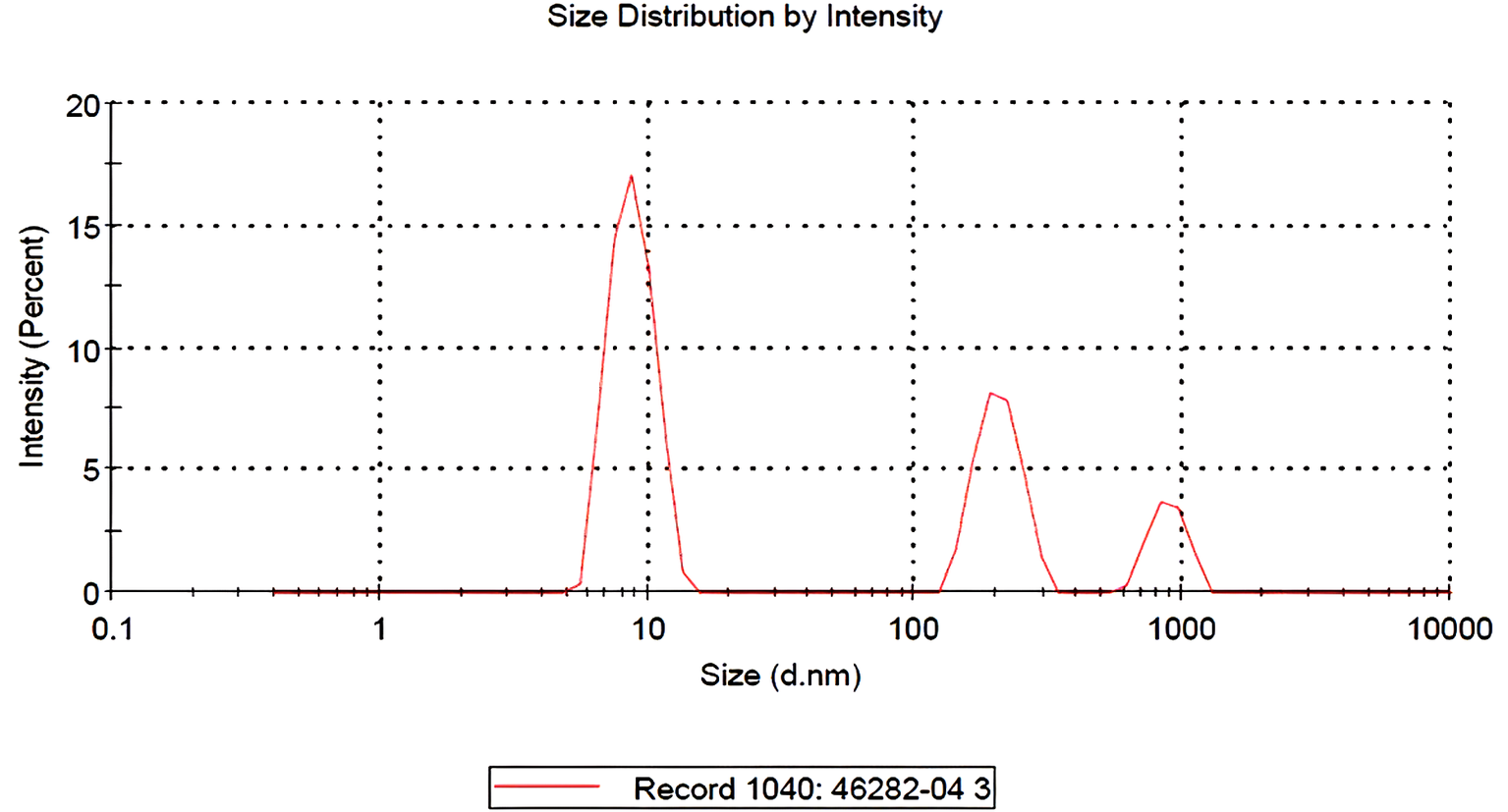
Zetasizer analysis showed that the average droplet diameter (Z-average) of the clove essential oil NEm was 249.5 nm. The polydispersity index (PDI) was 0.553. Examination of the droplet distribution indicated that the NEm exhibited a multimodal structure concentrated in different size ranges (Figure 2).
Evaluation of acaricidal treatment
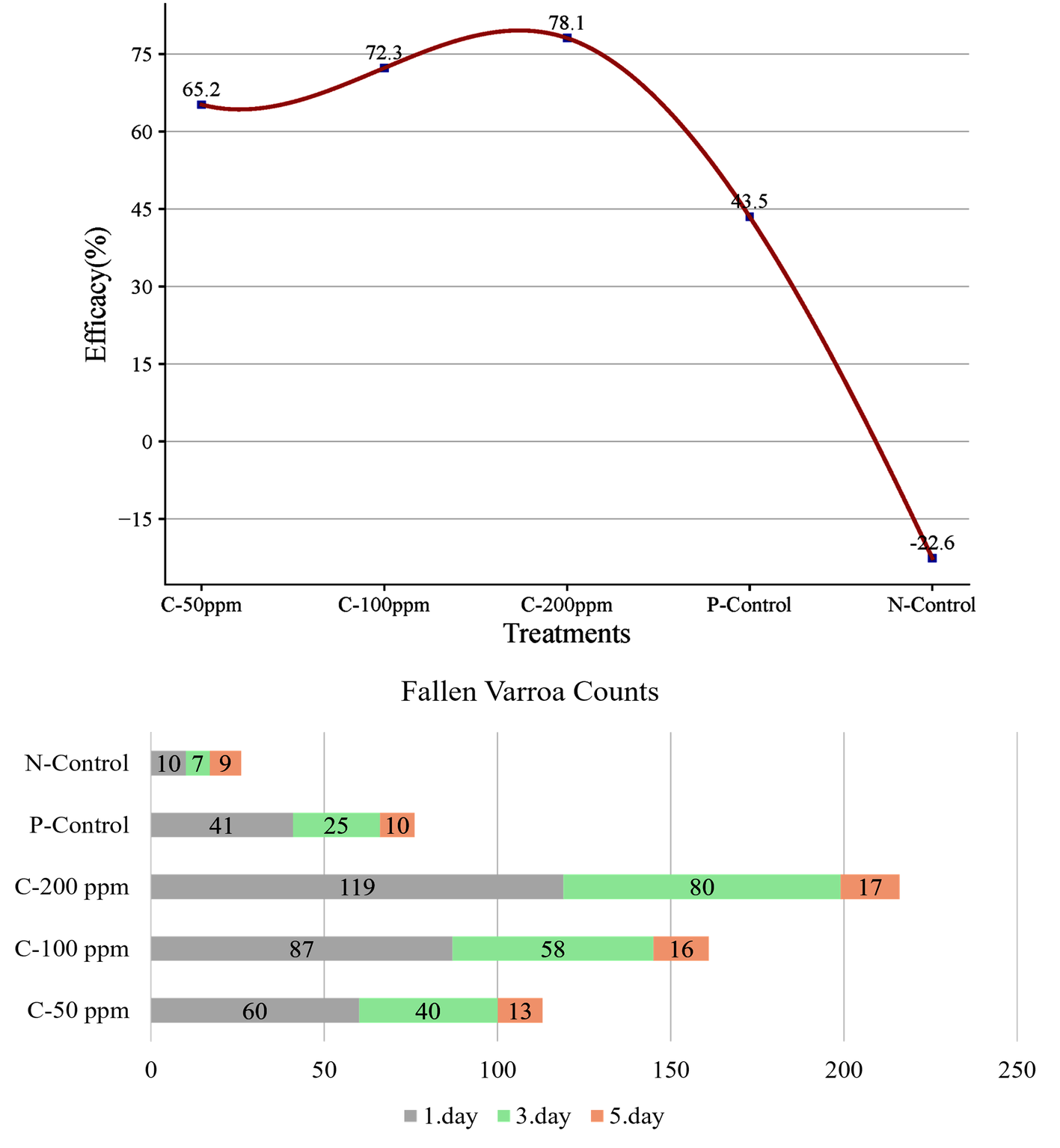
When the efficacy rates of the application groups were examined, rates of 65.2%, 72.3%, and 78.1% were observed at concentrations of 50, 100, and 200 ppm, respectively. The efficacy rate was 43.5% in the positive control group and -22.6% in the negative control group. Notably, NEm applications demonstrated higher efficacy than the Flumethrin group. When the reduced Varroa mite numbers were evaluated, a decreasing trend was observed in all groups on days 1, 3, and 5. In the application groups, the 200 ppm dose resulted in a greater reduction in mite numbers compared to the other doses. Similarly, a decrease was observed over time in the control groups, but the values were lower than those in the application groups (Figure 3).
In Table 2, it showed that both treatment and sampling day significantly affected Varroa destructor mite counts. A significant treatment effect was observed (F(4,20) = 198.91, p < 0.001, partial η² = 0.975). Similarly, sampling day had a significant effect on mite counts (F(4,80) = 1958.15, p < 0.001, partial η² = 0.990). Furthermore, the significant treatment × sampling day interaction (F(16,80) = 300.18, p < 0.001, partial η² = 0.984) indicated that changes in mite counts over time differed significantly among the treatment groups.
Download as Means followed by different letters in the same column are different.
Treatment
Day 0
Day 7
Day 14
Day 21
Day 28
C-50 ppm
27.0 ± 1.58ᵇ
18.4 ± 1.14ᵇ
14.8 ± 0.84ᵇ
12.0 ± 0.71ᵇ
9.4 ± 0.55ᵇ
C-100 ppm
26.0 ± 1.58ᵇ
16.8 ± 0.84ᶜ
12.6 ± 0.55ᶜ
9.4 ± 0.55ᶜ
7.2 ± 0.45ᶜ
C-200 ppm
29.2 ± 1.48ᵃ
18.0 ± 0.71ᵇ
13.0 ± 0.71ᶜ
8.6 ± 0.55ᶜ
6.4 ± 0.55ᶜ
P- Control
24.8 ± 1.48ᶜ
20.6 ± 1.14ᵃ
17.8 ± 0.84ᵃ
15.0 ± 0.71ᵃ
14.0 ± 0.71ᵃ
N- Control
24.8 ± 1.30ᶜ
25.8 ± 1.30ᵈ
27.8 ± 1.30ᵈ
29.4 ± 0.89ᵈ
30.4 ± 0.89ᵈ
df
F
P
Partial η²
Treatment
4, 20
198.91
<0.001
0.975
Week
4, 80
1958.15
<0.001
0.990
Treatment × Week
16, 80
300.18
<0.001
0.984
Molecular docking results
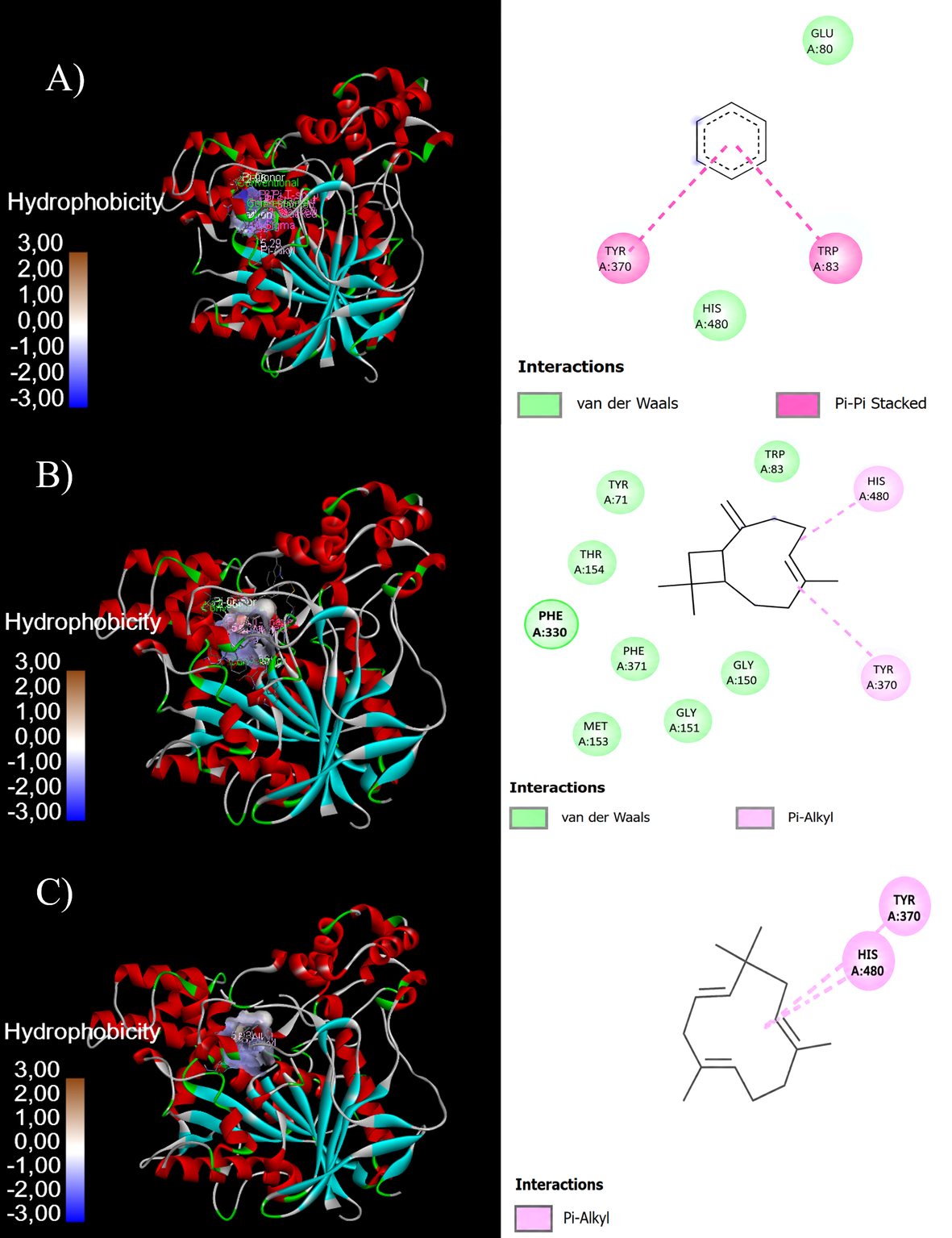
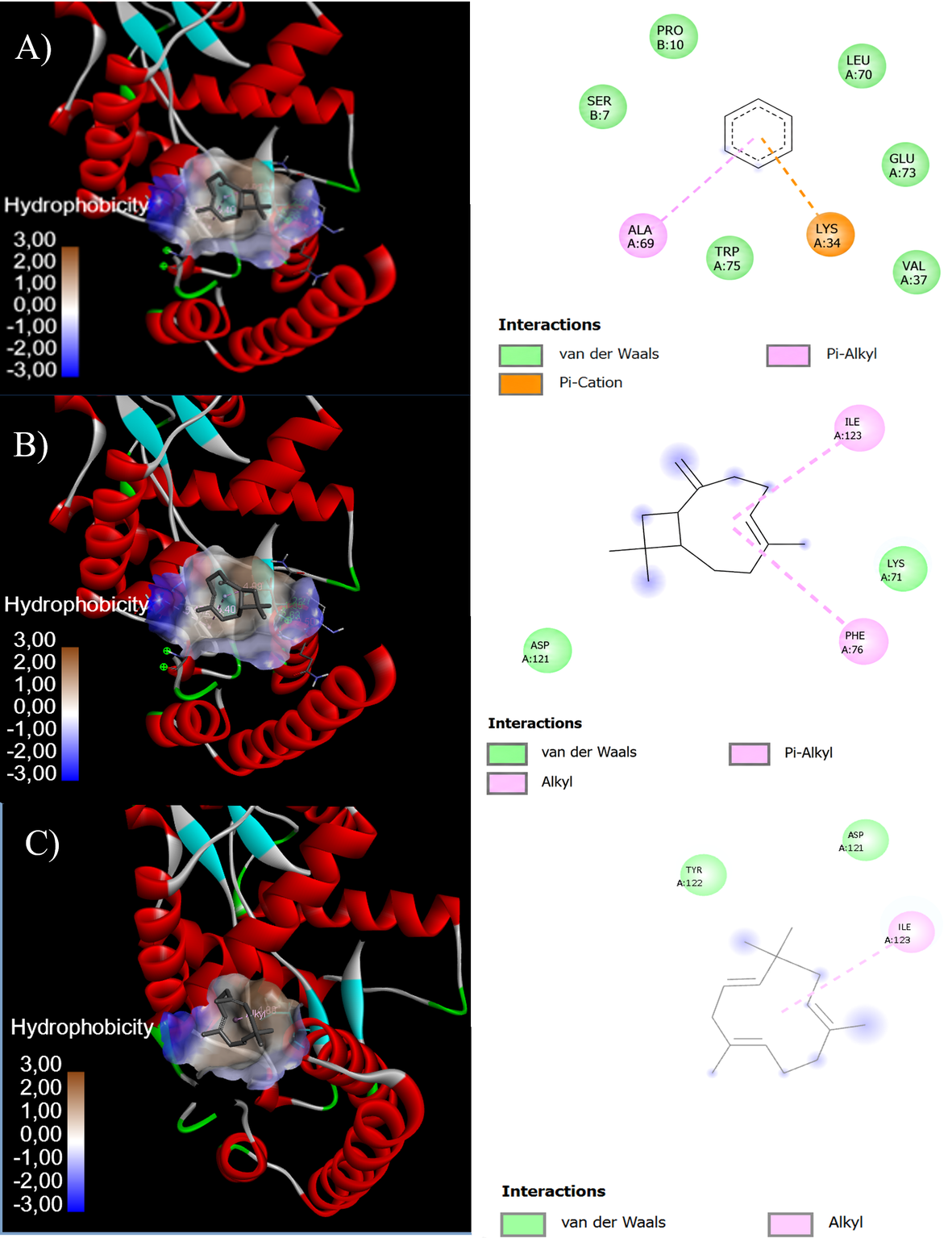
Molecular docking analyses determined the binding affinities of eugenol, caryophyllene, and humulene, the main components of clove essential oil, with acetylcholinesterase (AChE, PDB ID: 6XYY) and Varroa odorant-binding protein (OBP, PDB ID: 7NZA). For the AChE enzyme, the binding energies of eugenol, caryophyllene, and humulene were −6.483, −6.156, and −5.515 kcal/mol, respectively. For OBP, these values were −6.143, −6.487, and −6.334 kcal/mol, respectively. All ligands formed more than one binding conformation with both proteins, and the conformations with the lowest binding energy were considered the most suitable binding modes. The two-dimensional (2D) and three-dimensional (3D) protein–ligand interaction profiles are shown in Figure 4 and Figure 5.
Protein-Protein Interaction (PPI) analysis results
PPI analysis using the expanded STRING database identified the AChE protein as a central hub interacting with numerous proteins. Notably, its interactions with proteins involved in neurotransmission and members of the esterase family indicate that AChE plays a significant role in synaptic transmission. In contrast, the interaction network for OBP proteins exhibited a broader and denser structure. Strong activation and utilization of OBP family proteins were observed alongside chemoreceptor systems, particularly with CSP proteins. This suggests that OBPs are part of a system that cooperates in olfactory perception and chemical signal transmission (Figure 6).
In silico ADMET and toxicity analysis
A comprehensive in silico evaluation of the physicochemical, pharmacokinetic, and toxicity profiles of the major clove oil constituents is presented in Table 3. The results indicate that caryophyllene and humulene have greater lipophilicity, which may enhance their ability to penetrate the cuticular barrier of Varroa destructor. In contrast, eugenols show a more balanced physicochemical profile with increased hydrogen bonding capacity. All compounds were predicted to have high gastrointestinal absorption and blood-brain barrier permeability, supporting their potential to interact with neural targets such as AChE. Toxicity analysis showed that all compounds were non-mutagenic and non-carcinogenic, but differences were observed in bee toxicity and acute toxicity levels. Notably, eugenol was predicted to be safe for bees, whereas caryophyllene and humulene exhibited higher toxicity, suggesting potential selectivity towards target organisms.
Download as *LogP, octanol-water partition coefficient; GI, gastrointestinal; BBB, blood-brain barrier; Caco-2, human epithelial colorectal adenocarcinoma cell line permeability model; CYP3A4, cytochrome P450 3A4; P-gp, P-glycoprotein; AMES, Ames mutagenicity test; LD50, median lethal dose; Non-c, Non-carcinogenic.
Property
Eugenol
Caryophyllene
Humulene
Molecular Weight (g/mol)
164.20
204.35
204.35
LogP
2.2
5.96
6.64
H-bond Donor
1
0
0
H-bond Acceptor
2
0
0
Rotatable Bonds
3
0
0
GI Absorption
High
High
High
BBB Permeability
Yes
Yes
Yes
Caco-2 Permeability (log cm/s)
-4.48
-4.45
-4.34
CYP3A4 Inhibition
No
No
No
P-gp Substrate
No
No
No
AMES Mutagenicity
Non-toxic
Non-toxic
Non-toxic
Carcinogenicity
Non-c
Non-c
Non-c
Micronucleus Toxicity
No
No
No
Irritation Potential
No
Yes
Yes
Acute Toxicity (LD50, log mol/kg)
2.06
1.46
1.77
Bee Toxicity
Safe
Toxic
Toxic
Biodegradability
Safe
Safe
Safe
Discussion
This study is among the few that evaluate the effect of clove oil nanoemulsions (NEms) on Varroa destructor under both real field conditions and at the molecular level. Notably, the inclusion of the nanoformulation approach, together with its interactions with critical target proteins such as acetylcholinesterase (AChE) and odorant binding protein (OBP), provides a more comprehensive explanation of both the biological activity and the underlying mechanisms. In this regard, the study goes beyond traditional acaricide efficacy research, offering an integrated perspective on how nanoscale carrier systems modulate biological activity at both experimental and in silico levels. Furthermore, by contributing to the limited research on the field performance of essential oils, it provides important evidence for the applicability of NEm-based approaches in Varroa control. Honey bees are among the most ecologically and economically important pollinators worldwide, playing a fundamental role in the sustainability of food production and biodiversity (Warner et al. 2024). However, V. destructor mites are one of the main causes of colony losses observed in recent years (Insolia et al. 2022). The development of resistance in this parasite to common acaricides (Underwood and López-Uribe 2022) and the disadvantages of chemical control methods, such as residues, toxicity, and behavioral effects (Mullin et al. 2010), increase the need for alternative and sustainable control strategies (Noël, Le Conte and Mondet 2020). Recent reviews have emphasized that sustainable Varroa management should not rely solely on chemical treatments but should integrate routine colony monitoring, accurate diagnosis of infestation levels, and alternative control tools within an integrated pest management (IPM) framework (Dietemann et al. 2013). Furthermore, plant-derived compounds are increasingly recognized as promising complementary acaricides because of their multiple modes of action and reduced risk of chemical residues (Hỳbl et al. 2021; Bava et al. 2023b). In this context, plant-derived essential oils are attracting attention due to their eco-friendly nature, low residue risk, and multifaceted mechanisms of action (Pavela 2015; Shalaby et al. 2016). The effects of essential oils on mites include nervous system inhibition, developmental suppression, and behavioral changes (Akhtar and Isman 2004). Clove oil, in particular, has been identified as a potent biopesticide capable of causing high mortality in Varroa mites (Gashout and Guzmán-Novoa 2009). The findings of this study demonstrate that the acaricidal effect of clove oil-based NEms on Varroa mites is closely related not only to the formulation properties but also to the molecular-level interactions of the components. The efficacy rates, ranging from 65.2% to 78.1%, show that biological efficacy increases with dose, and the highest efficacy at 200 ppm supports a dose-dependent response. Because treatment efficacy can only be interpreted reliably when infestation levels are accurately determined, standardized diagnostic methods remain an essential prerequisite for evaluating and comparing Varroa control strategies under field conditions (Dietemann et al. 2013; Bava et al. 2023b).
This is consistent with studies reporting a correlation between increasing dose and greater mite reduction (Conti et al. 2020). In this study, an efficacy level of 43.5% was observed in the flumethrin group used as a positive control. This relatively low efficacy aligns with resistance levels of 51-94% reported in recent studies from different regions of Türkiye (Yarsan et al. 2024). Many studies have shown that V. destructor acquires resistance to this compound by developing various mutations (Alissandrakis, Ilias and Tsagkarakou 2017; González-Cabrera et al. 2018; Almecija et al. 2022; Benito-Murcia et al. 2022). This indicates that the efficacy of synthetic acaricides may be decreasing and highlights the need for alternative control strategies. Similar conclusions have been reached in recent reviews, which suggest that increasing acaricide resistance reinforces the importance of incorporating botanical products and other non-chemical approaches into integrated Varroa management programs (Bava et al. 2023b; Bava et al. 2022). In this context, the higher efficacy of NEm formulations compared to flumethrin suggests that these systems may be not only an alternative but also a more effective control approach. The increase in mite population (-22.6%) in the negative control group is consistent with previous findings showing that Varroa populations multiply rapidly under natural conditions (Akyol and Yeninar 2008; Narciso et al. 2024). The advantages offered by NEm formulations are considered one of the main reasons for their high efficacy. NEms increase bioavailability by overcoming the limitations of essential oils, such as low water solubility and high volatility (Singh et al. 2017). The average droplet size of 249.5 nm obtained in our study is consistent with values reported in the literature (Durmus et al. 2019; Tang et al. 2019). Although the average droplet size (249.5 nm) is slightly higher than the values generally reported for highly monodisperse nanoemulsions (>200 nm, PDI >0.3), it still falls within the nanoemulsion size range (20–500 nm) described in the literature (Demisli et al. 2020). The increase in surface area and improved contact with the target organism due to the reduction in droplet size may have enhanced biological efficacy (Leong et al. 2009). However, the PDI value of 0.553 indicates that the system is not completely homogeneous, which may contribute to variation in efficacy. The effect of NEms is not limited to physical properties; these systems also enhance biochemical mechanisms of action by providing better penetration of active compounds (Campolo et al. 2020).
The acaricidal effects of essential oils involve mechanisms such as induction of oxidative stress, enzyme inhibition, and disruption of cellular structures (Benelli 2018). Specifically, inhibition of the acetylcholinesterase (AChE) enzyme leads to impaired synaptic transmission, resulting in a neurotoxic effect (Asnaashari, Jahanban-Esfahlan and Amarowicz 2025). In this context, the selection of AChE as the target protein in our study is strongly supported by the literature. Molecular docking results showed that eugenol, caryophyllene, and humulene exhibited significant binding affinities with both AChE and OBP proteins. The calculated binding energy of -6.483 kcal/mol for eugenol is consistent with values reported in the literature (Brahmi et al. 2025). Similarly, these values are in line with those reported for caryophyllene, ranging from -6.2 to -8.1 kcal/mol (Sun et al. 2023; Salihu, Salleh and Ogunwa 2024). These results support the possibility that these compounds may affect neurological targets. Furthermore, the presence of hydrogen bonds, hydrophobic interactions, and π-interactions enhances the stability of ligand-protein complexes, thereby strengthening biological activity (Rafik et al. 2024; Yuriy et al. 2024).
Binding results obtained with OBP proteins indicate that essential oil components can produce both toxic and behavioral effects. OBPs are essential components of the olfactory perception system in insects (Brito, Moreira and Melo 2016), and interaction with these proteins can alter the orientation and behavior of pests. However, the literature emphasizes that OBP binding alone does not guarantee biological activity, and that the binding mode and site are decisive (Tsitsanou et al. 2012; Drakou et al. 2017). Therefore, while the results indicate a potential mechanism of action, experimental confirmation is required. The identification of eugenol as the dominant component at 64.55% in the GC-MS analysis explains the main source of the acaricidal effect of clove oil. The strong acaricidal effects of eugenol (Bakry et al. 2016) and its AChE inhibitory activity (Dalai et al. 2014) are consistent with the high efficacy observed in this study. Furthermore, ADMET analyses show that eugenol may be selective against target organisms due to its balanced lipophilicity and low toxicity profile (Bruna et al. 2022; Touhtouh et al. 2023). In contrast, the higher lipophilicity of caryophyllene and humulene may allow them to penetrate the mite cuticle more easily, supporting a synergistic effect. The findings regarding the timing of application are also noteworthy. The observation of the highest mite reduction on the first day after application indicates that the essential oils have a rapid but short-lived effect. This is consistent with the immediate mechanism of action reported in the literature (Güneşdoğdu and Abaci 2025). However, the decrease in effectiveness over time indicates the need for repeated doses in such applications. Factors affecting effectiveness under field conditions should also not be overlooked. V. destructor population dynamics vary depending on the presence of offspring and environmental conditions (Smoliński, Langowska and Glazaczow 2021). Furthermore, intercolony drift and robbing behaviors can facilitate the spread of mites, leading to re-infestation (Peck and Seeley 2019). This explains the increase observed, particularly in the negative control group, and strengthens the biological significance of the results.
From a practical perspective, the low-cost production potential and natural origin of NEms offer significant advantages (Çiçek, Korkmaz and Işik 2024). However, the time-consuming application process and the difficulty in achieving homogeneous distribution can be limiting factors, especially in strong colonies. Additionally, the need for repeated application due to short-term effectiveness should be considered in terms of labor and cost.
Limitations
This study has several important limitations. First, the lack of a formulation blank control (Tween 80, ethanol, and water without essential oil) represents a limitation, as it prevents clear attribution of the observed effects exclusively to the essential oil, rather than to the carrier system or formulation-related physical effects (Islam et al. 2020). Another limitation is that the nanoemulsion was prepared, characterized, and used in field trials at different institutions, which necessitated sample transportation prior to physicochemical characterization. It cannot be ruled out that sample transportation may have had a limited effect on droplet size and polydispersity index (PDI). Therefore, in future studies, performing both formulation and characterization in the same laboratory is expected to yield a more homogeneous droplet size distribution. Furthermore, as also overlooked in previous studies (Ozogul et al. 2017; Durmus et al. 2019), the absence of GC-MS analysis of the final nanoemulsion after ethanol removal constitutes a limitation. This step could have provided a more accurate confirmation of the chemical stability and eugenol content of the final formulation; thus, in future studies, the inclusion of post-formulation GC-MS verification is recommended to achieve more robust chemical characterization.
Second, the study was conducted in a single apiary and during one seasonal period, which restricts the generalizability of the results to other ecological conditions. Given the seasonal variability of Varroa population dynamics (Jack et al. 2023) and intercolony mite transfer (Goodwin et al. 2006), field results should be interpreted with caution, as this methodological limitation may affect efficacy calculations. In addition, the potential effects of NEm applications on bees, brood development, queen performance, and hive products have not been evaluated. Therefore, the findings should be interpreted only in terms of acaricidal efficacy, and future studies should include both safety and long-term field performance.
Finally, molecular docking analysis was employed in this study to provide a comparative preliminary assessment of ligand–protein interactions. All ligands were analyzed under identical parameters and conditions to ensure the relative comparability of the results. Although the docking protocol was not supported by classical validation steps such as redocking—partly due to limitations in the available laboratory infrastructure and computational resources—the findings should nevertheless be interpreted in terms of the relative binding tendencies of the ligands rather than absolute binding accuracy.
In conclusion, clove oil-based NEms appear to be an effective biopesticide candidate against Varroa mites, with efficacy supported by both physical (nano-size, increased surface area) and molecular (AChE inhibition, OBP interactions) mechanisms. The findings of this study are supported by applications under field conditions (colony level) and present promising results regarding the usability of NEm formulations in practical beekeeping. However, evaluating efficacy in different geographical regions, under varying climatic conditions, and in long-term applications is important to demonstrate the generalizability of this approach.
Conclusion
This study demonstrated that clove oil-based nanoemulsions (NEms) exhibited effective acaricidal activity against Varroa destructor under field conditions. The results indicate that efficacy increased, particularly at higher doses, and that the NEm formulation enhanced biological activity. Molecular docking analyses confirmed interactions of the main components with AChE and OBP proteins, revealing that the effect is based on both physical and molecular mechanisms. These findings suggest that clove oil NEms could be an eco-friendly and effective alternative for Varroa control. However, further studies under different field conditions and with long-term applications are important to support the generalizability of this approach.
Declarations
Author contributions
Conceptualization, methodology, resources, data curation, formal analysis, writing, review, and visualization were all performed by I.Y.B.
Funding
This research received no external funding.
Institutional review board statement
Not applicable.
Data availability statement
The original contributions presented in this study are included in the article. Further inquiries can be directed to the corresponding author.
Conflicts of interest
The author declares that the research was conducted in the absence of any commercial or financial relationships that could be construed as a potential conflict of interest.
References
- Abdelgaleil S.A.M., Gad H.A., Ramadan G.R.M., El-Bakry A.M., El-Sabrout A.M. 2024 . Monoterpenes: chemistry, insecticidal activity against stored product insects and modes of action-a review. International Journal of Pest Management, 70(3): 267-289. https://doi.org/10.1080/09670874.2021.1982067
- Akhtar Y., Isman M.B. 2004 . Comparative growth inhibitory and antifeedant effects of plant extracts and pure allelochemicals on four phytophagous insect species. J Applied Entomology, 128(1): 32-38. https://doi.org/10.1046/j.1439-0418.2003.00806.x
- Akyol E., Özkök D. 2005 . Varroa (Varroa destructor) mücadelesinde organik asitlerin kullanımı. Uludag Bee Journal, 5(4): 167-174.
- Akyol E., Yeninar H. 2008 . Controlling Varroa destructor (Acari: Varroidae) in honeybee Apis mellifera (Hymenoptera: Apidae) colonies by using Thymovar® and BeeVital®. Italian Journal of Animal Science, 7(2): 237-242. https://doi.org/10.4081/ijas.2008.237
- Alissandrakis E., Ilias A., Tsagkarakou A. 2017 . Pyrethroid target site resistance in Greek populations of the honey bee parasite Varroa destructor (Acari: Varroidae). Journal of Apicultural Research, 56(5): 625-630. https://doi.org/10.1080/00218839.2017.1368822
- Almecija G., Schimmerling M., Del Cont A., Poirot B., Duquesne V. 2022 . Varroa destructor resistance to TAU ‐FLUVALINATE \,: relationship between in vitro phenotypic test and VGSC L925V mutation. Pest Management Science, 78(12): 5097-5105. https://doi.org/10.1002/ps.7126
- Annoscia D., Del Piccolo F., Nazzi F. 2012 . How does the mite Varroa destructor kill the honeybee Apis mellifera? Alteration of cuticular hydrcarbons and water loss in infested honeybees. Journal of insect physiology, 58(12): 1548-1555. https://doi.org/10.1016/j.jinsphys.2012.09.008
- Asnaashari S., Jahanban‐Esfahlan A., Amarowicz R. 2025 . Harnessing Essential Oils for Acetylcholinesterase Inhibition: A Literature Review. Phytotherapy Research, 39(6): 2915-2988. https://doi.org/10.1002/ptr.8512
- Attia S., Grissa K.L., Lognay G., Bitume E., Hance T., Mailleux A.C. 2013 . A review of the major biological approaches to control the worldwide pest Tetranychus urticae (Acari: Tetranychidae) with special reference to natural pesticides: Biological approaches to control Tetranychus urticae. Journal of Pest Science, 86(3): 361-386. https://doi.org/10.1007/s10340-013-0503-0
- Bakry A.M., Abbas S., Ali B., Majeed H., Abouelwafa M.Y., Mousa A., Liang L. 2016 . Microencapsulation of Oils: A Comprehensive Review of Benefits, Techniques, and Applications. Comp Rev Food Sci Food Safe, 15(1): 143-182. https://doi.org/10.1111/1541-4337.12179
- Bava R., Castagna F., Carresi C., Cardamone A., Federico G., Roncada P., Palma E., Musella V., Britti D. 2022 . Comparison of Two Diagnostic Techniques for the Apis mellifera Varroatosis: Strengths, Weaknesses and Impact on the Honeybee Health. Veterinary sciences, 9(7): 354. https://doi.org/10.3390/vetsci9070354
- Bava R., Castagna F., Palma E., Marrelli M., Conforti F., Musolino V., Carresi C., Lupia C., Ceniti C., Tilocca B. 2023a . Essential oils for a sustainable control of honeybee varroosis. Veterinary Sciences, 10(5): 308. https://doi.org/10.3390/vetsci10050308
- Bava R., Castagna F., Ruga S., Nucera S., Caminiti R., Serra M., Bulotta R.M., Lupia C., Marrelli M., Conforti F. 2023b . Plants and their derivatives as promising therapeutics for sustainable control of honeybee (Apis mellifera) pathogens. Pathogens, 12(10): 1260. https://doi.org/10.3390/pathogens12101260
- Benelli G. 2018 . Mode of action of nanoparticles against insects. Environ Sci Pollut Res, 25(13): 12329-12341. https://doi.org/10.1007/s11356-018-1850-4
- Benito-Murcia M., Martín-Hernández R., Meana A., Botías C., Higes M. 2022 . Study of pyrethroid resistance mutations in populations of Varroa destructor across Spain. Research in Veterinary Science, 152: 34-37. https://doi.org/10.1016/j.rvsc.2022.07.021
- Boonmee T., Sinpoo C., Wongthaveethong L., Disayathanoowat T., Suanpoot P., Pettis J.S., Chaimanee V. 2024 . Properties of essential oils absorbed on the surface of cardboard pieces after using atmospheric-pressure plasma treatments to develop long-lasting Varroa miticides in honeybees (Apis mellifera). Plos one, 19(2): e0297980. https://doi.org/10.1371/journal.pone.0297980
- Brahmi M., Adli D.E.H., Kaoudj I., Alkholifi F.K., Arabi W., Sohbi S., Ziani K., Kahloula K., Slimani M., Sweilam S.H. 2025 . Chemical Composition, In Vivo, and In Silico Molecular Docking Studies of the Effect of Syzygium aromaticum (Clove) Essential Oil on Ochratoxin A-Induced Acute Neurotoxicity. Plants, 14(1): 130. https://doi.org/10.3390/plants14010130
- Brito N.F., Moreira M.F., Melo A.C.A. 2016 . A look inside odorant-binding proteins in insect chemoreception. Journal of Insect Physiology, 95: 51-65. https://doi.org/10.1016/j.jinsphys.2016.09.008
- Bruna F., Fernández K., Urrejola F., Touma J., Navarro M., Sepúlveda B., Larrazabal M., Paredes A., Neira I., Ferrando M., Osorio M., Yañez O., Bravo J. 2022 . Chemical composition, antioxidant, antimicrobial and antiproliferative activity of Laureliopsis philippiana essential oil of Chile, study in vitro and in silico. Arabian Journal of Chemistry, 15: 104271. https://doi.org/10.1016/j.arabjc.2022.104271
- Calderone N.W., Lin S. 2003 . Rapid determination of the numbers of Varroa destructor, a parasitic mite of the honey bee, Apis mellifera, on sticky-board collection devices. Apidologie, 34(1): 11-17. https://doi.org/10.1051/apido:2002042
- Campolo O., Giunti G., Laigle M., Michel T., Palmeri V. 2020 . Essential oil-based nano-emulsions: Effect of different surfactants, sonication and plant species on physicochemical characteristics. Industrial Crops and Products, 157: 112935. https://doi.org/10.1016/j.indcrop.2020.112935
- Candy K., Akhoundi M., Andriantsoanirina V., Durand R., Bruel C., Izri A. 2020 . Essential Oils as a Potential Treatment Option for Pediculosis. Planta Med, 86(09): 619-630. https://doi.org/10.1055/a-1161-9189
- Chromzadeh A., Ziaee M., Kocheili F., Sourestani M.M. 2026 . Preparation and characterization of palm oil microemulsion and evaluation the insecticidal activity against Tribolium confusum and Rhyzopertha dominica. Journal of Stored Products Research, 115: 102849. https://doi.org/10.1016/j.jspr.2025.102849
- Çiçek S., Korkmaz Y.B., Işik S. 2024 . A new economical route for the grapefruit peel essential oil: Nanoemulsion form and insecticidal activity. South African Journal of Botany, 169: 56-65. https://doi.org/10.1016/j.sajb.2024.04.005
- Çolak H., Durmuş M., Küley E., Köşker A.R., Sakarya Y., Esatbeyoglu T., Özogul F. 2026 . Application of juniper (Juniperus communis) essential oil nanoemulsions to control spoilage and pathogenic bacteria in fish. Front. Microbiol., 17. https://doi.org/10.3389/fmicb.2026.1758540
- Conti B., Bocchino R., Cosci F., Ascrizzi R., Flamini G., Bedini S. 2020 . Essential oils against Varroa destructor\,: a soft way to fight the parasitic mite of Apis mellifera. Journal of Apicultural Research, 59(5): 774-782. https://doi.org/10.1080/00218839.2020.1790790
- Daina A., Michielin O., Zoete V. 2017 . SwissADME: a free web tool to evaluate pharmacokinetics, drug-likeness and medicinal chemistry friendliness of small molecules. Sci Rep, 7(1): 42717. https://doi.org/10.1038/srep42717
- Dalai M.K., Bhadra S., Chaudhary S.K., Bandyopadhyay A., Mukherjee P.K. 2014 . Anti-cholinesterase activity of the standardized extract of Syzygium aromaticum L. Pharmacognosy magazine, 10(Suppl 2): S276. https://doi.org/10.4103/0973-1296.133275
- Damiani N., Gende L.B., Maggi M.D., Palacios S., Marcangeli J.A., Eguaras M.J. 2011 . Repellent and acaricidal effects of botanical extracts on Varroa destructor. Parasitol Res, 108(1): 79-86. https://doi.org/10.1007/s00436-010-2043-3
- Demisli S., Mitsou E., Pletsa V., Xenakis A., Papadimitriou V. 2020 . Development and Study of Nanoemulsions and Nanoemulsion-Based Hydrogels for the Encapsulation of Lipophilic Compounds. Nanomaterials, 10(12): 2464. https://doi.org/10.3390/nano10122464
- Dietemann V., Nazzi F., Martin S.J., Anderson D.L., Locke B., Delaplane K.S., Wauquiez Q., Tannahill C., Frey E., Ziegelmann B., Rosenkranz P., Ellis J.D. 2013 . Standard methods for varroa research. Journal of Apicultural Research, 52(1): 1-54. https://doi.org/10.3896/IBRA.1.52.1.09
- Drakou C.E., Tsitsanou K.E., Potamitis C., Fessas D., Zervou M., Zographos S.E. 2017 . The crystal structure of the AgamOBP1•Icaridin complex reveals alternative binding modes and stereo-selective repellent recognition. Cell. Mol. Life Sci., 74(2): 319-338. https://doi.org/10.1007/s00018-016-2335-6
- Durmus M., Ozogul Y., Küley Boga E., Uçar Y., Kosker A.R., Balikci E., Gökdogan S. 2019 . The effects of edible oil nanoemulsions on the chemical, sensory, and microbiological changes of vacuum packed and refrigerated sea bass fillets during storage period at 2 ± 2 °C. J Food Process Preserv, 43(12). https://doi.org/10.1111/jfpp.14282
- Farina P., Giunti G., Campolo O., Maggi F., Ricciardi R., Lucchi A., Canale A., Pavela R., Guedes R.N.C., Desneux N. 2024 . Nano-and microformulated botanicals for managing ticks and mites of medical and veterinary importance: Past, present, and future. Industrial Crops and Products, 222: 119809. https://doi.org/10.1016/j.indcrop.2024.119809
- Gamal Eldin N.K., Ebeid A.A., Sallam A.E.-R.M., Basuny N.K., Elaidy W.Kh. 2024 . Efficacy of thymol nanoemulsion against Varroa destructor mites infesting Apis mellifera colonies under the stress of abiotic factors in Egypt. Egyptian Journal of Basic and Applied Sciences, 11(1): 626-643. https://doi.org/10.1080/2314808X.2024.2365562
- Gashout H.A., Guzmán-Novoa E. 2009 . Acute toxicity of essential oils and other natural compounds to the parasitic mite, Varroa destructor, and to larval and adult worker honey bees (Apis mellifera L.). Journal of Apicultural Research, 48(4): 263-269. https://doi.org/10.3896/IBRA.1.48.4.06
- Gökalp F. 2025 . Computational insights into the binding interactions of natural compounds with Varroa destructor targets. International Journal of Biological Macromolecules: 148688. https://doi.org/10.1016/j.ijbiomac.2025.148688
- González-Cabrera J., Bumann H., Rodríguez-Vargas S., Kennedy P.J., Krieger K., Altreuther G., Hertel A., Hertlein G., Nauen R., Williamson M.S. 2018 . A single mutation is driving resistance to pyrethroids in European populations of the parasitic mite, Varroa destructor. J Pest Sci, 91(3): 1137-1144. https://doi.org/10.1007/s10340-018-0968-y
- Goodwin R.M., Taylor M.A., Mcbrydie H.M., Cox H.M. 2006 . Drift of Varroa destructor-infested worker honey bees to neighbouring colonies. Journal of Apicultural Research, 45(3): 155-156. https://doi.org/10.1080/00218839.2006.11101335
- Güneşdoğdu M., Abaci S.H. 2025 . Evaluation of carvacrol (95%) for the management of parasitic bee mites, Varroa destructor. International Journal of Acarology, 51(2): 135-141. https://doi.org/10.1080/01647954.2025.2456037
- Günesdogdu M., Abaci S.H., Sekeroglu A. 2022 . The effect of oxalic and formic acids applied in different forms against the honey bee (Apis mellifera L.) parasite Varroa destructor in autumn.
- Güneşdoğdu M., Abacı S.H. 2026 . Acaricidal activity of Laurus nobilis L. against Varroa destructor: nanoemulsion and molecular docking. BMC Vet Res,. https://doi.org/10.1186/s12917-026-05669-4
- Hristov P., Shumkova R., Palova N., Neov B. 2020 . Factors associated with honey bee colony losses: A mini-review. Veterinary Sciences, 7(4): 166. https://doi.org/10.3390/vetsci7040166
- Hỳbl M., Bohatá A., Rádsetoulalová I., Kopeckỳ M., Hoštičková I., Vaníčková A., Mráz P. 2021 . Evaluating the efficacy of 30 different essential oils against Varroa destructor and honey bee workers (Apis mellifera). Insects, 12(11): 1045. https://doi.org/10.3390/insects12111045
- Insolia L., Molinari R., Rogers S.R., Williams G.R., Chiaromonte F., Calovi M. 2022 . Honey bee colony loss linked to parasites, pesticides and extreme weather across the United States. Scientific reports, 12(1): 20787. https://doi.org/10.1038/s41598-022-24946-4
- Islam N., Amjad M., Ehsan-ul-Haq, Naz F. 2020 . Comparative field efficiency of the extracts of plant materials for controlling Varroa destructor in relation to brood development in honey bee (Apis mellifera) colonies. Int. J. Biosci., 16(1): 126-138. https://doi.org/10.12692/ijb/16.1.126-138
- Isman M.B., Miresmailli S., Machial C. 2011 . Commercial opportunities for pesticides based on plant essential oils in agriculture, industry and consumer products. Phytochemistry reviews, 10(2): 197-204. https://doi.org/10.1007/s11101-010-9170-4
- Jack C.J., de Bem Oliveira I., Kimmel C.B., Ellis J.D. 2023 . Seasonal differences in Varroa destructor population growth in western honey bee (Apis mellifera) colonies. Front. Ecol. Evol., 11. https://doi.org/10.3389/fevo.2023.1102457
- Jack C.J., Ellis J.D. 2021 . Integrated pest management control of Varroa destructor (Acari: Varroidae), the most damaging pest of (Apis mellifera L.(Hymenoptera: Apidae)) colonies. Journal of Insect Science, 21(5): 6. https://doi.org/10.1093/jisesa/ieab058
- Karaca E.Ö., Gürbüz N., Demir Y., Tüzün B., Özdemir İ., Gulcin İ. 2024 . Synthesis of 1,3‐Disubtitituted Tetrahydropyrimidinium Salts and Determination of Their Biological Properties and Molecular Docking. ChemistrySelect, 9(19): e202304440. https://doi.org/10.1002/slct.202304440
- Karapetkovska-Hristova V., Treneski V., Pavlovic I., Mustafa K.S. 2024 . Assessing the efficacy of organic and chemical treatments for Varroa mite control in Macedonian apiaries. Research Journal of Biotechnology, 19(9): 47-55. https://doi.org/10.25303/1909rjbt047055
- Kim S., Yoon K.A., Cho S., Lee J., Lim Y., Lee S.H. 2022 . Molecular and kinetic properties of three acetylcholinesterases in the Varroa mite, Varroa destructor. Pesticide Biochemistry and Physiology, 188: 105277. https://doi.org/10.1016/j.pestbp.2022.105277
- Leong T.S.H., Wooster T.J., Kentish S.E., Ashokkumar M. 2009 . Minimising oil droplet size using ultrasonic emulsification. Ultrasonics Sonochemistry, 16(6): 721-727. https://doi.org/10.1016/j.ultsonch.2009.02.008
- Ligor M., Stankevičius M., Wenda-Piesik A., Obelevičius K., Ragažinskienė O., Stanius Ž., Maruška A., Buszewski B. 2014 . Comparative Gas Chromatographic-Mass Spectrometric Evaluation of Hop (Humulus lupulus L.) Essential Oils and Extracts Obtained Using Different Sample Preparation Methods. Food Anal. Methods, 7(7): 1433-1442. https://doi.org/10.1007/s12161-013-9767-5
- Lin Z., Su X., Wang S., Ji T., Hu F.-L., Zheng H.-Q. 2020 . Fumigant toxicity of eleven Chinese herbal essential oils against an ectoparasitic mite (Varroa destructor) of the honey bee (Apis mellifera). Journal of Apicultural Research, 59(2): 204-210. https://doi.org/10.1080/00218839.2019.1688493
- Lindberg C.M., Melathopoulos A.P., Winston M.L. 2000 . Laboratory evaluation of miticides to control Varroa jacobsoni (Acari: Varroidae), a honey bee (Hymenoptera: Apidae) parasite. Journal of economic entomology, 93(2): 189-198. https://doi.org/10.1603/0022-0493-93.2.189
- Manna S., Roy S., Dolai A., Ravula A.R., Perumal V., Das A. 2023 . Current and future prospects of ''all-organic» nanoinsecticides for agricultural insect pest management. Frontiers in Nanotechnology, 4: 1082128. https://doi.org/10.3389/fnano.2022.1082128
- Mfarrej M.F.B., Rara F.M. 2019 . Competitive, Sustainable Natural Pesticides. Acta Ecologica Sinica, 39(2): 145-151. https://doi.org/10.1016/j.chnaes.2018.08.005
- Morfin N., Harpur B.A., De la Mora A., Guzman-Novoa E. 2023 . Breeding honey bees (Apis mellifera L.) for low and high Varroa destructor population growth: Gene expression of bees performing grooming behavior. Frontiers in Insect Science, 3: 951447. https://doi.org/10.3389/finsc.2023.951447
- Morris G.M., Huey R., Lindstrom W., Sanner M.F., Belew R.K., Goodsell D.S., Olson A.J. 2009 . AutoDock4 and AutoDockTools4: Automated docking with selective receptor flexibility. J Comput Chem, 30(16): 2785-2791. https://doi.org/10.1002/jcc.21256
- Mullin C.A., Frazier M., Frazier J.L., Ashcraft S., Simonds R., VanEngelsdorp D., Pettis J.S. 2010 . High levels of miticides and agrochemicals in North American apiaries: implications for honey bee health. PloS One, 5(3): e9754. https://doi.org/10.1371/journal.pone.0009754
- Myung Y., de Sá A.G.C., Ascher D.B. 2024 . Deep-PK: deep learning for small molecule pharmacokinetic and toxicity prediction. Nucleic Acids Res, 52(W1): W469-W475. https://doi.org/10.1093/nar/gkae254
- Narciso L., Topini M., Ferraiuolo S., Ianiro G., Marianelli C. 2024 . Effects of natural treatments on the varroa mite infestation levels and overall health of honey bee (Apis mellifera) colonies. PloS One, 19(5): e0302846. https://doi.org/10.1371/journal.pone.0302846
- Noël A., Le Conte Y., Mondet F. 2020 . Varroa destructor: how does it harm Apis mellifera honey bees and what can be done about it? Emerging Topics in Life Sciences, 4(1): 45-57. https://doi.org/10.1042/ETLS20190125
- Osanloo M., Sedaghat M.M., Esmaeili F., Amani A. 2018 . Larvicidal activity of essential oil of Syzygium aromaticum (Clove) in comparison with its major constituent, eugenol, against Anopheles stephensi. Journal of arthropod-borne diseases, 12(4): 361. https://doi.org/10.18502/jad.v12i4.354
- Ozogul Y., Yuvka İ., Ucar Y., Durmus M., Kösker A.R., Öz M., Ozogul F. 2017 . Evaluation of effects of nanoemulsion based on herb essential oils (rosemary, laurel, thyme and sage) on sensory, chemical and microbiological quality of rainbow trout (Oncorhynchus mykiss) fillets during ice storage. Lwt, 75: 677-684. https://doi.org/10.1016/j.lwt.2016.10.009
- Papachristos D.P., Stamopoulos D.C. 2002 . Repellent, toxic and reproduction inhibitory effects of essential oil vapours on Acanthoscelides obtectus (Say)(Coleoptera: Bruchidae). Journal of stored products research, 38(2): 117-128. https://doi.org/10.1016/S0022-474X(01)00007-8
- Pavela R. 2015 . Essential oils for the development of eco-friendly mosquito larvicides: A review. Industrial crops and products, 76: 174-187. https://doi.org/10.1016/j.indcrop.2015.06.050
- Peck D.T., Seeley T.D. 2019 . Mite bombs or robber lures? The roles of drifting and robbing in Varroa destructor transmission from collapsing honey bee colonies to their neighbors. PLOS ONE, 14(6): e0218392. https://doi.org/10.1371/journal.pone.0218392
- Preeti, Sambhakar S., Malik R., Bhatia S., Al Harrasi A., Rani C., Saharan R., Kumar S., Geeta, Sehrawat R. 2023 . Nanoemulsion: An Emerging Novel Technology for Improving the Bioavailability of Drugs. Scientifica, 2023: 1-25. https://doi.org/10.1155/2023/6640103
- Rafik A., Tüzün B., Zouihri H., EL Ammari L., Safi Z.S., Wazzan N.A., Guedira T. 2024 . Crystal growth, morphological, mechanical, spectroscopic studies, optical properties, molecular docking, ADME/T, Hirshfeld surfaces analysis and theoretical calculations of hybrid organic-inorganic phosphate compound. Inorganic Chemistry Communications, 160: 111828. https://doi.org/10.1016/j.inoche.2023.111828
- Regnault-Roger C., Vincent C., Arnason J.T. 2012 . Essential Oils in Insect Control: Low-Risk Products in a High-Stakes World. Annu. Rev. Entomol., 57(1): 405-424. https://doi.org/10.1146/annurev-ento-120710-100554
- Salihu A.S., Salleh W.M.N.H.W., Ogunwa T.H. 2024 . Chemical composition, acetylcholinesterase inhibition and molecular docking studies of essential oil from Knema hookeriana Warb. (Myristicaceae). Natural Product Research, 38(14): 2516-2521. https://doi.org/10.1080/14786419.2023.2184359
- Sammataro D., Degrandi-Hoffman G., Needham G., Wardell G. 1998 . Some volatile plant oils as potential control agents for Varroa mites (Acari: Varroidae) in honey bee colonies (Hymenoptera: Apidae).
- Sengottayan S.-N. 2013 . Physiological and biochemical effect of neem and other Meliaceae plants secondary metabolites against Lepidopteran insects. Frontiers in physiology, 4: 359. https://doi.org/10.3389/fphys.2013.00359
- Seven-Çakmak S. 2017 . Bal arisi (Apis mellifera anatoliaca) kolonilerinde pudra şekeri yöntemi ile varroa (Varroa destructor) bulaşiklik seviyesinin belirlenmesi ve koloni seçimi. Uludağ Arıcılık Dergisi, 17(1): 7-23. https://doi.org/10.31467/uluaricilik.373723
- Shalaby H.A., El Khateeb R.M., El Namaky A.H., Ashry H.M., Kandil O.M., Abou El Dobal S.K. 2016 . Larvicidal activity of camphor and lavender oils against sheep blowfly, Lucilia sericata (Diptera: Calliphoridae). Journal of parasitic diseases, 40(4): 1475-1482. https://doi.org/10.1007/s12639-015-0715-8
- Singh Y., Meher J.G., Raval K., Khan F.A., Chaurasia M., Jain N.K., Chourasia M.K. 2017 . Nanoemulsion: Concepts, development and applications in drug delivery. Journal of Controlled Release, 252: 28-49. https://doi.org/10.1016/j.jconrel.2017.03.008
- Smoliński S., Langowska A., Glazaczow A. 2021 . Raised seasonal temperatures reinforce autumn Varroa destructor infestation in honey bee colonies. Sci Rep, 11(1): 22256. https://doi.org/10.1038/s41598-021-01369-1
- Sun Z., Su X., Lin Y., Long C., Zhang Y., Zhao T. 2023 . Chemical Composition, and Antioxidant and Cholinesterase Inhibitory Activities of Lindera glauca Fruit Essential Oil and Molecular Docking Studies of Six Selected Compounds. Horticulturae, 9(2): 289. https://doi.org/10.3390/horticulturae9020289
- Szklarczyk D., Kirsch R., Koutrouli M., Nastou K., Mehryary F., Hachilif R., Gable A.L., Fang T., Doncheva N.T., Pyysalo S., Bork P., Jensen L.J., von Mering C. 2023 . The STRING database in 2023: protein-protein association networks and functional enrichment analyses for any sequenced genome of interest. Nucleic Acids Res, 51(D1): D638-D646. https://doi.org/10.1093/nar/gkac1000
- Takadaş F., Ozogul F., Ucar Y., Kuley E., Durmuş M., Köşker A.R., Sakarya Y., Özkütük S.T., Yılmaz N., Zhang Z. 2026 . Comparative Study of Extraction Techniques and Concentration Effects in Olive Leaf Nanoemulsions with Application on Sea bass (Dicentrarchus labrax). Food Bioscience: 108459. https://doi.org/10.1016/j.fbio.2026.108459
- Takeda N., Takata A., Arai Y., Sasaya K., Noyama S., Wakisaka S., Ghazy N.A., Voigt D., Suzuki T. 2020 . A vegetable oil-based biopesticide with ovicidal activity against the two‐spotted spider mite, Tetranychus urticae Koch. Engineering in Life Sciences, 20(11): 525-534. https://doi.org/10.1002/elsc.202000042
- Tang D., Chen M., Huang X., Zhang G., Zeng L., Zhang G., Wu S., Wang Y. 2023 . SRplot: A free online platform for data visualization and graphing. PLOS ONE, 18(11): e0294236. https://doi.org/10.1371/journal.pone.0294236
- Tang Y., Zhou Y., Lan X., Huang D., Luo T., Ji J., Mafang Z., Miao X., Wang H., Wang W. 2019 . Electrospun Gelatin Nanofibers Encapsulated with Peppermint and Chamomile Essential Oils as Potential Edible Packaging. J. Agric. Food Chem., 67(8): 2227-2234.
- Tapera M., Kekeçmuhammed H., Tüzün B., Daştan S.D., Celik M.S., Taslimi P., Dastan T., Topcu K.S.B., Cacan E., Şahin O. 2024 . Novel 1, 2, 4-triazole-maleamic acid derivatives: synthesis and evaluation as anticancer agents with carbonic anhydrase inhibitory activity. Journal of Molecular Structure, 1313: 138680. https://doi.org/10.1016/j.molstruc.2024.138680
- Tirello P., Pozzebon A., Cassanelli S., Van Leeuwen T., Duso C. 2012 . Resistance to acaricides in Italian strains of Tetranychus urticae: toxicological and enzymatic assays. Experimental and applied acarology, 57(1): 53-64. https://doi.org/10.1007/s10493-012-9536-y
- Touhtouh J., Laghmari M., Benali T., Aanniz T., Lemhadri A., Akhazzane M., Habbadi K., Bouyahya A., Zengin G., Hammani K. 2023 . Determination of the antioxidant and enzyme-inhibiting activities and evaluation of selected terpenes' ADMET properties: in vitro and in silico approaches. Biochemical Systematics and Ecology, 111: 104733.
- Traynor K.S., Mondet F., de Miranda J.R., Techer M., Kowallik V., Oddie M.A., Chantawannakul P., McAfee A. 2020 . Varroa destructor: A complex parasite, crippling honey bees worldwide. Trends in parasitology, 36(7): 592-606. https://doi.org/10.1016/j.pt.2020.04.004
- Trott O., Olson A.J. 2010 . AutoDock Vina: Improving the speed and accuracy of docking with a new scoring function, efficient optimization, and multithreading. J Comput Chem, 31(2): 455-461. https://doi.org/10.1002/jcc.21334
- Tsitsanou K.E., Thireou T., Drakou C.E., Koussis K., Keramioti M.V., Leonidas D.D., Eliopoulos E., Iatrou K., Zographos S.E. 2012 . Anopheles gambiae odorant binding protein crystal complex with the synthetic repellent DEET: implications for structure-based design of novel mosquito repellents. Cell. Mol. Life Sci., 69(2): 283-297. https://doi.org/10.1007/s00018-011-0745-z
- Underwood R., López-Uribe M. 2022 . Methods to control Varroa mites: An integrated pest management approach.
- Warner S., Pokhrel L.R., Akula S.M., Ubah C.S., Richards S.L., Jensen H., Kearney G.D. 2024 . A scoping review on the effects of Varroa mite (Varroa destructor) on global honey bee decline. Science of the total environment, 906: 167492. https://doi.org/10.1016/j.scitotenv.2023.167492
- Xu Z., Zhu J., Zhao J., Zhu X., Liu X. 2024 . Essential oil of Hygrophila salicifolia (Vahl) Nees: Chemical composition, evaluation of antioxidant activity, anti-acetylcholinesterase and anti-α-glucosidase activities integrating molecular docking, and network pharmacology analysis. Industrial Crops and Products, 220: 119278. https://doi.org/10.1016/j.indcrop.2024.119278
- Yarsan E., Yilmaz F., Sevin S., Akdeniz G., Celebi B., Ozturk S.H., Ayikol S.N., Karatas U., Ese H., Fidan N., Agacdiken B., Babur C., Buldag M., Pehlivan S. 2024 . Investigation of resistance against to flumethrin using against Varroa destructor in Türkiye. Vet Res Commun, 48(3): 1683-1696. https://doi.org/10.1007/s11259-024-10351-x
- Yuriy K., Kusdemir G., Volodymyr P., Tüzün B., Taslimi P., Karatas O.F., Anastasia K., Maryna P., Sayın K. 2024 . A biochemistry‐oriented drug design: synthesis, anticancer activity, enzymes inhibition, molecular docking studies of novel 1,2,4-triazole derivatives. Journal of Biomolecular Structure and Dynamics, 42(3): 1220-1236. https://doi.org/10.1080/07391102.2023.2253906
- Zhang Y., Liu X., Wang Y., Jiang P., Quek S. 2016 . Antibacterial activity and mechanism of cinnamon essential oil against Escherichia coli and Staphylococcus aureus. Food control, 59: 282-289. https://doi.org/10.1016/j.foodcont.2015.05.032
to post any comment or correction.


2026-05-25
Date accepted:
2026-07-08
Date published:
2026-07-17
Edited by:
Marčić, Dejan

This work is licensed under a Creative Commons Attribution 4.0 International License
2026 Buluş, İsmail Yaşhan
 Download article
Download the citation
RIS with abstract
(Zotero, Endnote, Reference Manager, ProCite, RefWorks, Mendeley)
RIS without abstract
BIB
(Zotero, BibTeX)
TXT
(PubMed, Txt)