


More than weeds: non-crop plants shape predatory mite communities in banana systems
González-Cano, Lina Marcela  1
; Godoy, Lucas Lorena
2
; Araujo Lacerda, José Dantas
3
; de Carvalho Mineiro, Jeferson Luiz
4
; Shigueaki Nomura, Edson
5
and Sato, Mário Eidi
6
1
; Godoy, Lucas Lorena
2
; Araujo Lacerda, José Dantas
3
; de Carvalho Mineiro, Jeferson Luiz
4
; Shigueaki Nomura, Edson
5
and Sato, Mário Eidi
6
1✉ Laboratório de Acarologia, Instituto Biológico, Campinas, SP, Brazil & Department of Entomology and Acarology, College of Agriculture Luiz de Queiroz, University of São Paulo, Piracicaba, SP, Brazil.
2Department of Entomology and Acarology, College of Agriculture Luiz de Queiroz, University of São Paulo, Piracicaba, SP, Brazil.
3Department of Entomology and Acarology, College of Agriculture Luiz de Queiroz, University of São Paulo, Piracicaba, SP, Brazil.
4Laboratório de Acarologia, Instituto Biológico, Campinas, SP, Brazil.
5Agência Paulista de Tecnologia dos Agronegócios (APTA) – Unidade Regional de Pesquisa e Desenvolvimento de Pariquera-Açu, SP, Brazil.
6Laboratório de Acarologia, Instituto Biológico, Campinas, SP, Brazil.
2026 - Volume: 66 Issue: 2 pages: 377-393
https://doi.org/10.24349/smsj-tqgoOriginal research
Keywords
Abstract
Introduction
Banana (Musa spp.) is one of the most important fruit crops worldwide, playing a significant role in food security and income generation in tropical and subtropical regions. In addition to fresh consumption, it is used in the production of processed foods and in industrial applications such as fiber and bioethanol, remaining a staple food in many countries (Ranjha et al., 2020; Rana et al., 2018; Gebre et al., 2022). Globally, India leads banana production, while Brazil ranks among the world's largest producers. Within Brazil, the state of São Paulo stands out by concentrating a substantial share of national production and involving thousands of rural properties, representing an agricultural system of great economic and social importance (FAO, 2024; IBGE, 2024).
Like other perennial crops, bananas are subject to infestation by a wide range of arthropod pests, including phytophagous mites (Moraes et al., 2024). Among these, Raoiella indica Hirst (Trombidiformes: Tenuipalpidae) has gained particular attention due to its invasive behavior and capacity to cause significant damage to bananas and other crops, such as coconut palm (Otero-Colina et al., 2016; Amaro et al., 2023). Despite the agronomic relevance of banana cultivation, studies addressing mite communities associated with these banana agroecosystems remain limited, particularly those focusing on predatory mites and their potential role in natural pest regulation.
Predatory mites of the family Phytoseiidae (Parasitiformes: Mesostigmata) are among the most important natural enemies of phytophagous mites and small insects, such as thrips and whiteflies (McMurtry et al., 2013). The family includes approximately 2,700 valid species (Demite et al., 2026), several of which are extensively used in applied biological control programs. However, the diversity of Phytoseiidae in agricultural systems is still considered underestimated, especially in tropical regions, where their distribution and community structure are strongly influenced by plant architecture, crop management, and the availability of alternative habitats (Lofego et al., 2024; Moraes et al., 2025).
Weeds found in agroecosystems exhibit wide structural variation, including differences in plant architecture, leaf size and arrangement, the presence of trichomes, surface roughness, domatia, extrafloral nectaries, and branching patterns (Kwinda et al., 2024; Lucatero et al. 2024). This structural heterogeneity increases the availability of microhabitats, shelter, and oviposition sites, enhances moisture retention and protection against abiotic stresses, and also provides alternative food resources such as pollen and small arthropods, thereby contributing to the maintenance of phytoseiid mites during periods of prey scarcity (Schmidt, 2014; Tixier, 2018; Pozzebon et al., 2015).
Understanding how Phytoseiidae communities are structured across crops and associated weeds is essential to clarify the ecological role of non-crop vegetation in sustaining predator populations within agroecosystems. Evaluating these plant-associated assemblages can improve our understanding of biological control dynamics and provide a basis for designing ecologically based pest management strategies.
The objective of this study was to evaluate the community structure of phytoseiid mites associated with banana cultivars and spontaneous vegetation in a banana-growing region of São Paulo state, Brazil. Specifically, we aimed to (i) compare alpha diversity (species richness and Shannon diversity) of Phytoseiidae between banana cultivars and co-occurring weeds, (ii) assess differences in community composition between these two plant groups, and (iii) explore plant–mite associations through network analyses.
We hypothesized that (1) spontaneous vegetation would harbor higher phytoseiid diversity than banana cultivars, acting as reservoirs of predatory mites; and (2) Phytoseiidae assemblage composition would differ significantly between banana plants and weeds, reflecting contrasts in plant architecture and available microhabitats. These expectations are based on evidence that plant structural traits affect phytoseiid diversity and persistence, and spontaneous vegetation can act as a reservoir of predatory mites, supporting assemblages distinct from those on cultivated plants (Schmidt, 2014; Tixier, 2018).
Material and methods
Study area and plant material
The study was conducted from September 2018 to September 2019 in the municipality of Pariquera-Açu, southern São Paulo State, Brazil (Figure 1). Sampling was carried out in the experimental germplasm collection of bananas (Musa spp.) maintained at the APTA (Agência Paulista de Tecnologia dos Agronegócios, Polo Regional de Pariquera-Açu). This collection (24º36′31''S; 47º53′48'' W) consists of a field-maintained germplasm bank established for the conservation, characterization, and maintenance of banana cultivars, without commercial production purposes. Despite the non-commercial use, the area was managed under conventional practices as described by Moreira (1999) and Nomura et al. (2020): chemical fertilization; pest, disease and weed management; desuckering; deleafing; heart cutting; and plant propping. In addition, monthly preventive applications of systemic fungicides were carried out for the control of Black Sigatoka (Mycosphaerella fijiensis Morelet, Mycosphaerellaceae), as well as insecticide applications for the control of the banana weevil borer (Cosmopolites sordidus Germar, Curculionidae).
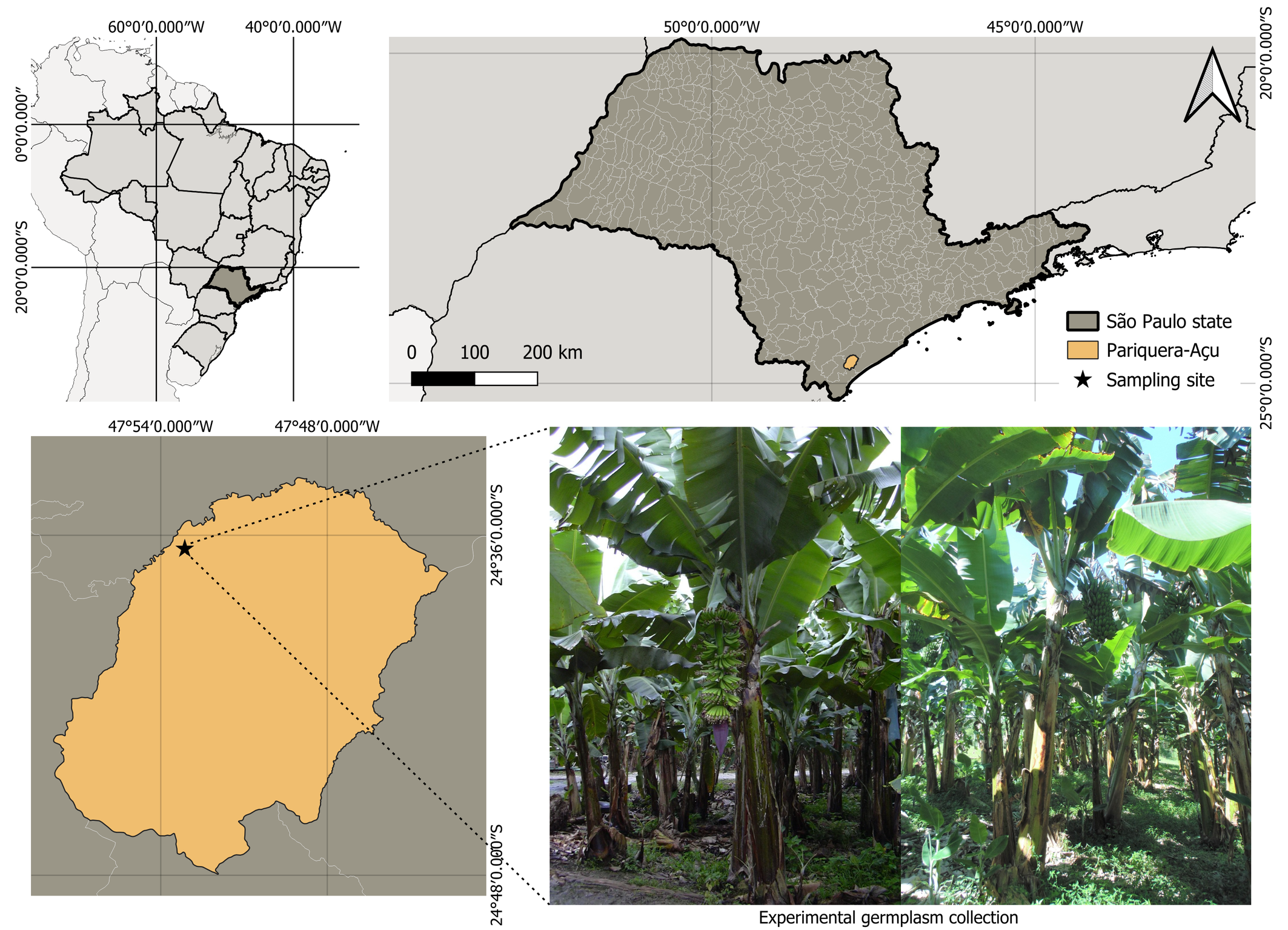
The region presents a humid subtropical climate (Cfa), according to the Köppen climate classification, with an average annual temperature of approximately 18–24 °C and mean annual precipitation exceeding 2,000 mm, relatively well-distributed throughout the year, with peaks in summer months. Rainfall is relatively well distributed throughout the year, with higher precipitation from December to March (INMET, 2020).
The evaluated plant material comprised five banana cultivars: Grand Naine, Terra Maranhão, Prata Catarina, BRS Platina, and BRS Princesa. Grand Naine is a triploid cultivar (AAA) belonging to the Cavendish subgroup. Prata Catarina (AAB) belongs to the Prata subgroup and represents a clone of the cultivar Prata-Anã, whereas Terra Maranhão (AAB) belongs to the Terra subgroup. The cultivar BRS Platina (PA42-44/AAAB) is a hybrid derived from a cross between Prata-Anã and M53, and BRS Princesa (YB42-07/AAAB) was derived from a cross between ′Yangambi no. 2′ and M53, both developed by Embrapa Mandioca e Fruticultura (Nomura et al., 2020).
In addition to banana plants, the most abundant spontaneous vegetation species occurring within the cultivated areas were sampled to evaluate their role as potential reservoirs of mite assemblages associated with banana crops.
Sampling design
Mites were sampled monthly from banana plants and associated spontaneous vegetation. Banana leaf sampling followed the protocol proposed by Alonso et al. (2015). For each cultivar and sampling date, five plants were selected, and from each plant two leaf fragments of 100 cm² were collected from the median portion of one of the oldest functional leaves, resulting in a total sampled area of 200 cm² per plant.
Spontaneous plants were sampled using a composite approach due to their structural heterogeneity and variable morphology. Plant material was collected based on availability within each sampling unit until a standardized volumetric amount (approximately 100–200 mL) was reached. The number of spontaneous plant species included in each composite sample varied among sampling events depending on local plant diversity and abundance. Leaves, stems, and reproductive structures from all available spontaneous plant species within the sampling unit were collected and pooled to form a composite sample. This composite material was subsequently used for both mite extraction and botanical identification.
Because banana leaves and spontaneous vegetation differ markedly in architecture and in the diversity of microhabitats available to mites, sampling protocols were tailored to each plant type to ensure biologically meaningful and repeatable sampling. Accordingly, comparisons between banana cultivars and weeds were conducted at the level of standardized sample units, defined as the combination of sampling date and plant category (banana cultivar or weeds).
Mite extraction and identification
All plant material was placed in paper bags, sealed within plastic bags, and transported in isothermal boxes containing reusable ice packs to reduce mite activity during transport to the Laboratory of Acarology (ESALQ/USP).
In the laboratory, samples were immersed in a solution of water and neutral detergent for 20 minutes to facilitate mite detachment. The suspension was then filtered through a 500-mesh sieve; and retained mites were preserved in 70% ethanol in Eppendorf tubes.
Mites were cleared and mounted on microscope slides in Hoyer's medium and kept in an oven at approximately 45 °C for seven days prior to sealing. Specimens were examined under phase-contrast and differential interference contrast optical microscopes (Leica DMLB and Nikon Eclipse 80i). Taxonomic identification to order level followed Krantz and Walter (2009). All specimens were categorized to order or suborder level (Mesostigmata, Trombidiformes, Sarcoptiformes). Mites belonging to the family Phytoseiidae (Mesostigmata) were identified to species level whenever possible using the dichotomous key provided by Lofego et al. (2024) based on adult females (males and immature stages remained unidentified). Trombidiformes were identified to family level, whereas Sarcoptiformes were not further identified. When necessary, identifications were confirmed by comparison with reference material deposited in the slide collection of the Laboratory of Acarology (ESALQ/USP).
Data analysis
All statistical analyses were conducted in R (version 4.3.2). Descriptive analyses of mite assemblage composition at the order level were based on relative abundances calculated per sampling unit (sampling date × plant category), and mean relative abundances were computed for each banana cultivar and for weeds. Alpha diversity of Phytoseiidae assemblages was assessed using species richness (S) and Shannon diversity index (H′) (Shannon, 1948), calculated for each sampling unit from species-by-sample matrices. Differences among banana cultivars and weeds were tested using generalized linear mixed models (GLMMs) (glmmTMB function) (Brooks et al., 2017), with plant category (weeds and each banana cultivar) as a fixed effect and sampling date included as a random effect to account for temporal dependence. Species richness was modeled assuming a Poisson distribution, while Shannon diversity was analyzed using a Gaussian distribution after confirming the normality of residuals (as suggested by Santon et al., 2023). Pairwise comparisons among plant categories were performed using Sidak-adjusted estimated marginal means. Community structure of Phytoseiidae (species-level) and Trombidiformes (family-level) assemblages was examined using non-metric multidimensional scaling (NMDS) based on presence–absence data using Jaccard distances (function metaMDS, vegan package) (Oksanen et al., 2024). Differences in community composition between the banana crop and weeds were tested using permutational multivariate analysis of variance (PERMANOVA), with permutations constrained within sampling date (function adonis2, vegan).
Occurrence records were aggregated across sampling dates and locations to construct a quantitative interaction matrix depicting the frequency of association between host plants and Phytoseiidae or Trombidiformes taxa. Interaction strength was defined as the total number of individuals of each taxon recorded on each plant species. The resulting plant × mite matrix was visualized as a bipartite network using the bipartite package (Dormann et al., 2008).
Results
A total of 1,302 mites were recorded during the study, including adult males and females as well as immature stages. Of these, 645 belonged to Mesostigmata (Phytoseiidae), 569 to Trombidiformes, and 88 to Sarcoptiformes. Mite assemblages associated with banana cultivars and spontaneous vegetation were dominated by Mesostigmata, Trombidiformes, and Sarcoptiformes, although their relative contributions varied among plant categories (Figure 2). Across banana cultivars, Trombidiformes generally represented the most abundant order, accounting for approximately 32–42% of individuals per sample, followed by Mesostigmata (about 25–36%) and Sarcoptiformes (typically less than 25%). Differences among cultivars were mainly driven by shifts in the relative proportions of Trombidiformes and Mesostigmata, whereas Sarcoptiformes consistently represented a smaller fraction of the assemblage.
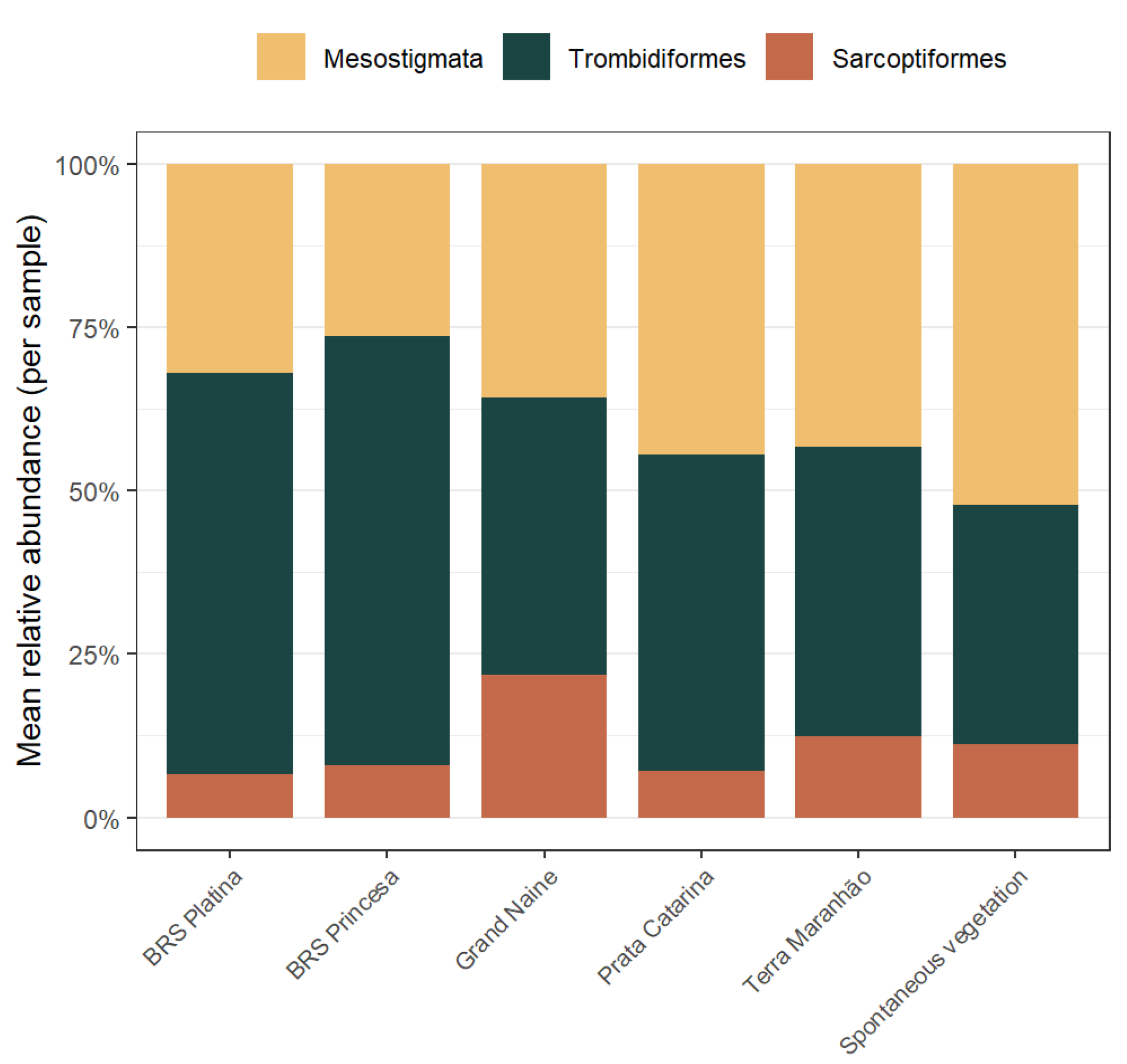
In contrast, mite assemblages associated with spontaneous vegetation were characterized by a higher relative abundance of Mesostigmata, which accounted for more than half of the individuals recorded across samples, while Trombidiformes and Sarcoptiformes represented smaller proportions (Figure 2). Overall, weeds exhibited a relative enrichment of predatory mites (mostly Mesostigmata) compared with banana cultivars, whereas banana-associated assemblages showed a more balanced contribution of predatory and non-predatory orders.
During the study period, 30 spontaneous weed species (20 different families) were recorded throughout the study period (Table 1). The most frequently occurring species were Commelina virginica L. (13 records), Tridax procumbens L. (13), and Emilia sonchifolia (L.) DC. ex Wight (9). These species also supported the highest mite abundances. In contrast, eleven weed species were recorded in only a single sampling event, namely Parthenium hysterophorus L., Ageratum conyzoides L., Lepidium latifolium L., Ipomoea indivisa (Vell.) Hallier f., Cyperus sp., Euphorbia hirta L., Senna occidentalis (L.) Link, Desmodium sp., Phyllanthus niruri L., Panicum fasciculatum (Jacq.) B.K.Simon & S.W.L.Jacobs, and Stachytarpheta cayennensis (Rich.) Vahl.
When evaluating the mite community associated with spontaneous plants, variation was observed in the occurrence of groups among the sampled plant species. Six plant species presented exclusively phytoseiid mites: S. occidentalis, E. hirta, P. niruri, L. latifolium, Digitaria insularis (L.) Fedde and P. fasciculatum. In turn, only P. hysterophorus, although present in a single sample, registered exclusively Trombidiformes mites. Four weed species, Desmodium sp., A. conyzoides, Solanum americanum Mill. and Amaranthus viridis L., did not present associated mites during the sampling period (Table 1).
Download as
Family
Species/Cultivars
2018
2019
Mite abundance
Sep
Oct
Nov
Dec
Jan
Feb
Mar
Apr
May
Jun
Jul
Aug
Sep
M
S
T
Musaceae
BRS Platina
T
T
M, S, T
M, T
T
M, S, T
M, T
M, T
M, T
0
0
M
M, T
18
2
58
BRS Princesa
T
T
M, S, T
M, T
M, S, T
T
T
T
M, T
0
0
0
0
6
3
67
Grand Naine
M, T
S
T
M, S, T
M, T
M, T
M, T
M, S, T
M, T
M, T
S
M, S, T
0
115
6
146
Prata Catarina
M, T
M, T
M, T
M, T
M, S, T
T
M
M, T
M, T
M, T
0
M
0
67
3
104
Terra Maranhão
T
M, S, T
M, S, T
M, S, T
M, S, T
M, S, T
M, T
M, T
M
0
0
0
T
52
8
44
Amaranthaceae
Amaranthus viridis L.
0
0
0
0
0
0
Asteraceae
Ageratum conyzoides L.
0
0
0
0
Bidens pilosa L.
M, S
M, T
S
4
4
2
Emilia sonchifolia (L.) DC. ex Wight
M, S, T
M, T
M
M
0
0
0
0
11
1
2
Parthenium hysterophorus L.
T
0
0
9
Tridax procumbens L.
M, S, T
M, S, T
0
M, S, T
M, T
M
M, S, T
0
0
0
0
91
9
14
Brassicaceae
Lepidium latifolium L.
M
6
0
0
Commelinaceae
Commelina virginica L.
M, S
M, S, T
0
M, S, T
S, T
M
M, T
M, T
M, T
0
0
0
39
11
15
Convolvulaceae
Ipomoea indivisa (Vell.) Hallier f.
M, S, T
15
5
2
Cucurbitaceae
Momordica charantia L.
M, S, T
0
17
2
1
Cyperaceae
Cyperus sp.
M, T
4
0
5
Euphorbiaceae
Euphorbia hirta L.
M
2
0
0
Fabaceae
Arachis pintoi Krapov. & W.C.Greg.
M
M, S, T
S, T
13
9
13
Desmodium sp.
0
0
0
0
Senna occidentalis (L.) Link
M
1
0
0
Malvaceae
Sida rhombifolia L.
M, S, T
0
14
1
6
Melastomataceae
Clidemia hirta (L.) D.Don
M, S, T
T
M, T
M, T
M
M, T
46
5
20
Oxalidaceae
Oxalis sp.
M, S, T
0
0
T
T
0
7
6
9
Phyllanthaceae
Phyllanthus niruri L.
M
10
0
0
Piperaceae
Piper umbellatum L.
0
S
M, T
M, S, T
0
M, S, T
M, T
M
0
18
6
20
Plantaginaceae
Plantago major L.
0
M, S, T
1
2
1
Poaceae
Brachiaria sp.
M, T
M, T
0
19
0
4
Digitaria insularis (L.) Fedde
M
M
3
0
0
Eleusine indica (L.) Gaertn.
T
0
0
0
0
3
Panicum fasciculatum Sw.
M, T
4
0
2
Poaceae
Panicum maximum (Jacq.) B.K.Simon & S.W.L.Jacobs
M, S, T
M
0
S
0
22
3
5
Rosaceae
Rubus sp.
M, T
M, T
0
0
18
0
13
Solanaceae
Solanum americanum Mill.
0
0
0
0
0
0
Urticaceae
Cecropia sp.
S, T
M, T
0
0
3
1
4
Verbenaceae
Stachytarpheta cayennensis (Rich.) Vahl
M, S
19
1
0
Total mite abundance
645
88
569
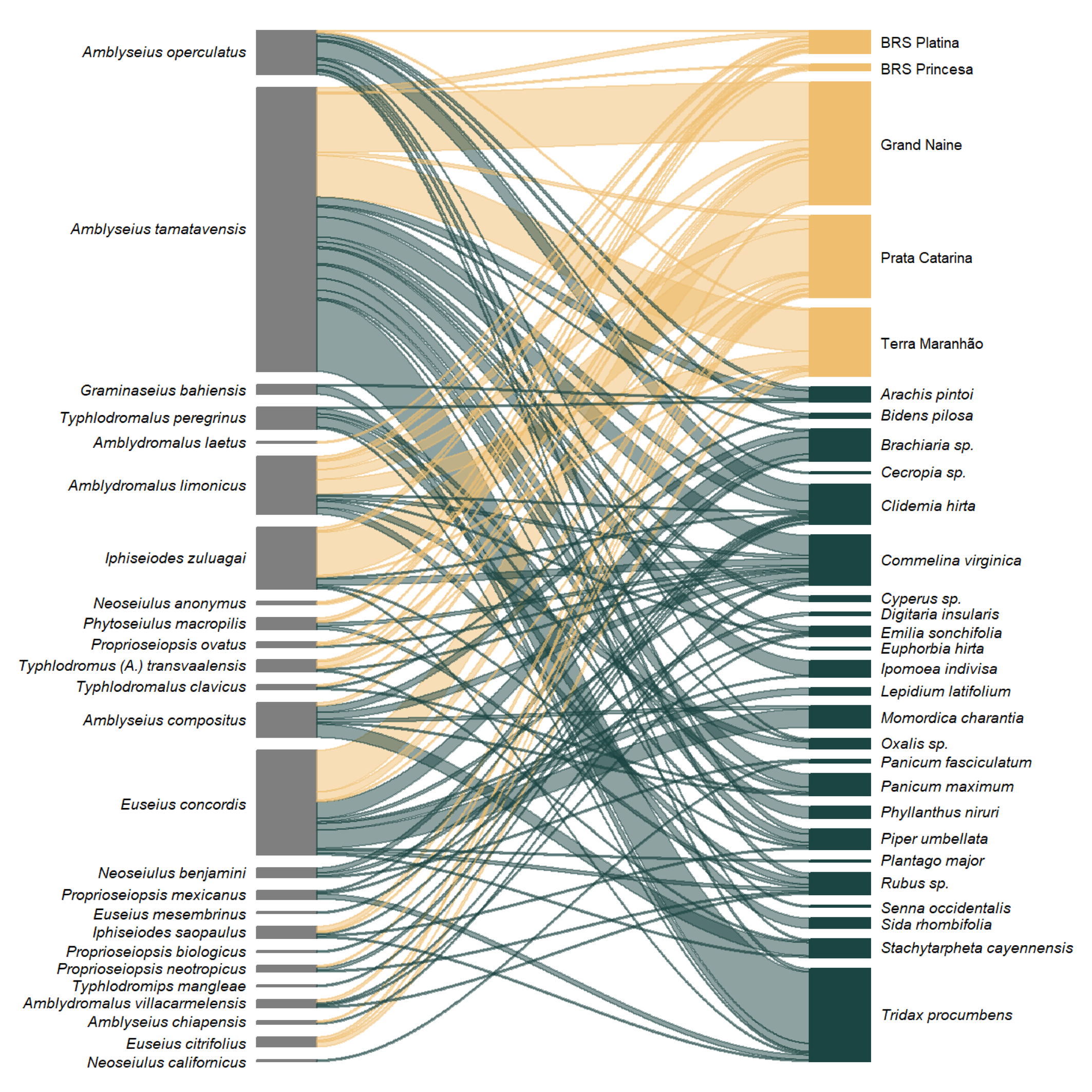
A total of 25 phytoseiid species belonging to 11 genera were identified (435 adult females) (Table 2). Of these, 12 species were found on both banana plants and weeds, five species were found exclusively on banana plants, and nine species were restricted to weeds. The most abundant recorded phytoseiid species was Amblyseius tamatavensis Blommers, followed by Euseius concordis (Chant), Iphiseiodes zuluagai Denmark & Muma, and Amblydromalus limonicus (Garman & McGregor). Amblyseius tamatavensis also showed the broadest plant association, occurring on 14 weed species and all banana cultivars. By comparison, E. concordis was recorded on eight weed species and four banana cultivars, while I. zuluagai occurred on only four weed species and four banana cultivars (Figure 3). The weed species with the highest richness of Phytoseiidae species were C. virginica (10 species), Clidemia hirta (L.) D.Don (nine species), and T. procumbens (seven species) (Table 3).
This study reports the first record of Graminaseius bahiensis Ferragut & Carvalho since its original description by Carvalho et al. (2017) in the state of Bahia, more than 1,400 km from the type locality.
Download as
Phytoseiid Species
Banana plant
Weeds
Amblydromalus laetus (Chant & Baker)
1
0
Amblydromalus limonicus (Garman & McGregor)
23
12
Amblydromalus villacarmelensis (Moraes)
2
3
Amblyseius chiapensis De Leon
1
1
Amblyseius compositus Denmark & Muma
2
19
Amblyseius operculatus De Leon
2
25
Amblyseius tamatavensis Blommers
66
105
Euseius citrifolius Denmark & Muma
6
0
Euseius concordis (Chant)
31
32
Euseius mesembrinus (Dean)
0
1
Graminaseius bahiensis Ferragut & Carvalho
0
6
Iphiseiodes saopaulus (Denmark & Muma)
4
3
Iphiseiodes zuluagai Denmark & Muma
30
7
Neoseiulus anonymus (Chant & Baker)
2
0
Neoseiulus benjamini (Schicha)
0
6
Neoseiulus californicus (McGregor)
0
1
Phytoseiulus macropilis (Banks)
3
4
Proprioseiopsis biologicus Lofego, Demite & Moraes
0
1
Proprioseiopsis mexicanus (Garman)
0
5
Proprioseiopsis neotropicus (Ehara)
1
3
Proprioseiopsis ovatus (Garman)
2
1
Typhlodromips mangleae De Leon
0
1
Typhlodromalus clavicus Denmark & Muma
1
2
Typhlodromalus peregrinus Muma
0
13
Typhlodromus (Anthoseius) transvaalensis (Nesbitt)
5
2
Adult males
64
123
Immature stages
8
15
TOTAL ADULT FEMALES
182
253
TOTAL PHYTOSEIID MITES
254
391
Download as
Family
Species/Cultivars
Phytoseiid species
Abundance
Musaceae
BRS Platina
Amblydromalus laetus
1
Amblydromalus limonicus
2
Amblyseius operculatus
1
Amblyseius tamatavensis
3
Iphiseiodes zuluagai
2
Neoseiulus anonymus
1
Phytoseiulus macropilis
2
Proprioseiopsis ovatus
1
Typhlodromus (Anthoseius) transvaalensis
1
BRS Princesa
Amblydromalus limonicus
1
Amblyseius tamatavensis
1
Iphiseiodes zuluagai
1
Phytoseiulus macropilis
1
Grand Naine
Amblydromalus limonicus
5
Amblyseius compositus
2
Amblyseius tamatavensis
35
Euseius citrifolius
2
Euseius concordis
25
Neoseiulus anonymus
1
Typhlodromalus clavicus
1
Typhlodromus (Anthoseius) transvaalensis
3
Prata Catarina
Amblydromalus limonicus
6
Amblydromalus villacarmelensis
2
Amblyseius chiapensis
1
Amblyseius tamatavensis
2
Euseius citrifolius
1
Euseius concordis
5
Iphiseiodes saopaulus
3
Iphiseiodes zuluagai
26
Proprioseiopsis neotropicus
1
Proprioseiopsis ovatus
1
Typhlodromus (Anthoseius) transvaalensis
1
Terra Maranhão
Amblydromalus limonicus
9
Amblyseius operculatus
1
Amblyseius tamatavensis
25
Euseius citrifolius
3
Euseius concordis
1
Iphiseiodes saopaulus
1
Iphiseiodes zuluagai
1
Asteraceae
Bidens pilosa
Amblyseius operculatus
2
Typhlodromalus clavicus
1
Emilia sonchifolia
Amblydromalus limonicus
1
Amblydromalus villacarmelensis
1
Amblyseius tamatavensis
3
Proprioseiopsis mexicanus
1
Tridax procumbens
Amblyseius operculatus
2
Amblyseius tamatavensis
43
Graminaseius bahiensis
5
Iphiseiodes saopaulus
1
Iphiseiodes zuluagai
1
Proprioseiopsis mexicanus
3
Typhlodromalus peregrinus
1
Brassicaceae
Lepidium latifolium
Euseius concordis
4
Commelinaceae
Commelina virginica
Amblydromalus limonicus
2
Amblydromalus villacarmelensis
1
Amblyseius chiapensis
1
Amblyseius compositus
4
Amblyseius tamatavensis
12
Euseius concordis
2
Iphiseiodes zuluagai
4
Phytoseiulus macropilis
2
Proprioseiopsis ovatus
1
Typhlodromus (Anthoseius) transvaalensis
1
Convolvulaceae
Ipomoea indivisa
Amblyseius tamatavensis
9
Euseius concordis
1
Cucurbitaceae
Momordica charantia
Amblyseius compositus
2
Euseius concordis
11
Cyperaceae
Cyperus sp.
Amblyseius tamatavensis
3
Euphorbiaceae
Euphorbia hirta
Amblyseius tamatavensis
1
Fabaceae
Arachis pintoi
Amblyseius operculatus
2
Amblyseius tamatavensis
5
Graminaseius bahiensis
1
Typhlodromalus peregrinus
1
Senna occidentalis
Amblyseius tamatavensis
1
Malvaceae
Sida rhombifolia
Typhlodromalus peregrinus
6
Melastomataceae
Clidemia hirta
Amblydromalus limonicus
1
Amblyseius operculatus
10
Amblyseius tamatavensis
6
Euseius mesembrinus
1
Iphiseiodes saopaulus
1
Iphiseiodes zuluagai
1
Proprioseiopsis biologicus
1
Proprioseiopsis neotropicus
2
Typhlodromips mangleae
1
Oxalidaceae
Oxalis sp.
Amblydromalus limonicus
4
Amblyseius operculatus
1
Amblyseius tamatavensis
1
Phyllanthaceae
Phyllanthus niruri
Amblyseius tamatavensis
7
Piper umbellata
Amblyseius operculatus
3
Amblyseius tamatavensis
5
Iphiseiodes saopaulus
1
Iphiseiodes zuluagai
1
Typhlodromalus peregrinus
2
Plantaginaceae
Plantago major
Euseius concordis
1
Poaceae
Brachiaria sp.
Amblyseius compositus
4
Amblyseius tamatavensis
1
Euseius concordis
10
Neoseiulus benjamini
3
Proprioseiopsis mexicanus
1
Digitaria insularis
Neoseiulus benjamini
2
Panicum fasciculatum
Neoseiulus benjamini
1
Neoseiulus californicus
1
Panicum maximum
Amblyseius compositus
1
Amblyseius tamatavensis
8
Typhlodromalus clavicus
1
Typhlodromalus peregrinus
3
Rosaceae
Rubus sp.
Amblydromalus limonicus
4
Amblydromalus villacarmelensis
1
Amblyseius operculatus
3
Euseius concordis
2
Phytoseiulus macropilis
2
Proprioseiopsis neotropicus
1
Urticaceae
Cecropia sp.
Amblyseius operculatus
1
Verbenaceae
Stachytarpheta cayennensis
Amblyseius compositus
8
Amblyseius operculatus
1
Euseius concordis
1
Typhlodromus (Anthoseius) transvaalensis
1
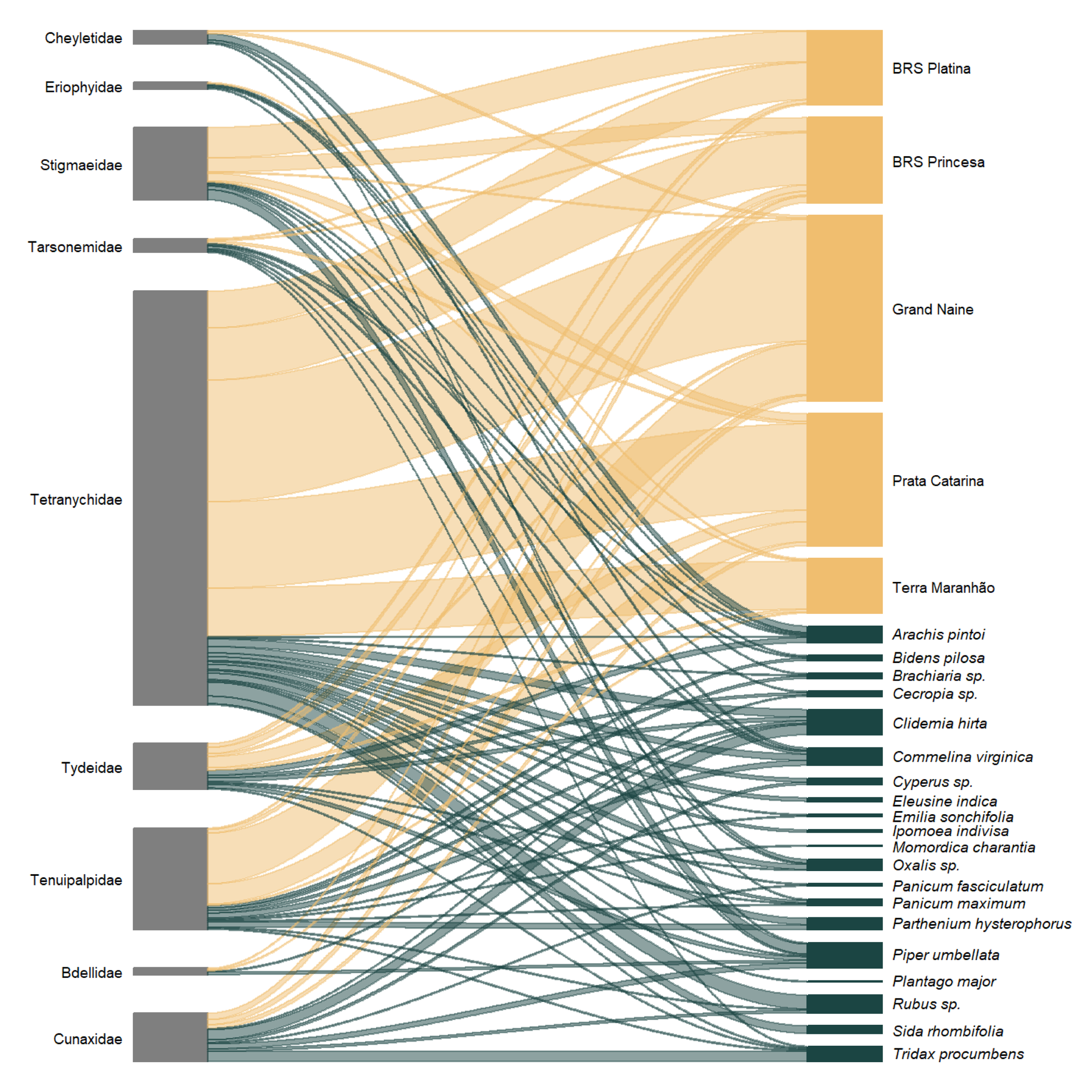
In addition to Mesostigmata, mites belonging to the order Trombidiformes (Prostigmata) were represented by nine families (Table 4). Among these, Tetranychidae was the most abundant. Besides the phytophagous mites, four families consisted of predatory taxa, namely Bdellidae, Cunaxidae, Cheyletidae, and Stigmaeidae were recorded. Tetranychidae was the family associated with the greatest number of plant hosts, occurring on 17 weed species and all banana cultivars, whereas Tenuipalpidae showed the second broadest association, being recorded on 10 weed species and all banana cultivars (Figure 4).
Download as
Trombidiformes Families
Banana plant
Weeds
Bdellidae
2
3
Cheyletidae
3
8
Cunaxidae
12
26
Eriophyidae
1
4
Stigmaeidae
43
14
Tarsonemidae
4
7
Tenuipalpidae
61
19
Tetranychidae
272
54
Tydeidae
21
15
TOTAL
419
150
Alpha diversity of phytoseiid mites differed among plant categories (Table 5). Species richness was significantly affected by plant category (χ² = 30.65, df = 5, P < 0.0001). Spontaneous vegetation had the highest mite species richness, with an estimated mean of 3.95 species per sample, whereas banana cultivars supported lower richness, ranging from 1.33 to 2.00 species per sample. Pairwise comparisons indicated that richness in weeds was significantly higher than in Prata Catarina (P = 0.0004) and Terra Maranhão (p = 0.0083). Differences between weeds and Grand Naine (P = 0.0655), BRS Platina (P = 0.3409), and BRS Princesa (P = 0.4027) were not statistically significant. No significant differences in richness were detected among banana cultivars (all P ≥ 0.9975).
Shannon diversity (H′) also differed significantly among plant categories (χ² = 28.61, df = 5, P < 0.0001). Spontaneous vegetation exhibited the highest diversity (H′ = 0.93), whereas banana cultivars showed lower values, ranging from 0.23 to 0.63 (Table 4). Shannon diversity in weeds was significantly higher than in Grand Naine (P = 0.0064), Prata Catarina (P = 0.0001), and Terra Maranhão (P = 0.0014). Differences between weeds and Platina (P = 0.8378) and Princesa (P = 0.1138) were not significant. As observed for species richness, Shannon diversity did not differ significantly among banana cultivars (all P ≥ 0.5690).
Download as
Plant category
Richness (S)
95% CI
Shannon diversity (H′)
95% CI
Spontaneous vegetation
3.95 ± 0.43 a
3.19–4.90
0.93 ± 0.09 a
0.75–1.12
Grand Naine
2.00 ± 0.43 ab
1.32–3.04
0.36 ± 0.13 b
0.11–0.61
BRS Platina
2.00 ± 0.58 ab
1.14–3.52
0.63 ± 0.17 ab
0.29–0.97
Prata Catarina
1.50 ± 0.31 b
1.01–2.24
0.24 ± 0.10 b
0.03–0.44
BRS Princesa
1.33 ± 0.67 ab
0.50–3.55
0.23 ± 0.24 ab
0.00–0.71
Terra Maranhão
1.50 ± 0.39 b
0.90–2.49
0.26 ± 0.13 b
0.00–0.53
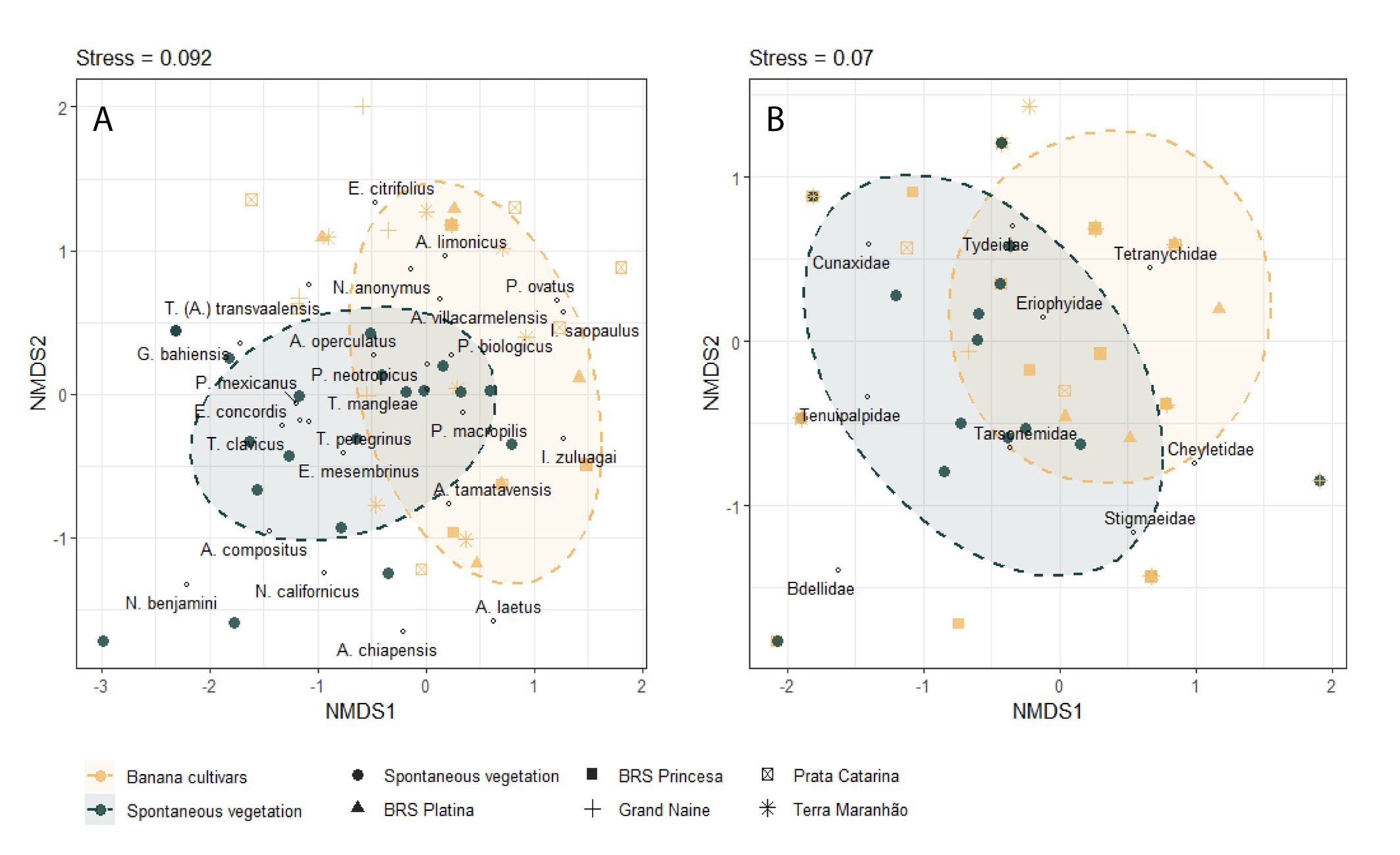
Phytoseiidae assemblage composition differed significantly between the banana crop and weeds, as confirmed by PERMANOVA (F1,62 = 4.37, R² = 0.066, P = 0.002) (Figure 5A). This result indicates that the plant category (banana × weeds) explained approximately 6.6% of the variation in Phytoseiidae community composition, after accounting for temporal structure. A similar pattern was observed for the Trombidiformes community (F1,87 = 6.08, R2 = 0.065, P > 0.0001) (Figure 5B).
Discussion
Several studies conducted in Brazil have demonstrated that Trombidiformes mites tend to exhibit high abundance in perennial crops and in natural vegetation, environments that offer greater structural stability and diversity of microhabitats. In rubber tree clones, Daud & Feres (2013) observed that more than 50% of all sampled mites belonged to a single Trombidiformes species, Tenuipalpus heveae Baker (Acari: Tenuipalpidae). A similar pattern was recorded in natural vegetation within the Caatinga biome, where Trombidiformes (including phytophagous and predatory species), together with Astigmata, showed higher abundance (Rodrigues et al., 2025). In natural vegetation in Piauí, Rossetti et al. (2025) reported the predominance of Trombidiformes mites of the family Iolinidae, characterized by mites with predatory habits (O'Dowd & Wilson, 1991).
Predatory Trombidiformes families (Bdellidae, Cunaxidae, Cheyletidae, and Stigmaeidae) were recorded in both banana crops and weeds. Although these groups are less frequently emphasized in applied biological control studies, they are recognized as important predators of small arthropods and nematodes, and may contribute to ambient predation pressure in agroecosystems, with some Cheyletidae species also being employed as biological control agents in poultry production systems (Walter & Proctor, 2013; Hernandes et al. 2015; Knapp et al. 2018). The presence of multiple predatory groups, such as Mesostigmata and Trombidiformes, suggests a degree of functional redundancy, which may enhance the resilience of mite predator communities to environmental disturbances. Weeds may therefore support a broader predatory guild, reinforcing the ecological value of non-crop vegetation extending beyond a single taxonomic group.
Regarding the Phytoseiidae, the higher species richness and Shannon diversity observed on spontaneous vegetation strongly support our first hypothesis and align with a growing body of literature emphasizing the role of non-crop vegetation in conserving natural enemies in agroecosystems (Landis et al., 2000; Gurr et al., 2017). Studies conducted in different Brazilian cropping systems consistently demonstrate that weeds function as important reservoirs of natural enemies. In apple orchards, spontaneous plants support high abundance and diversity of predatory mites (Rode et al., 2024). In strawberry crops in southern Brazil, weeds serve as refuges for predatory mite species also observed in the present study (Ferla et al., 2007). Similarly, in citrus orchards in the Amazon, spontaneous plants have been identified as reservoirs of abundant predatory mites associated with citrus plants (Ferreira et al., 2018).
The higher diversity observed on spontaneous vegetation may thus be linked to their greater structural complexity. Structurally complex plants (leaves, trichomes, domatia, and extrafloral nectaries) typically provide a greater diversity of microhabitats, refuge from abiotic stress, and access to alternative food resources, all of which are critical for the persistence of predatory mites in the crop areas (McMurtry et al., 2013; Loughner et al., 2010; Schmidt, 2014).
Tridax procumbens and E. sonchifolia, the weed species with the highest phytoseiid abundances in our study, belong to the family Asteraceae, whose species have previously been associated with the occurrence of predatory mite communities (Castro et al., 2024). Similarly, Rezende and Lofego (2012) also reported T. procumbens as one of the plant species hosting the greatest richness of Phytoseiidae in perennial cropping systems.
Phytoseiid mites were exclusively recorded on six weed species, even in the absence of phytophagous mites. This pattern may be related to the generalist feeding habits of many phytoseiids, which are able to consume pollen, fungi, and small arthropods (McMurtry et al., 2013). We hypothesize that these plants may provide alternative food resources or favorable structural conditions that support predator persistence. These results suggest that the presence of Phytoseiidae does not depend exclusively on the occurrence of phytophagous prey, reinforcing the potential role of spontaneous vegetation as a supporting habitat for the maintenance of natural enemies within the agroecosystem.
This community differentiation between the banana crops and weeds highlights that spontaneous plants do not merely host more species, but support different assemblages of predatory mites, reinforcing their ecological role as complementary habitats rather than mere redundant extensions of the crop environment. Similar patterns have been reported in other perennial systems, where non-crop vegetation harbors distinct predator communities that enhance landscape-level biodiversity (Aguilar-Fenollosa et al., 2011; Pekas & Wäckers, 2017).
At a broader scale, diversified agroecosystems with ground cover, intercropping, or proximity to semi-natural habitats increase vegetation heterogeneity and mixed plant strata, potentially functioning as reservoirs that promote the persistence and dispersal of predatory mites (Dahmer et al., 2026; Tixier et al., 2018). Similar roles have been proposed for pioneer plants such as Cecropia pachystachya Trécul, which harbor diverse predatory mite communities and may facilitate recolonization of agricultural habitats (Lofego et al., 2017). In this context, spontaneous vegetation may likewise contribute to the recolonization of banana plants by predatory species such as A. tamatavensis, which was abundantly recorded on both banana plants and several weed species in the present study, although recolonization dynamics were not directly evaluated.
In perennial cropping systems, such as those involving bananas, where the crop structure is relatively uniform and management practices periodically reduce the availability of prey, weeds may buffer predator populations against local extinction. The consistent enrichment of Mesostigmata within weeds, together with the higher alpha diversity of Phytoseiidae, suggests that weeds contribute disproportionately to maintaining regional predator species pools.
The dominance of A. tamatavensis, E. concordis, I. zuluagai, and A. limonicus indicates that banana agroecosystems favor generalist phytoseiid species with flexible feeding strategies (types III and IV according to McMurtry et al., 2013). These taxa are known to exploit alternative food sources such as pollen, fungi, and non-pest prey, traits that enhance survival in habitats where pest populations fluctuate spatially and temporally (McMurtry et al., 2013).
The frequent association of these predatory species with weeds is consistent with findings showing that pollen-producing and structurally complex plants can sustain phytoseiid populations independently of prey availability (Nomikou et al., 2010; Duarte et al., 2015). Thus, weeds may contribute not only to predator abundance but also to functional stability, maintaining predatory mites during periods of low pest pressure on banana plants. Findings from other Brazilian cropping systems further support this interpretation. In strawberry crops in southern Brazil, spontaneous plants have been highlighted as important hosts for natural enemies, with B. pilosa (Asteraceae) supporting populations of predatory mites such as Typhlodromips mangleae De Leon and Proprioseiopsis neotropicus (Ehara) (Araujo et al., 2021), species also recorded on other plant species in the present study. A similar pattern has been observed in citrus orchards in the Amazon region, where C. hirta has been identified as a reservoir of predatory mites, including Amblyseius aerialis (Muma) and I. zuluagai, which are abundant on citrus plants (Ferreira et al., 2018).
Contrary to expectations, Phytoseiidae diversity and species richness did not vary significantly among banana cultivars. This result suggests that, under the conditions studied, cultivar identity plays a secondary role compared with plant type (crop vs. weeds) in structuring predatory mite assemblages. Similar findings have been reported in other cropping systems, where differences among cultivars are outweighed by broader contrasts in habitat complexity and resource availability (Stavrinides & Mills, 2009). The relatively uniform architecture and microclimatic conditions of banana leaves across cultivars may constrain habitat differentiation for mites, particularly when compared with the morphological diversity of spontaneous vegetation. This finding implies that conservation strategies targeting predator diversity in banana systems may benefit more from spontaneous vegetation management than from the selection of specific cultivars alone.
From an agroecological perspective, our results reinforce the importance of spontaneous vegetation as a key component of biodiversity-based pest management strategies. By sustaining diverse and compositionally distinct predator communities, weeds may enhance the long-term persistence of natural enemies and facilitate recolonization of crop plants following disturbances such as pruning, pesticide applications, or seasonal population declines (Landis et al., 2000; Gurr et al., 2017). Empirical evidence from tropical agroecosystems supports this interpretation, for instance, a study conducted in Brazil in rubber tree plantations showed that spontaneous plants, particularly Cecropia spp., function as important reservoirs of predatory mites, with some weed species harboring higher abundance and diversity of predators than others (Bellini et al., 2005).
However, it is important to emphasize that this study did not directly quantify pest suppression or predator movement between weeds and banana plants. Consequently, the reservoir function inferred herein should be interpreted as support for predator diversity and persistence rather than direct evidence of enhanced biological control efficacy. In addition, a lower overall abundance of mites, particularly phytoseiids, was observed during June, July, and August, months characterized by reduced rainfall and lower temperatures in the region (INMET, 2020). Although this pattern suggests a possible seasonal influence on mite populations, conclusions regarding population dynamics would require monitoring across multiple years, representing a potential avenue for future research.
Other aspects of the study should be accounted for when contextualizing these findings, as sampling methods differed between banana leaves and weeds owing to contrasts in plant architecture, and comparisons were based on standardized sampling units. In addition, because the study was observational, inferences regarding predator dispersal, trophic interactions, and impacts on pest populations are indirect. Future studies integrating manipulative experiments, standardized prey assessments, and approaches such as molecular gut-content analysis, stable isotopes, or mark–recapture techniques would be instrumental in confirming whether weeds act as net sources of predatory mites for banana plants. Evaluating how weed management practices influence both predator and pest dynamics will also be critical for translating biodiversity conservation into actionable pest management recommendations.
Conclusion
This study demonstrates that spontaneous vegetation contributes significantly to the diversity and structuring of predatory mite assemblages in banana agroecosystems. By hosting richer and compositionally distinct communities of Phytoseiidae and other predatory mites, non-crop species play a pivotal role in sustaining natural enemy populations over time. These findings underscore the ecological value of understory vegetation in perennial tropical systems, suggesting that maintaining spontaneous vegetation is a viable and effective component of integrated pest management (IPM) strategies for sustainable banana production.
Acknowledgements
We acknowledge São Paulo Research Foundation (FAPESP: Process: 2021/11965-3) for the funding received for this research. Our thanks also go to CNPq-Brazil (National Council for Scientific and Technological Development - Brazil) for funding research fellowship to the last author (Process: 306852/2019-5). Jeferson Luiz de Carvalho Mineiro was also supported by Consórcio Pesquisa Café/Embrapa Café (Process: 10.24.22.022.00.01). The present work was carried out with the support of the Coordination for the Improvement of Higher Education Personnel - Brazil (CAPES) - Financing Code 001.
References
- Aguilar-Fenollosa E., Ibáñez-Gual M.V., Pascual-Ruiz S., Hurtado M., Jacas J.A. 2011. Effect of ground-cover management on spider mites and their phytoseiid natural enemies in clementine mandarin orchards (I): bottom-up regulation mechanisms. Biol. Control, 59(2): 158-170.
- Alonso D., Hernandez R., Chico R., Miranda I., Rodriguez H. 2015. Incidencia de Raoiella indica Hirst y Tetranychus tumidus Banks en diferentes genotipos de plátano (Musa spp.). Revist. Prot. Veg., 30: 2224-4697.
- Amaro G., Fidelis E.G., da Silva R.S., Marchioro C.A. 2023. Effect of study area extent on the potential distribution of species: a case study with models for Raoiella indica Hirst (Acari: Tenuipalpidae). Ecol. Model., 483: 110454. https://doi.org/10.1016/j.ecolmodel.2023.110454
- Araujo E.S., Benatto A., Mirás-Avalos J.M., Rogoski T., Oelke S.F., Schussler M., Ferla N.J., de Carvalho S.A., Zawadneak M.A. 2021. Acarofauna present in organic strawberry fields and associated weed species in southern Brazil. Exp. Appl. Acarol., 86: 91-115. https://doi.org/10.1007/s10493-021-00675-7
- Bellini M.R., Moraes G.J., Feres R.J.F. 2005. Plantas de ocorrência espontânea como substratos alternativos para fitoseídeos (Acari: Phytoseiidae) em cultivos de seringueira Hevea brasiliensis Muell. Arg. (Euphorbiaceae). Revist. Bras. Zool., 22: 35-42. https://doi.org/10.1590/S0101-81752005000100005
- Brooks M.E., Kristensen K., van Benthem K.J., Magnusson A., Berg C.W., Nielsen A., Skaug H.J., Maechler M., Bolker B.M. 2017. glmmTMB balances speed and flexibility among packages for zero-inflated generalized linear mixed modeling. The R J., 9(2): 378-400. https://doi.org/10.32614/RJ-2017-066
- Carvalho A.N., Oliveira A.R., Argolo P.S., Ferragut F. 2017. Three new species of phytoseiid mites (Acari: Phytoseiidae) from Bahia State, Brazil. Zootaxa, 4272(1): 142-150. https://doi.org/10.11646/zootaxa.4272.1.8
- Castro I.S., Azevedo, A.O. de., Vinhas, N.A.N., Schlemer S.M., Borges Wurlitzer, W., Freitas E.M. de., Heiden G., Ferla, N. J. 2024. Phytoseiid mites associated with Asteraceae plants in the Pampa biome with description of two new species. Int. J. Acarol., 50(7), 570-586. https://doi.org/10.1080/01647954.2024.2387717
- Dahmer P.C., Cavalcante A.C.C., Demite P.R. 2026. Phytoseiidae (Acari: Mesostigmata: Gamasina) associated with guarana cultivation (Paullinia cupana Kunth, Sapindaceae) in the Central Amazon Region. Acarologia, 66(1): 35-49. https://doi.org/10.24349/ab1s-yntz
- Daud R.D., Feres R.J.F. 2013. Community structure of mites (Arachnida: Acari) in six rubber tree clones. Int. J. Acarol., 39(8): 589-596. https://doi.org/10.1080/01647954.2013.856470
- Demite P.R., Moraes G.J., McMurtry J.A., Denmark H.A., Castilho R.C. 2026. Phytoseiidae Database. Available from: https://www.lea.esalq.usp.br/phytoseiidae (accessed 13 Feb 2026).
- Dormann C.F., Gruber B., Fruend J. 2008. Introducing the bipartite package: analysing ecological networks. R News, 8(2): 8-11.
- Duarte M.V., Venzon M., Bittencourt M.C.S., Rodríguez-Cruz F.A., Pallini A., Janssen A. 2015. Alternative food promotes broad mite control on chilli pepper plants. BioControl, 60(6): 817-825. https://doi.org/10.1007/s10526-015-9688-x
- FAO. 2024. Banana market review 2023. Rome.
- Ferla N.J., Marchetti M.M., Gonçalves D. 2007. Ácaros predadores (Acari) associados à cultura do morango (Fragaria sp., Rosaceae) e plantas próximas no Estado do Rio Grande do Sul. Biota Neotrop., 7, 103-110. https://doi.org/10.1590/S1676-06032007000200012
- Ferreira C.T., Krug C., Garcia M.V.B., Moraes G.J. 2018. Leprosis mite and other mite species (Acari) associated to orange groves in Brazilian Central Amazon. Syst. Appl. Acarol., 23(3): 449-462. https://doi.org/10.11158/saa.23.3.4
- Gebre G.G., Fikadu A.A., Gebeyehu T.K. 2022. Is banana value chain in East Africa sustainable? Evidence from Ethiopia. Resour., Environ. Sustain., 8: 100060. https://doi.org/10.1016/j.resenv.2022.100060
- Gurr G.M., Wratten S.D., Landis D.A., You M. 2017. Habitat management to suppress pest populations: progress and prospects. Annu. Rev. Entomol., 62: 91-109. https://doi.org/10.1146/annurev-ento-031616-035050
- Hernandes F.A., Castro T.M.M.G., Venancio R. 2015. Prostigmata (Acari: Trombidiformes) as biological control agents. In: Carrillo D., Moraes G.J., Peña J. (eds) Prospects for Biological Control of Plant Feeding Mites and Other Harmful Organisms. Progress in Biological Control, 19: 151-184. Springer, Cham. https://doi.org/10.1007/978-3-319-15042-0_6
- IBGE - Instituto Brasileiro de Geografia e Estatística. 2024. Produção de banana no Brasil. Available from: https://www.ibge.gov.br/explica/producao-agropecuaria/banana/br (accessed 05 Jan 2026).
- INMET - Instituto Nacional de Meteorologia . 2020. Banco de Dados Meteorológicos para Ensino e Pesquisa (BDMEP): dados horários da estação automática de Registro-SP (A766). Ministério da Agricultura, Pecuária e Abastecimento. Available from: https://bdmep.inmet.gov.br (accessed 05 Jan 2026).
- Knapp M., van Houten Y., van Baal E., Groot T. 2018. Use of predatory mites in commercial biocontrol: current status and future prospects. Acarologia, 58(Suppl): 72-82. https://doi.org/10.24349/acarologia/20184275
- Krantz G.W., Walter D.E. 2009. A manual of acarology. 3rd edn. Texas: Texas Tech University Press. 807 pp.
- Kwinda M., Siebert S.J., Van Coller H., Masehela T.S. 2024. Identifying plant functional traits of weeds in fields planted with glyphosate-tolerant maize for preferable weed management practices. Agriculture, 14, 223. https://doi.org/10.3390/agriculture14020223
- Landis D.A., Wratten S.D., Gurr G.M. 2000. Habitat management to conserve natural enemies of arthropod pests in agriculture. Annu. Rev. Entomol., 45: 175-201. https://doi.org/10.1146/annurev.ento.45.1.175
- Lofego A.C., Rezende J.M., Demite P.R. Feres R.J.F. 2017. Mite fauna associated with Cecropia pachystachya Trec. (Urticaceae) - the importance of the plant as reservoir and dissemination means for predatory mites. Syst. Appl. Acarol., 22(10): 1780-1794. https://doi.org/10.11646/zootaxa.3086.1.2
- Lofego A.C., Barbosa M.F.C., Demite P.R., Moraes, G.J. 2024. Phytoseiidae (Acari: Mesostigmata) of the subfamily Amblyseiinae from Brazil. Zootaxa, 5439(1): 1-306. https://doi.org/10.11646/zootaxa.5439.1.1
- Loughner R., Wentworth K., Loeb G., Nyrop J. 2010. Influence of leaf trichomes on predatory mite density and distribution in plant assemblages and implications for biological control. Biol. Control, 54(3): 255-262. https://doi.org/10.1007/s10493-008-9183-5
- Lucatero A., Jha S., Philpott S.M. 2024. Local habitat complexity and its effects on herbivores and predators in urban agroecosystems. Insects, 15, 41. https://doi.org/10.3390/insects15010041
- McMurtry J.A., Moraes G.J., Sourassou N.F. 2013. Revision of the lifestyles of phytoseiid mites (Acari: Phytoseiidae) and implications for biological control strategies. Syst. Appl. Acarol., 18(4): 297-320. https://doi.org/10.11158/saa.18.4.1
- Moraes G.J., Castilho R.C., Flechtmann C.H., Demite P.R., Halliday B. 2025. Progress in understanding the world mesostigmatic mites, with emphasis on the family Phytoseiidae (Acari: Mesostigmata). Acarologia, 65(3): 647-676. https://doi.org/10.24349/q3gy-1vyg
- Moraes G.J., Castilho R.C., Flechtmann C.H.W. 2024. Manual de acarologia: acarologia básica e ácaros de plantas cultivadas no Brasil. Piracicaba: Fundação de Estudos Agrários Luiz de Queiroz. https://doi.org/10.37856/9786589722588.fealq.2024.485
- Moreira R.S. 1999. Banana: teoria e prática de cultivo. Campinas: Fundação Cargill. 335 p.
- Nomikou M., Sabelis M.W., Janssen A. 2010. Pollen subsidies promote whitefly control through the numerical response of predatory mites. BioControl, 55(2): 253-260. https://doi.org/10.1007/s10526-009-9233-x
- Nomura E.S., Damatto Junior E.R., Maruyama I.S., Mendonça J.C., Saes L.A., Penteado L.A.C., Kobori R.T., Moraes W.S. 2020. Cultivo da bananeira. Campinas: CDRS. 178 p.
- O'Dowd D.J., Wilson M.F. 1997. Leaf domatia and the distribution and abundance of foliar mites in broad leaf deciduous forest in Wisconsin. Am. Midl. Nat., 137(2): 337-348. https://doi.org/10.2307/2426853
- Oksanen J., Simpson G., Blanchet F., Kindt R., Legendre P., Minchin P., O'Hara R., Solymos P., Stevens M., Szoecs E., Wagner H., Barbour M., Bedward M., Bolker B., Borcard D., Carvalho G., Chirico M., De Caceres M., Durand S., Evangelista H., FitzJohn R., Friendly M., Furneaux B., Hannigan G., Hill M., Lahti L., McGlinn D., Ouellette M., Ribeiro Cunha E., Smith T., Stier A., Ter Braak C., Weedon J. 2024. vegan: Community Ecology Package. R package version 2.6-6.1. https://CRAN.R-project.org/package=vegan
- Otero-Colina G., González-Gómez R., Martínez-Bolaños L., Otero-Prevost L.G., López-Buenfil J.A., Escobedo-Graciamedrano R.M. 2016. Infestation of Raoiella indica Hirst (Trombidiformes: Tenuipalpidae) on host plants of high socio-economic importance for tropical America. Neotrop. Entomol., 45(3): 300-309. https://doi.org/10.1007/s13744-016-0368-z
- Pekas A., Wäckers F.L. 2017. Multiple resource supplements synergistically enhance predatory mite populations. Oecologia, 184(2): 479-484. https://doi.org/10.1007/s00442-017-3877-5
- Pozzebon A., Loeb G.M., Duso C. 2015. Role of supplemental foods and habitat structural complexity in persistence and coexistence of generalist predatory mites. Sci. Rep., 5, 14997. https://doi.org/10.1038/srep14997
- Rana G.K., Singh Y., Mishra S.P., Rahangdale H.K. 2018. Potential use of banana and its by-products: a review. Int. J. Curr. Microbiol. Appl. Sci., 7(6): 1827-1832. https://doi.org/10.20546/ijcmas.2018.706.218
- Ranjha M.M.A.N., Irfan S., Nadeem M., Mahmood S. 2020. A comprehensive review on nutritional value, medicinal uses, and processing of banana. Food Rev. Int., 36: 1-27. https://doi.org/10.1080/87559129.2020.1725890
- Rezende J.M., Lofego A.C. 2012. Mites (Mesostigmata, Prostigmata, Astigmatina) associated with weeds among physic nut crops (Jatropha curcas L.: Euphorbiaceae) in Brazil. Syst. Appl. Acarol., 17(1), 15-26. https://doi.org/10.11158/saa.17.1.5
- Rode P.A., Ferla J.J., Bizarro G.L., Schussler M., Ferla N.J. 2024. Mite fauna (Acari) associated with apple orchards (Malus domestica) and spontaneous vegetation as reservoir for predatory mites. Biota Neotrop., 24(1): e20231602. https://doi.org/10.1590/1676-0611-bn-2023-1602
- Rodrigues J.K., Almeida-Neto M., Demite P.R., Silva L.R.A., Araújo I.F., Castro E.B., Lofego A.C. 2025. Mites on Caatinga remnants vegetation in Northeast Brazil, with description of a new species of Phytoseiidae (Acari: Mesostigmata). Syst. Appl. Acarol., 30(2): 243-266. https://doi.org/10.11158/saa.30.2.5
- Rossetti, O. C., Araújo, F. G. D., Araújo, W. S. D., Daud, R. D. 2025. Plant mites (Arachnida: Acariformes, Parasitiformes) in Caatinga remnants from Piauí State, Brazil. Pap. Avulsos Zool., 65, e202565032. https://doi.org/10.11606/1807-0205/2025.65.032
- Santon M., Korner-Nievergelt F., Michiels N.K., Anthes N. 2023. A versatile workflow for linear modelling in R. Front. Ecol. Evol., 11: 1065273. https://doi.org/10.3389/fevo.2023.1065273
- Schmidt R.A. 2014. Leaf structures affect predatory mites (Acari: Phytoseiidae) and biological control: a review. Exp. Appl. Acarol., 62: 1-17. https://doi.org/10.1007/s10493-013-9730-6
- Shannon C.E. 1948. A mathematical theory of communication. The Bell Syst. Tech., J., 27 (3), p. 379-423. https://doi.org/10.1002/j.1538-7305.1948.tb01338.x
- Stavrinides M.C., Mills N.J. 2009. Demographic effects of pesticides on biological control of Pacific spider mite (Tetranychus pacificus) by the western predatory mite (Galendromus occidentalis). Biol. Control, 48(3): 267-273. https://doi.org/10.1016/j.biocontrol.2008.10.017
- Tixier M.-S. 2018. Predatory mites (Acari: Phytoseiidae) in agro-ecosystems and conservation biological control: a review and explorative approach for forecasting plant-predatory mite interactions and mite dispersal. Front. Ecol. Evol., 6, 192. https://doi.org/10.3389/fevo.2018.00192
- Walter D.E., Proctor H.C. 2013. Mites: ecology, evolution and behaviour: life at a microscale. 2nd edn. The Netherlands: Springer. 494 pp. https://doi.org/10.1007/978-94-007-7164-2
 to post any comment or correction.


2026-01-13
Date accepted:
2026-04-22
Date published:
2026-05-05
Edited by:
Kreiter, Serge

This work is licensed under a Creative Commons Attribution 4.0 International License
2026 González-Cano, Lina Marcela; Godoy, Lucas Lorena; Araujo Lacerda, José Dantas; de Carvalho Mineiro, Jeferson Luiz; Shigueaki Nomura, Edson and Sato, Mário Eidi
 Download article
Download the citation
RIS with abstract
(Zotero, Endnote, Reference Manager, ProCite, RefWorks, Mendeley)
RIS without abstract
BIB
(Zotero, BibTeX)
TXT
(PubMed, Txt)