


Prof. M.A. Zaher: one of the most important pioneers of acarology in Egypt
Abo-Shnaf, Reham  1
; Elhalawany, Ashraf Said
2
; Negm, Mohamed W.
3
and Sanad, Ahmad Said
4
1
; Elhalawany, Ashraf Said
2
; Negm, Mohamed W.
3
and Sanad, Ahmad Said
4
1✉ Vegetable and Aromatic Plant Mites Department, Plant Protection Research Institute, Agricultural Research Centre, Dokii, Giza, Egypt.
2Fruit Tree Mite Department, Plant Protection Research Institute, Agricultural Research Centre, Dokii, Giza, Egypt.
3Department of Plant Protection, Faculty of Agriculture, Assiut University, Egypt.
4Vegetable and Aromatic Plant Mites Department, Plant Protection Research Institute, Agricultural Research Centre, Dokii, Giza, Egypt.
2023 - Volume: 63 Issue: 2 pages: 373-382
https://doi.org/10.24349/ns49-6g7aObituary
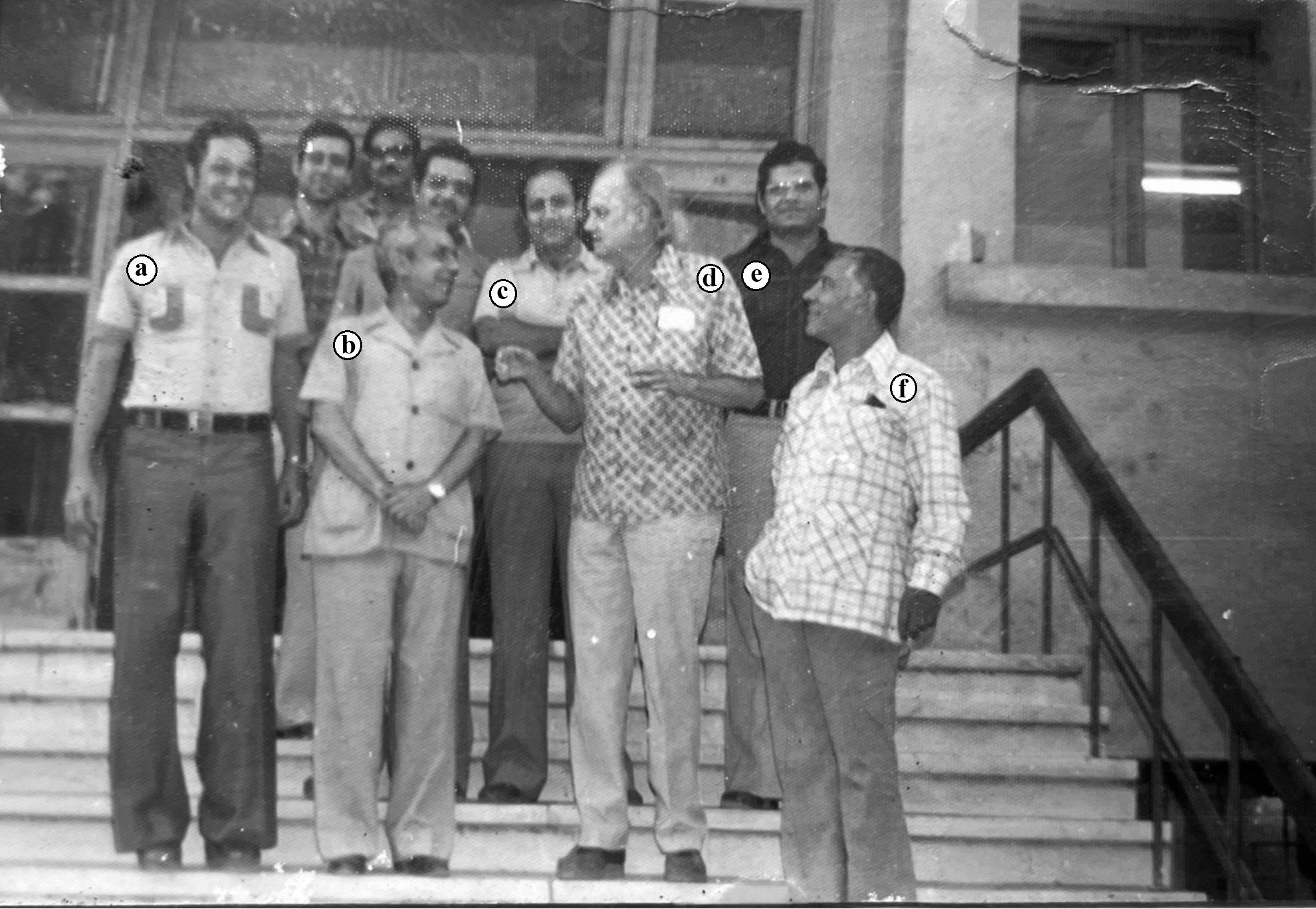
Professor Mohamed Abd El-Aziz Zaher sadly passed away on October 12th, 2022, aged 95 years, leaving his native village of Meet El Amel, Aga, Dakahlia governorate, Egypt where he was born on February10th, 1927, his colleagues and friends, and the worldwide community of acarologists. With this passing, the scientific world community loses one of the best acarologists.
Gilberto José de Moraes
I am grateful to you for informing about the passing away of Prof. Mohamed A. Zaher. It is certainly very sad news, and acarology loses much with his death. But we should be thankful to God for allowing us to share part of our lifetime with this great acarologist, absorbing part of his great knowledge about mites in general, especially the Egyptian mites. He was a good friend of many other well-known acarologists, leading to the conduction of beautiful scientific works. Despite the many papers he published, I would like to highlight his ''Predaceous and nonphytophagous mites in Egypt'', published in 1986, bringing together what was known by that time about the taxonomy of the Egyptian plant and soil mites. That was certainly a major contribution to those interested in knowing about the identity of mites of those groups, constructed in close collaboration with renowned American acarologists, well represented by Dr Edward Baker. Dr Zaher was also the mentor of a number of acarologists, who have significantly contributed to mite taxonomy along the years, and who will continue to do so.
Edward Albert Ueckermann
I have met Prof. Zaher for the first time during an African Acarology Symposium in Egypt in 2004, which was a huge privilege. However, he made a huge impression on me when I was still a young acarologist. During that time, South Africa was politically in a bad place and ignored by most scientists. Prof. Zaher was one of the few acarologists who knew that it was a political and not acarological issue. He was one of the few who was willing to share his monumental articles with us. His two volumes of ''Survey and ecological studies of phytophagous, predacious and soil mites in Egypt'' are a forever reminder of his kindness to us and we will always be thankful to him.
Ronald Ochoa
Dr Zaher was an institution, a great scientist dedicated to the growth of acarology, not only in his beautiful country but in all the African continent.
Biographic elements
M. A. Zaher was a prolific scholar who revolutionized the scientific understanding of the diversity of mites not only in Egypt, but also in many other nearby countries in the region. Throughout, he sought to connect mite systematics, ecology, and other disciplines to mentor the next generation of scientists. He was among the most influential acarologists, using his expertise in taxonomy and ecology of mites to improve mite pest management in agro-ecosystems. He also sought to make biodiversity information more readily accessible. He understood the value of information contained in museum collections and was an early proponent of data basing individual mite specimens and collections as a whole. M. A. Zaher served as a reputable scientific reference for many researchers as well as the curator of the mite reference collection of the Egyptian Society of Acarology Museum (ESAM), Zoology and Agricultural Nematology Department, the Faculty of Agriculture, Cairo University, Giza governorate, Egypt until his death.
M. A. Zaher graduated in 1948 at the Faculty of Agriculture, Cairo University (Fouad I), one of the oldest and most respected schools in Egypt dedicated to the study of strong interdisciplinary focus, with a large cohort of graduate students and a tranquil leafy campus at Giza governorate, Egypt. Immediately afterward, his academic career was linked to that same institution as an administrator.
He joined the Department of Plant Protection in 1954 and obtained his Master's degree in the Faculty of Agriculture, Cairo University. Three years later, he received his PhD in Entomology from London University. He became a lecturer in 1958, associate professor in 1964 and full professor in 1971. He was the head of the Department of Zoology and Agricultural Nematology from 1976 to 1982. Upon retiring in 1987, he was awarded the title of professor emeritus of the Faculty of Agriculture, Cairo University.
His main professional interest was the study of the mite fauna of Egypt. His contributions on the subject are tremendous and span from this early stage until his retirement. He was the first to establish the scientific school of acarology in Egypt at the Faculty of Agriculture, in 1959. This large scientific school spreads to universities and research centres in Egypt and other Arab countries. Many of the Egyptian and Arab researchers graduated from this school, having turned leaders and well-known globally. The number of researchers has increased in this field in Egypt, exceeding what was found in many European countries at that time.
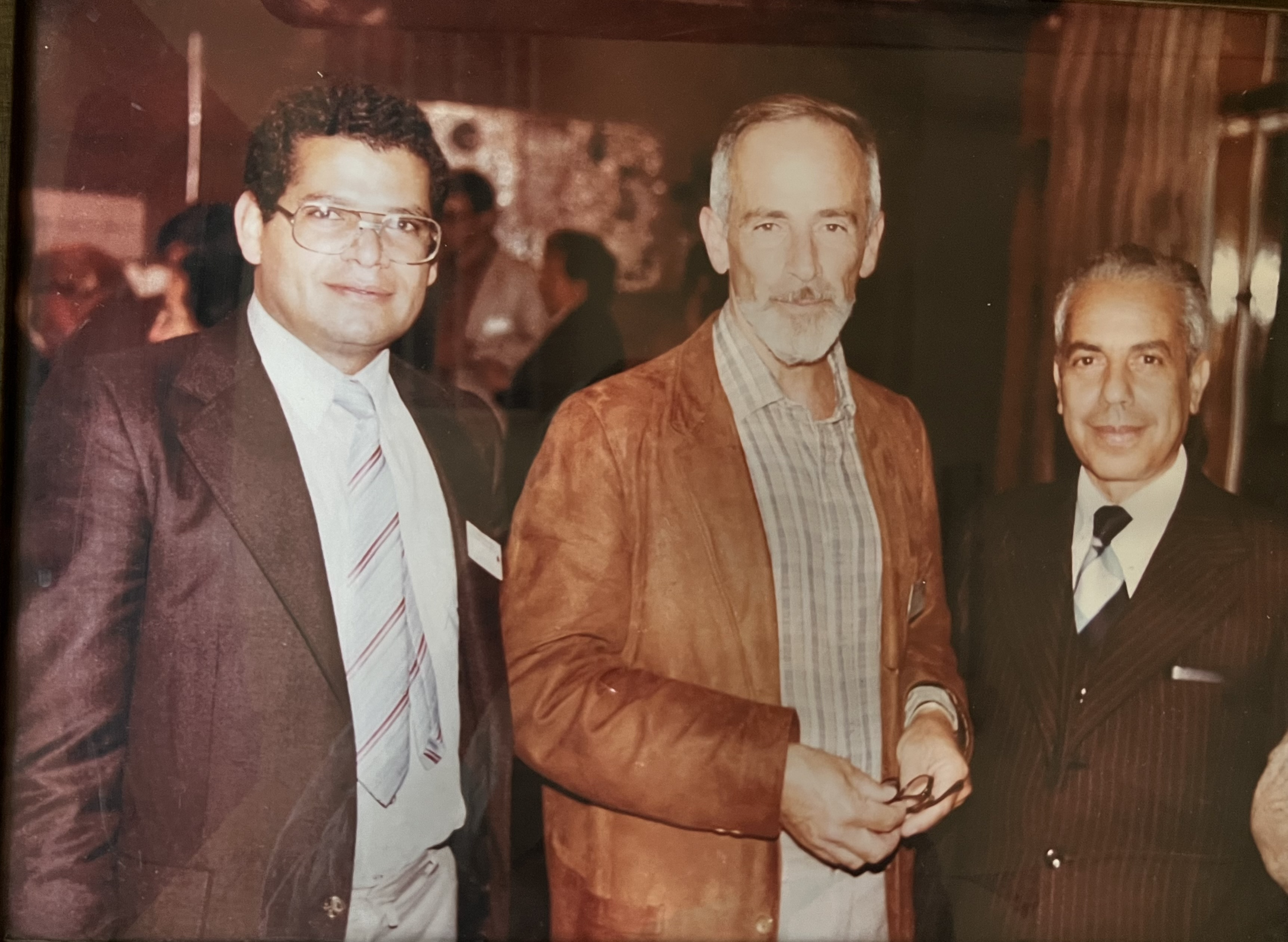
The years 1978–1986 solidified M. A. Zaher's knowledge on acarology as he began a series of visiting professorships and scientific explorations on mites around the world, working on mite bioecology, taxonomy, and biological control. These included a visit in 1978 to the Acarology Laboratories of the United States Department of Agriculture (USDA) in the states of Maryland and Florida, two visits to the Acarology Division of the British Museum, in 1978 and 1982, several visits to Universities and Research Institutions of Plant Protection in the United Kingdom in 1983, and two visits to the Acarology Laboratory, the Faculty of Science, Amsterdam University, The Netherlands in 1980 and 1986.
In 1976, M. A. Zaher started participating in international projects such as: 1) The American-Egyptian project (1976–1982), of which he was the Egyptian coordinator while Dr E.W. Baker the American coordinator. A team of acarologists from different Egyptian institutions was assigned to that purpose. His activities corresponded to the discovery and selection of promising Egyptian natural enemies of pest organisms, for use in Egypt as biological control agents; 2) The Egyptian-German Project (1982–1990), for pest rodents in Egyptian crops and gardens.
During his long and productive career, M. A. Zaher published more than 133 scholarly papers in the field of acarology, most of which in journals of international audience, e.g., Nature, Annals of the Entomological Society of America, International Journal of Acarology, Entomologia Experimentalis et Applicata, Acarologia, Experimental & Applied Acarology, Insect Science & its Application, Entomophaga, Zeitschrift für Angewandte Entomologie, Archives of Phytopathology. Such publications included environmental, biological and taxonomical studies on plant-feeding and predatory mites on field crops, vegetables, fruits, and ornamental plants. Studying plant-feeding mite species, their dispersal, and food preference led to their successful control in Egypt.
Over 63 years serving as a professor, M. A. Zaher acted with leadership in scientific research and technological development, bringing invaluable contributions to acarology. He was the first to study the biology of predatory mites globally, to know their preferred prey and the role they played and how they could be used for the biological control of mite/insect pests and fungi. Such studies helped to enlarge agricultural production by increasing awareness and knowledge of farmers about these economically important organisms. That resulted in improved and sustainable control of the harmful mites with predatory mites in Egypt and elsewhere.
M. A. Zaher wrote some scientific books which were widely used by postgraduate students, such as 1) Plant-feeding mites; 2) Predatory and parasitic mites; 3) Ecology and biology of mites; 4) Morphology of mites.
But the impact of the acarological works authored or co-authored by M. A. Zaher went beyond the impact of each of them, as these were integrated into the extensive publication of 1986 titled ''Survey and Ecological Studies on Phytophagous, Predaceous and Soil Mites in Egypt″. That publication had inspiring effect on students, colleagues, and scientists interested in the Egyptian Acari, detailing a comprehensive survey for the discovery of plant-feeding and predatory mites on several crops in Egypt. This book was intended to be held next to a microscope, so that the tiny organisms could be studied and identified. It included about 400 species with information about their distribution, economic importance, description, illustrations, and taxonomic keys; about 115 of them were new to science or reported for the first time in Egypt. That publication simplified the task of researchers and scholars in the study of these organisms, so important in agricultural production. It was distributed to faculties and research centres in Egypt and in other Arabian countries, as well as to the USDA and other foreign leading universities and research centres. It took six years to complete this book comprising 1000 pages and divided in four parts, with several Egyptian authors making contributions. It resulted from extensive activities conducted within a joint Egypt-USA programme financed by USDA.
Over the course of his career, M. A. Zaher had been an active editorial board member in a number of scientific societies, including the Egyptian Society of Entomology, the Egyptian Society of Zoology, the Egyptian Society of Natural Resources, the Royal Insect Society of London, and the American Society of Acarology. He was elected as a member of the advisory board of the International Journal of Acarology for 20 years, since 1976. An elective member of the International Advisory Council for Biosystematic in Entomology (I.A.C.B.S.E.) as representative for the Middle East in 1980s. He founded the Egyptian Society of Acarology which publishes the Journal of the Egyptian Society of Acarology (ACARINES), serving as president of the Society and editor-in-chief of the journal.
M. A. Zaher was a member of many technical committees, such as the Permanent Scientific Committee for the Promotion of Professors on Plant Protection in Egypt and abroad from the 1970s to the 1990s, the Recommendation Committee of the Ministry of Agriculture, and the Academy of Scientific Research and Technology (ASRT).
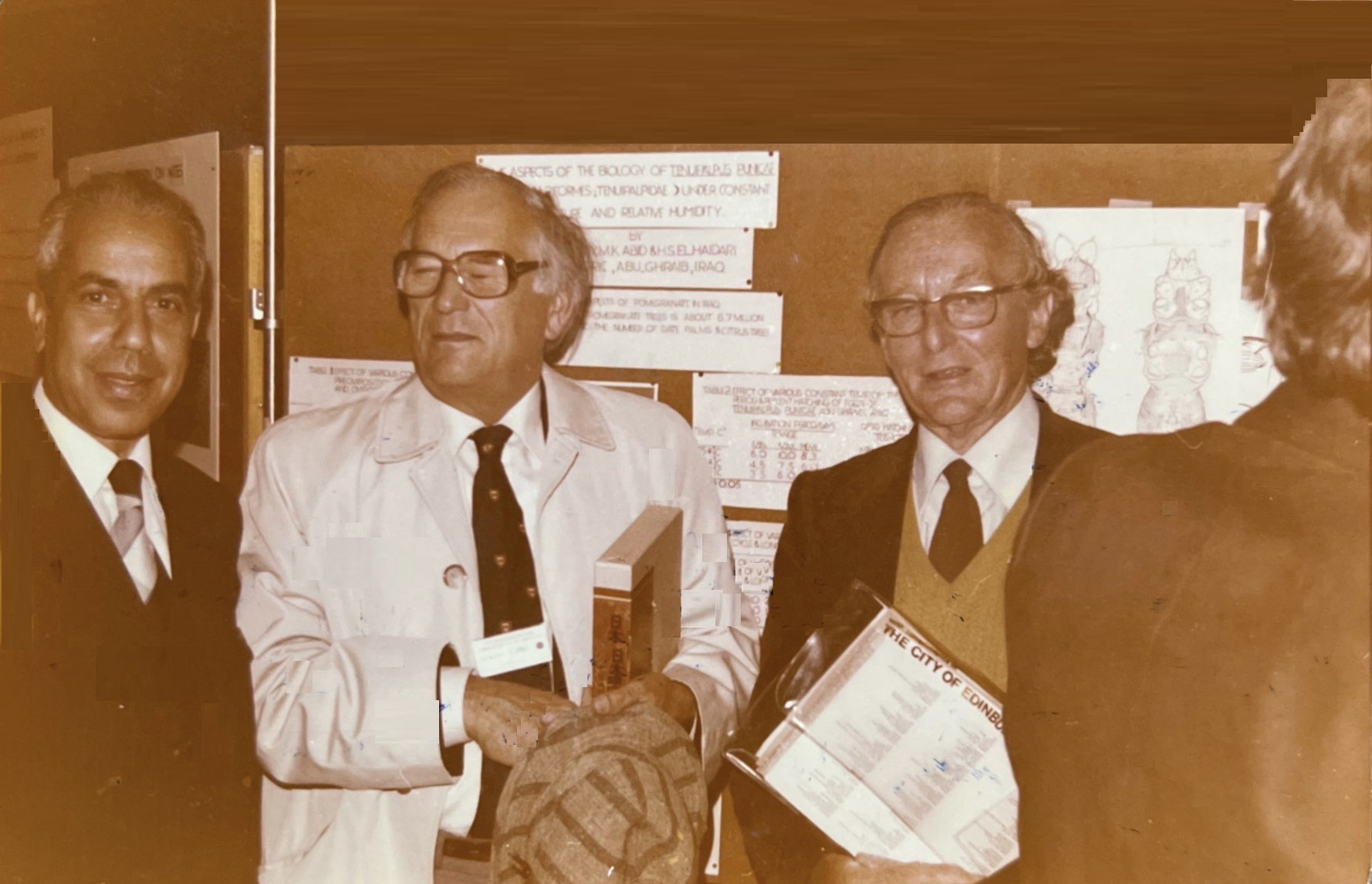
He attended several national and international scientific meetings such as: the International Congress of Acarology in Fort Colins, Colorado, USA (1963), Michigan, USA (1978), and Edinburgh, Scotland, UK (1982); International Congress of Entomology, Hamburg, Germany (1980); International Congress of Plant Protection, Brighton, England, UK (1983); Third International Congress of African Acarologists, Giza, Egypt (2004); First International Conference of Plant Protection Research Institute, Dokii, Egypt (1980); First and Second Conference of Economic Entomology (Egyptian Society of Entomology) (1989 and 2007).
He described 50 new genera/species of mites since 1960s. By being internationally known, acarologists from the American continent, Russia, South Africa, Iran, and India named several new mite species and genera in his honor for his distinguished effort for the advancement of acarology. Only to cite some examples, E.W. Baker named one new species (Paralorryia zaheri) in1968, H.A. Denmark named one new predatory mite species (Typhlodromus zaheri) in 1992, V.I. Mirtofanov named a new genus of phytophagous mites (Zaheria) in 1973, recently a new predatory mite (Proctolaelaps zaheri) was named after him in a paper by E.A. Ueckermann and G.J. de Moraes. Several mite species have been named in his honor by Egyptian acarologists.
M. A. Zaher was awarded several national and international prizes, such as the Medal of Science and Arts of the second class in 1989; a certificate of appreciation and gratitude from the Food and Agriculture Organization (FAO) and the Ministry of Agriculture in 1990 for the distinguished effort in the development of agricultural research; a certificate of appreciation in 2000 from the International Journal of Acarology on the occasion of its silver anniversary commemoration, for his contribution for the advancement of acarology in Egypt; the Scientific Creativity Award by the National Bank of Egypt from the ASRT in 2002; a certificate of appreciation from the Faculty Members Club at Cairo University as an ideal professor in 2004, in recognition of his teaching and scientific research activities since appointed as an administrator in October 1948. During the Third International Congress of African Acarologists in Egypt in January 2004, the editorial board of the International Journal of Acarology honored him with a collection of modern acarological books to be deposited in the library of the Faculty of Agriculture, Cairo University, in recognition of his pioneering work in acarology in Egypt. Finally, he received the State Appreciation Award in Agricultural Sciences in 2013 from the ASRT.
M. A. Zaher has supervised many MSc and PhD students (more than 65 theses). His graduate students have conducted research on mite biodiversity, taxonomy and integrated management of pest mites. He coordinated, in dissertation and thesis works, the basic and applied research that led to the registration of mite species. Throughout his professional life, he always had a key role in the training and guidance of new professors and researchers. While M. A. Zaher officially retired in 1987, he continued to supervise master and doctoral students, to publish, to examine and evaluate doctoral and master theses, and to promote researchers and faculty members in Arab and foreign countries (i.e., Pakistan, Saudi Arabia, Sudan, and Jordan). Also, he was responsible for training postgraduate students from the University of Amsterdam, the Netherlands at the Acarology Laboratory, the Faculty of Agriculture, Cairo University, as summer courses of 2–3 months for three years in the 1980s, within a scientific protocol between the two universities for the exchange of faculty members and postgraduate students.
M. A. Zaher was a patient, helpful, knowledgeable guide, as well as a generous mentor, influencing several learners of acarology. A multitude of students and colleagues have learnt from his truly encyclopedic knowledge and thoughtful advice. Not only his great accuracy, precision and criticism in scientific matters, but also his unbiased openness in discussions, and his humbleness. Those who knew him and worked with him remember him as a passionate scientist and a beloved mentor with a wonderfully generous spirit. The scientific world of acarology loses much with M. A. Zaher's death.
Acknowledgements
We are grateful to all acarologists who provided us some inspiring details about Prof. M. A. Zaher.
References
- Afify A.M., Gomaa S.A., Zaher M.A. 1969. Effectiveness of Agistemus exsertus Gonzalez (Acarina: Stigmaeidae) as an egg predator of the spider mite, Tetranychus cinnabarinus (Boisd.) under varying room conditions. Z. ang. Ent., 63: 48-52. https://doi.org/10.1111/j.1439-0418.1969.tb04362.x
- Ali F.S., Zaher M.A. 2007. Effect of food and temperature on the biology of Typhlodromus swirskii (Athias-Henriot) (Acari- Phytoseiidae). Acarines: J. Egypt. Soc. Acarol., 1: 17-21. https://doi.org/10.21608/ajesa.2007.4986
- El-Badry E.A., Zaher M.A. 1960. Fist record on some predatory mites of family Cheyletidae in Egypt. Bull. Soc. Ent. Egypte, 44: 287-290.
- El-Badry E.A., Zaher M.A. 1961. Life history of predatory mite, Typhlodromus (Amblyseius) cucumeris Oudemans. Bull. Soc. Ent. Egypte, 45: 427-434.
- El-Enany M.A., Nawar M.S., Zaher M.A. 1990. On the identity of the two spotted spider mite Tetranychus urticae in Egypt. Acarologia, 31 (3): 259-262.
- El-Enany M.A., Zaher M.A., Hassan A.F. 1983. Cross-mating between the red spider mites Tetranychus cucurbitacearum (Sayed) and T. cinnabarinus (Boisd.). Z. ang. Ent., 96 (1-5): 1-3. https://doi.org/10.1111/j.1439-0418.1983.tb03631.x
- Hanna M.A., Zaher M.A., Ibrahim S.M. 1982. Some probable causes of the host preference in six species of phytophagous mites. Z. ang. Ent., 93: 329-333. https://doi.org/10.1111/j.1439-0418.1982.tb03603.x
- Hasan A.S., Zaher M.A. 1956. Biology of the red spider mite, Eotetranychus cucurbitacearum Sayed. Bull. Soc. Ent. Egypte, 40: 301-320.
- Mohamed M.I., Zaher M.A., Hassan M.F. 1982. Observations on Cheyletus cacahuamilpensis, a predator of the tenuipalpid mite Dolichotetranychus floridanus. Entomophaga, 27 (3): 343-348. https://doi.org/10.1007/BF02374818
- Moussa M.A., Zaher M.A., Naguib M. 1964. Observations on the egg laying habits of Prodenia litura in Egyptian cotton fields (Lepidoptera). Bull. Soc. Ent. Egypte, 27: 59-63.
- Nawar S.M., Zaher M.A., Ewies H.F. 2020. Field trials to control date palm dust mite Oligonychus afrasiaticus (McGregor) (Actinidida: Tetranychidae) infesting date palm trees with entomopathogenic fungi in Sharq El-Owainat, Egypt. Plant Archives, 20 (2): 4361-4364.
- Nawar M.S., Zaher M.A., El-Enany M.A.M., Ibrahim A.A. 2001a. Life tables of Typhlodromus athiasae at different temperatures (Acari: Phytoseiidae). Egypt. J. Agric. Res., 79 (4): 1277-1289.
- Nawar M.S., Zaher M.A., El-Enany M.A.M., Ibrahim A.A. 2001b. Life table parameters of Phytoseius plumifer (Canestrini and Fanzago) reared at different temperatures. Egypt. J. Agric. Res., 79 (4): 1341-1352.
- Nawar M.S., Zaher M.A., Shoeib A.A. 2008. Life tables and food range of Saniosulus nudus Summers (Acari: Eupalopsellidae). Bull. Soc. Ent. Egypte, 85: 281-287.
- Rasmy A.H., Momen F.M., Zaher M.A., Abou-Elella G.M. 2003. Dietary influence on the life history and predation of the predatory phytoseiid mite Amblyseius zaheri. Int. J. Trop. Ins. Sci., 23, Special Issue (1): Novel Approaches to Tick and Mite Management in Africa: 31-34. https://doi.org/10.1017/S1742758400012224
- Rasmy A.H., Momen F.M., Zaher M.A., Nawar M.S., Abou-Elella G.M. 2002. Dietary influence on the life history and predation of the phytoseiid mite Amblyseius deleoni. Acarid phylogeny and evolution in mites and ticks. Huwer Academic Publishers, the Netherlands: 315-318. https://doi.org/10.1007/978-94-017-0611-7_32
- Rasmy A.H., Soliman Z.R., Zaher M.A., El-Bagoury E.E. 1978. Biological studies on three mite species of the family Tydeidae. Proc. 4th Conf. Pest Control, Cairo, Part II: 812-814.
- Rasmy A.H., Zaher M.A. 1983. Population density of the citrus brown mite Eutetranychus orientalis (Klein) as affected by citrus species. Int. Cong. Plant Prot., Brighton, England, p. 118.
- Rasmy A.H., Zaher M.A., Abou-Awad B. 1971a. Effects of the ecological and chemical factors on mites infesting deciduous fruit trees in Egypt. Z. ang. Ent., 68: 426-437.
- Rasmy A.H., Zaher M.A., Abou-Awad B. 1971b. Mites associated with deciduous trees in U.A.R. Z. ang. Ent., 70: 179-183. https://doi.org/10.1111/j.1439-0418.1972.tb02167.x
- Rasmy A.H., Zaher M.A., El-Bagoury M.E. 1972a. The ecological approaches to the management of citrus rust mite Phyllocoptruta oleivorus (Ashm.). Z. ang. Ent., 70: 68-71. https://doi.org/10.1111/j.1439-0418.1972.tb02149.x
- Rasmy A.H., Zaher M.A., El-Bagoury M.E. 1972b. Mites associated with citrus in Nile Delta. Z. ang. Ent., 70: 183-186. https://doi.org/10.1111/j.1439-0418.1972.tb02168.x
- Rasmy A.H., Zaher M.A., Momen F.M., Nawar M.S., Abou- Elella G.M. 2000. The effect of prey species on biology and predatory efficiency of some phytoseiid mites. 1- Amblyseius delenoi (Muma & Denmark). Egypt. J. Biol. Pest Cont., 10 (2): 117-121.
- Shehata K.K., Zaher M.A. 1969. Two new species of the genus Amblyseius from U.A.R. (Acarina: Phytoseiidae). Acarologia, 11 (2): 173-174.
- Shereef G.M., Zaher M.A., Afifi A.M. 1980a. Mites inhabiting organic manure in Egypt. 1st Conf. Plant Prot. Res. Inst., Dokki, Egypt, 3: 107-120.
- Shereef G.M., Zaher M.A., Afifi A.M. 1980b. Life history of Hypoaspis bregetovae S. & A. and H. petrovae S. & A. with their feeding habits (Mesostigmata: Laelapidae). 1st Conf. Plant Prot. Res. Inst., Dokki, Egypt, 13-15 Dec., 3: 149-168.
- Shereef G.M., Zaher M.A., Afifi A.M. 1980c. Biological studies and feeding habits of Proctolaelaps pygmaeus (Müller) (Mesostigmata: Ascidae). 1st Conf. Plant Prot. Res. Inst., Dokki, Egypt, 13-15 Dec., 3: 169-181.
- Shereef G.M., Zaher M.A., Afifi A.M. 1980d. Some biological observations on Glyptholaspis confusa (Foa) (Mesostigmata: Macrochelidae). 1st Conf. Plant Prot. Res. Inst., Dokki, Egypt, 13-15 Dec., 3: 183-198.
- Shereef G.M., Zaher M.A., Darwish M.A. 1978. Biological studies on two oribatid mites Oppia sticta Popp. and Schelorobates zaherii Youssef & Nasr. Proc. 4th Conf. Pest Control, Cairo: 826-833.
- Soliman Z.R., Zaher M.A. 1967. Two new species of the genus Neophyllobius (Acarina: Neophyllobiidae). Bull. Soc. Ent. Egypte, 51: 27-30.
- Soliman Z.R., Zaher M.A. 1975. Hemitarsocheylus, a new genus of the family Tarsocheylidae with a description of a new species. Acarologia, 17 (1): 103-105.
- Soliman Z.R., Zaher M.A. 1976. Bdellid mites of Lattakia, Syria (Acarina: Bdellidae). Bull. Soc. Ent. Egypte, 59: 73-82.
- Soliman Z.R., Zaher M.A., El-Bishlawy S.M.O. 1975. Studies on the biology of the predaceous mite, Cunaxa capreolus Berl. (Acarina: Prostigmata: Cunaxidae). Anz. Schadlingskd, Pflanzenschuts, Hmweltschut, 2 (48): 124-126 (In German). https://doi.org/10.1007/BF01876377
- Soliman Z.R., Zaher M.A., El-Safy G.S. 1974a. An attempt of rearing Tydeus californicus (Banks) (Acarina: Tydeidae), on sweet potato leaves in Egypt. Bull. Soc. Ent. Egypte, 58: 217-219.
- Soliman Z.R., Zaher M.A., El-Safy G.S. 1974b. Control of Cenopalpus spp. on fruit trees in Egypt (Acarina: Tenuipalpidae). Bull. Ent. Soc. Egypt, Econ. Ser., 8: 57-62.
- Soliman Z.R., Zaher M.A., Ibrahim M.A. 1974c. Population dynamics of predaceous mites associated with olive scales insects in Egypt. Bull. Zool. Soc. Egypt, 26: 1-8.
- Soliman Z.R., Zaher M.A., Mohamed M.I. 1978. Biology and predaceous efficiency of Macrocheles matrius (Hull) (Acari: Mesostigmata). Z. ang. Ent., 85: 225-230. https://doi.org/10.1111/j.1439-0418.1978.tb04034.x
- Wafa A.K., Zaher M.A., Afify A.M., Gomaa E.A. 1969. Effect of diet on the development of the predaceous mite Agistemus exsertus Gonzalez (Acarina: Stigmaeidae). Z. ang. Ent., 63: 282-288. https://doi.org/10.1111/j.1439-0418.1969.tb04393.x
- Wafa A.K., Zaher, M.A., Osman A.A. 1970a. Control of phytophagous mites on mango trees in U.A.R. Bull. Ent. Soc. Egypt, Econ. Ser., 4: 215-225.
- Wafa A.K., Zaher M.A., Soliman Z.R. 1967. Biology of the European red spider mite, Panonychus ulmi (Koch) in U.A.R. Bull. Soc. Ent. Egypte, 51: 131-139.
- Wafa A.K., Zaher M.A., Soliman Z.R. 1970b. Life history of the predatory mite Eutogenes africanus Wafa & Soliman (Acarina: Cheyletidae). Bull. Soc. Ent. Egypte, 54: 129-131.
- Wafa A.K., Zaher M.A., Soliman Z.R. 1970c. Life history of the predatory mite Acaropsis aegyptiaca Wafa & Soliman (Acarina: Cheyletidae). Bull. Soc. Ent. Egypte, 54: 155-158.
- Wafa A.K., Zaher M.A., Yousef A.A. 1968/1969. Survey of tenuipalpid mites in U.A.R. (Acarina: Tenuipalpidae). Bull. Zool. Soc. Egypt, 22: 25-59.
- Yousef A.A., Zaher M.A., Abd El-Hafiez A.M. 1979a. Effect of season and grapevine variety on the biology of Tenuipalpus granati Sayed, with description of its immature stages (Acari: Prostigmata: Tenuipalpidae). Acarologia, 21 (3-4): 384-388.
- Yousef A.A., Zaher M.A., Abd-El-Hafiez A.M. 1982a. Effect of prey on the biology of Amblyseius gossipi El-Badry and Agistemus exsertus Gonzalez (Acari: Phytoseiidae). Z. ang. Ent., 93 (1-5): 453-456. https://doi.org/10.1111/j.1439-0418.1982.tb03619.x
- Yousef A.A., Zaher M.A., Kandil M.M. 1979b. Comparative morphological studies on the developmental stages of Cheletogenes ornatus (C. & F.) (Prostigmata: Cheyletidae). Acarologia, 21 (2): 228-233.
- Yousef A.A., Zaher M.A., Kandil M.M. 1982b. Effect of prey and temperature on the development and biology of Cheyletus malaccensis Oudemans (Acari: Cheyletidae). Z. ang. Ent., 93 (1‐5): 39-42. https://doi.org/10.1111/j.1439-0418.1982.tb03568.x
- Zaher M.A. 1960. Effect of adult population density on the silver Y moth Plusia gamma L. Bull. Soc. Ent. Egypte, 54: 235-240.
- Zaher M.A. 1984a. Survey and ecological studies on phytophagous, predaceous and soil mites in Egypt. I. Phytophagous mites in Egypt (Nile Valley and Delta). PL 480 Programme U.S.A., Project No. EG-ARS-30, Grant No. FG-EG-139. 228 pp.
- Zaher M.A. 1984b. Survey and ecological studies on phytophagous, predaceous and soil mites in Egypt. III. Mites of Sinai. PL 480 Programme U.S.A., Project No. EG-ARS-30, Grant No. FG-EG-139. 36 pp.
- Zaher M.A. 1986. Survey and ecological studies on phytophagous, predaceous and soil mites in Egypt. II-A: predaceous and nonphytophagous mites (Nile Valley and Delta). Text. PL 480 Programme U.S.A., Project No. EG-ARS-30, Grant No. FG-EG-139. 567 pp.
- Zaher M. A. 1989. Mites of Egypt and their role in agriculture. Proc. of the 1st Int. Conf. of Econ. Ent. Egypt, 3: 48-82.
- Zaher M.A. 2004. History of Acari in Egypt and its situation at present. 3rd Int. Cong. Afr. Acarol., Giza (11-15 Jan., 2004).
- Zaher M.A. 2007. Acarology in Egypt: A brief history. Acarines: J. Egypt. Soc. Acarol., 1: 1-4. https://doi.org/10.21608/ajesa.2007.4982
- Zaher M.A., Abou-Awad B.A. 1978a. Three new species of the genus Eriophyes and Phytoptes in Egypt (Eriophyoidea: Eriophyidae). Acarologia, 20 (4): 556-562.
- Zaher M.A., Abou-Awad B.A. 1978b. A new species and new record of some eriophyoid mites in Egypt (Eriophyoidea: Eriophyidae). Acarologia, 21 (1): 61-64.
- Zaher M.A., Abou-Awad B.A. 1978c. Two new eriophyoid species infesting olive trees in Egypt. Acarologia, 21 (1): 104-108.
- Zaher M.A., Afify A.M., Gomaa E.A. 1971a. Survey and biology of Agistemus exsertus Gonzalez with the description of the immature stages (Acarina: Stigmaeidae). Z. ang. Ent., 67: 814-819.
- Zaher M.A., El-Badry E.A. 1961. Life history of the predatory mite, Agistemeus fleschneri Summers, and effect of nutrition on its biology. Bull. Soc. Ent. Egypte, 45: 375-385.
- Zaher M.A., El-Badry, E.A. 1962. Abundance of mites and insects predaceous on tetranychid and tenuiplapid mites in Giza. Bull. Soc. Ent. Egypte, 46: 429-441.
- Zaher M.A., El-Badry E.A. 1964. Survey and population studies on red and false spider mites. 1st Int. Cong. Acarol., Fort Collins, Clo., U.S.A., 1963.
- Zaher M.A., El-Bagoury M.E. 1981. A new tydeid mite, Paralorryia bakeri n.sp. from Egypt (Prostigmata: Tydeidae). Acarologia, 22 (2): 179-180.
- Zaher M.A., El-Bishlawy S.M.O., Ali F.S. 2007a. Some ecological and biological studies on Typhlodromus swirskii (Athias- Henriot) (Acari-Phytoseiidae). Acarines: J. Egypt. Soc. Acarol., 1: 23-28. https://doi.org/10.21608/ajesa.2007.4987
- Zaher M.A., El-Borolossy M.A., Ali F.S. 2001. Morphological and biological studies on Typhlodromus talbii Athias- Henriot (Gamasida-Phytoseiidae). Int. J. Trop. Ins. Sci., 21 (1): 43-53. https://doi.org/10.1017/S1742758400020038
- Zaher M.A., El-Hennawy H.K., Hassan M.F., Hussein A.M., Ahmed N.F.R. 2005. Survey and populations of spiders and other arthropods in cucurbit and legume fields in El-Kanater, Egypt. Serket, 9 (3): 91-100.
- Zaher M.A., El-Khateeb H.M.A. 1993. Effect of nutrition on some biological aspects of Tetranychus urticae Koch. Zag. J. Agric. Res., 20 (1): 379-383.
- Zaher M.A., Gomaa E.A. 1978. Incidence of eupalopsellid mites in Egypt with description of two new species (Acari: Eupalopsellidae). Acarologia, 20 (4): 546-555.
- Zaher M.A., Gomaa E.A. 1979a. Genus Neophyllobius in Egypt with description of three new species (Acari: Neophyllobidae). Int. J. Acarol., 5 (2): 123-130. https://doi.org/10.1080/01647957908683135
- Zaher M.A., Gomaa E.A. 1979b. Three new species of genus Raphignathus in Egypt (Prostigmata: Raphignathidae). Acarologia, 21 (2): 197-203.
- Zaher M.A., Gomaa E.A., El-Enany M.A. 1981. Crossbreeding between the green two spotted mite, Tetranychus urticae Koch and T. arabicus Attiah. Z. ang. Ent., 92 (1-5): 527-529. https://doi.org/10.1111/j.1439-0418.1981.tb01706.x
- Zaher M.A., Gomaa E.A., El-Enany M.A. 1982a. Spider mites of Egypt (Tetranychidae: Acari). Int. J. Aacrol., 8 (2): 91-114. https://doi.org/10.1080/01647958208683284
- Zaher M.A., Hanna M.A. 1965. Population study on Tegonotus hassani K. on olive trees in Egypt. Bull. Soc. Ent. Egypte, 49: 1-9.
- Zaher M.A., Hanna M.A. 1982. History of Acarology in Egypt. Indira Publishing House, Michigan, 48237 U.S.A. p. 161-170.
- Zaher M.A., Hanna M.A., Mohamed M.I., Sawiris Z.R. 1980d. Relative susceptibility of ten soybean varieties to mite infestation and probable causes of resistance. 1st Conf. Plant Prot. Res. Inst., Dokki, Egypt, 13-15 Dec., 3: 41-51.
- Zaher M.A., Mohamed M.I. 1980a. Mites associated with sugar beet in Egypt. Ann. Agric. Soc. Moshtohor, 13: 205-207.
- Zaher M.A., Mohamed M.I. 1980b. Soil mites associated with some crops in Sinai Peninsula. Ann. Agric. Soc. Moshtohor, 13: 209-213.
- Zaher M.A., Mohamed M.I., Abd El-Halim S.M. 1985. Incidence of mites associated with stored seed and food products in Upper Egypt. Exp. Appl. Acarol., (2): 19-24. https://doi.org/10.1007/BF01193352
- Zaher M.A., Momen F.M., Rasmy A.H., Nawar M.S., Abou-Elella G.M. 2007b. Some factors affecting reproduction and sex-ratio of the predacious mite Amblyseius deleoni (Muma and Denmark) (Acari: Phytoseiidae). Arch. Phytopathol. Plant Prot., 40 (4): 264-280. https://doi.org/10.1080/03235400500424653
- Zaher M.A., Moussa M.A. 1959. Relationship between larval and pupal periods of some lepidopterous insects. Nature, 184: 288. https://doi.org/10.1038/184288a0
- Zaher M.A., Moussa M.A. 1961. Effect of population density on Prodenia litura (F.). Ann. Ent. Soc. Amer., 54 (2): 145-149. https://doi.org/10.1093/aesa/54.2.145
- Zaher M.A., Moussa M.A. 1962. Effect of larval crowding on the cutworm Agrotis ypsilon Rott. Bull. Soc. Ent. Egypte, 56: 365-372.
- Zaher M.A., Moussa M.A., Kotby F.1960. Abundance of the cotton leafworm Prodenia litura (F.) in relation to host plants. I-Host plants and their effects on biology. Bull. Soc. Ent. Egypte, 44: 241-251.
- Zaher M.A., Nawar M.S., Shoeib A.A. 2008. Effect of some biotic and abiotic factors on the biology of Saniosulus nudus Summers (Acari: Eupalopsellidae). Bull. Soc. Ent. Egypte, 85: 289-294.
- Zaher M.A., Rakha M.A. 1981a. A new pyroglyphid mite Hiristia egyptiaca sp. n., from house sparrow nest in Egypt (Pyroglyphidae: Acaridida). Bull. Zool. Soc. Egypté, 31: 79-82.
- Zaher M.A., Rakha M.A. 1981b. A new dermoglyphid mite Dermoglyphus atyoeii sp. n. from house sparrow in Egypt (Acaridida: Dermoglyphidae). Bull. Zool. Soc. Egypté, 31: 131-134.
- Zaher M.A., Rakha, M.A. 1981c. Microlichus passerines sp.n. (Epidermoptidae: Acaridida) from Passer domesticus niloticus, in Egypt. Bull. Zool. Soc. Egypté, 31: 135-137.
- Zaher M.A., Rasmy A.H. 1969. A new species of the genus Tuckerella from U.A.R. (Acarina: Tuckerellidae). Acarologia, 11 (4): 730-732.
- Zaher M.A., Rasmy A.H., Abou-Awad B. 1971b. Ecological studies on mites infesting deciduous fruit trees in lower Egypt. Z. ang. Ent., 69: 59-64. https://doi.org/10.1111/j.1439-0418.1971.tb03183.x
- Zaher M.A., Rasmy A.H., Soliman Z.R., El-Bagoury E.E. 1978b. Tydeid mites of Egypt. Proc. 4th Conf. Pest Cont., Cairo, Part II: 837-839.
- Zaher M.A., Shehata, K.K., 1963. Biological studies on Tydeus californicus (Banks) in Egypt, U.A.R. Bull. Soc. Ent. Egypte, 47: 297-300.
- Zaher M.A., Shehata K.K. 1965. Oligonychus vitis n. sp. (Acarina: Tetranychidae). Bull. Soc. Ent. Egypte, 49: 67-69.
- Zaher M.A., Shehata K.K. 1969. Two new species of the genus Typhlodromus (Acarina: Phytoseiidae). Indian Bull. Ent., 1 (1): 54-59.
- Zaher M.A., Shehata K.K. 1970. A new typhlodromid mite, Typhlodromus tetramedius n. sp. (Acarina: Phytoseiidae). Bull. Soc. Ent. Egypte, 54: 217-221.
- Zaher M.A., Shehata K.K. 1971a. Biological studies on the predatory mite Typhlodromus pyri Scheuten with the effect of prey and non-prey substances (Acarina: Phytoseiidae). Z. ang. Ent., 67: 389-394. https://doi.org/10.1111/j.1439-0418.1971.tb02137.x
- Zaher M.A., Shehata K.K. 1971b. Biology of the red spider mite Oligonychus mangiferus (R. & S.) (Acarina: Tetranychidae). Bull. Soc. Ent. Egypte, 55: 393-401.
- Zaher M.A., Shehata K.K., El-Khatib H. 1978a. Population density effects on biology of Tetranychus arabicus, the common spider mite in Egypt. Rec. Advan. Acarol., 1: 507-509. Read at V Int. Cong. Acarol. East Lancing, Michigan, U.S.A. https://doi.org/10.1016/B978-0-12-592201-2.50071-3
- Zaher M.A., Shereef G.M., Afifi A.M. 1980a. Population density of mites in three types of organic manure. 1st Conf. Plant Prot. Res. Inst., Dokki, Egypt, 13-15 Dec., 3: 97-105.
- Zaher M.A., Shereef G.M., Duweini F.K. 1980b. Mites associated with solitary bees in lower Egypt. 1st Conf. Plant Prot. Res. Inst., Dokki, Egypt, 13-15 Dec., 3: 135-147.
- Zaher M.A., Shereef G.M., Duweini F.K. 1980c. Biological and morphological studies on Cheletonella caucastiaca Volgin in Egypt (Acari: Cheyletidae). 1st Conf. Plant Prot. Res. Inst., Dokki, Egypt, 13-15 Dec., 3: 199-218.
- Zaher M.A., Soliman Z.R., 1965. Eutogenes punctata n. sp. (Acarina: Cheyletidae). Bull. Soc. Ent. Egypte, 50: 65-66.
- Zaher M.A., Soliman Z.R. 1966. Eupalopsis aegyptiaca n. sp. (Acarina: Stigmaeidae). Acarologia, 8 (3): 421-423.
- Zaher M.A., Soliman Z.R. 1967. The family Cheyletidae (Acarina) in the U.A.R. with a description of four new species. Bull. Soc. Ent. Egypte, 51: 21-26.
- Zaher M.A., Soliman Z.R. 1971a. Life history of the predatory mite Cheletogenes ornatus (C. & F.) (Acarina: Cheyletidae). Bull. Soc. Ent. Egypte, 55: 35-39.
- Zaher M.A., Soliman Z.R., 1971b. Life history of the predatory mite Cheyletus malaccensis Oudemans (Acarina: Cheyletidae). Bull. Soc. Ent. Egypte, 55: 49-53.
- Zaher M.A., Soliman Z.R. 1971c. Life history of the predatory mite Chiapacheylus macrocorneus Zaher & Soliman (Acarina: Cheyletidae). Bull. Soc. Ent. Egypte, 55: 137-140.
- Zaher M.A., Soliman Z.R., Diab F.M. 1977. An experimental study of Borrelia anserina in four species of Argas ticks. Z. Parasitenk., 53: 213-223. https://doi.org/10.1007/BF00380466
- Zaher M.A., Soliman Z.R., El-Bishlawy S.M. 1975a. Feeding habits of the predaceous mite, Cunaxa capreolus Berlese (Acarina: Cunaxidae). Entomophaga, 25 (2): 209-212. https://doi.org/10.1007/BF02371661
- Zaher M.A., Soliman Z.R., El-Bishlawy S.M. 1975b. Studies on the population dynamics of soil predaceous prostigmatid mites in Giza, Egypt. Z. ang. Ent., 19: 440-443. https://doi.org/10.1111/j.1439-0418.1975.tb02367.x
- Zaher M.A., Soliman Z.R., El-Safy G.S. 1973. Survey and population studies on mites associated with deciduous trees in Giza, Egypt. Bull. Soc. Ent. Egypte, 57: 425-433.
- Zaher M.A., Soliman Z.R., El-Safy G.S. 1974. Biological studies on Cenopalpus pulcher (C. & F.) (Acarina: Tenuipalpidae). Bull. Soc. Ent. Egypte, 58: 367-373.
- Zaher M.A., Soliman Z.R., Rakha M.A. 1982b. Biological studies on the predatory mite, Saniouslus nudus Summers (Raphignathoidea: Eupalopsellidae). VI Int. Cong. Acarol., Edinburgh, 1982: 597-600.
- Zaher M.A., Soliman Z.R., Rasmy A.H., Abou-Awad B.A. 1978c. Eriophyid mites of Egypt. Proc. 4th Conf. Pest Cont., Cairo, Part II: 815-817.
- Zaher M.A., Wafa A.K., Maher A.A., Rasmy A.H. 1970c. General survey of mites associated with citrus trees in Egypt and Giza strip. Bull. Soc. Ent. Egypte, 54: 73-79.
- Zaher M.A., Wafa A.K., Osman A.A. 1970a. Population studies of mites associated with mango trees in U.A.R. Bull. Soc. Ent. Egypte, 54: 141-148.
- Zaher M.A., Wafa A.K., Shehata K.K. 1969a. Life history of the predatory mite Phytoseius plumifer (C. & F.) and effect of nutrition on its biology (Acarina: Phytoseiidae). Ent. Exp. Appl., 12: 383-388. https://doi.org/10.1111/j.1570-7458.1969.tb02534.x
- Zaher M.A., Wafa A.K., Yousef A.A. 1969b. Biological studies on Raoiella indica Hirst and Phyllotetranychus aegyptiacus Sayed infesting date palm trees in U.A.R. Z. ang. Ent., 63: 406-411. https://doi.org/10.1111/j.1439-0418.1969.tb04395.x
- Zaher M.A., Wafa A.K., Yousef A.A. 1969c. The biology of the false spider mite Cenopalpus lanceolatisetae Attiah. Ind. J. Ent., 31 (1): 53-58.
- Zaher M.A., Wafa A.K., Yousef A.A. 1970b. Biology of Brevipalpus phoenicis (Geijeskens) in U.A.R. (Acarina: Tenuipalpidae). Bull. Soc. Ent. Egypte, 54: 177-183.
- Zaher M.A., Yousef A.A. 1969. Three genera of family Tenuipalpidae in U.A.R. with description of three new species (Acarina: Tenuipalpidae). Acarologia, 11 (2): 272-280.
- Zaher M.A., Yousef A.A. 1972. Biology of the false spider mite Tenuipalpus punicae P. & B. (Acarina: Tenuipalpidae). Z. ang. Ent., 70: 23-29. https://doi.org/10.1111/j.1439-0418.1972.tb02146.x
- Zaher M.A., Yousef A.A. 1973. A new species of the genus Exothorhis from Sudan (Acarina: Eupalopsellidae). Bull. Soc. Ent. Egypte, 57: 447-450.
- Zaher M.A., Yousef A.A., Kandil M.M. 1981. Effect of food on the biology of Cheletogenes ornatus (C. & F.) (Acari: Prostigmata: Cheyletidae). Acarologia, 22 (4): 361-366.
 to post any comment or correction.


2023-01-30
Date accepted:
2023-02-27
Date published:
2023-03-28
Edited by:
Kreiter, Serge

This work is licensed under a Creative Commons Attribution 4.0 International License
2023 Abo-Shnaf, Reham; Elhalawany, Ashraf Said; Negm, Mohamed W. and Sanad, Ahmad Said
 Download article
Download the citation
RIS with abstract
(Zotero, Endnote, Reference Manager, ProCite, RefWorks, Mendeley)
RIS without abstract
BIB
(Zotero, BibTeX)
TXT
(PubMed, Txt)