


Donald Macfarlane (1930 - 2019)
Baker, Anne1 and Bowman, Clive2
1✉ Department of Life Sciences, Natural History Museum, Cromwell Road, London, SW7 5BD, United Kingdom.
2Mathematical Institute, University of Oxford, Oxford OX2 6GG, United Kingdom.
2020 - Volume: 60 Issue: 1 pages: 196-199
https://doi.org/10.24349/acarologia/20204363Obituary
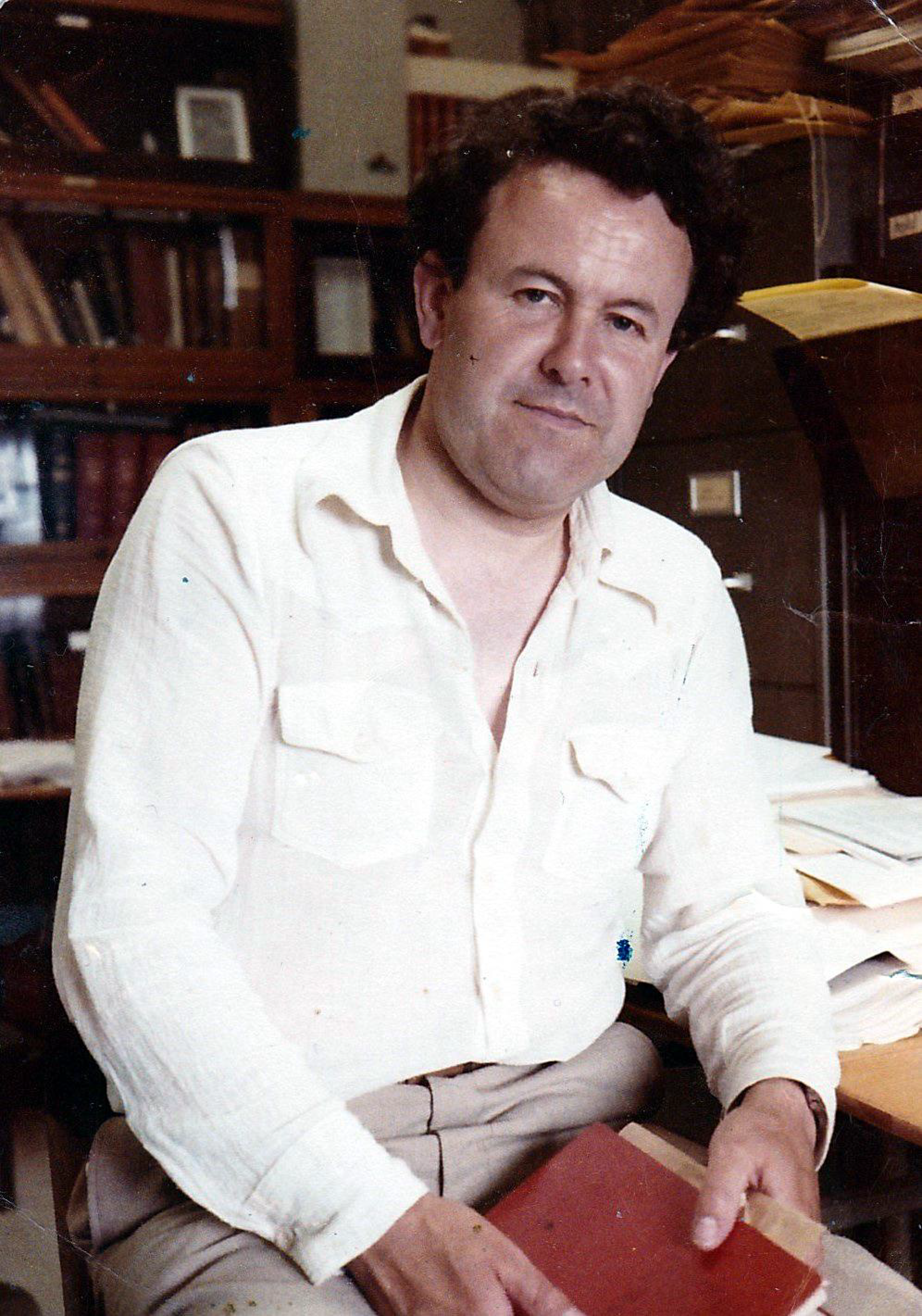
Don Macfarlane, an acarologist held in high esteem by colleagues around the world, died on 9 September 2019. He amassed an encyclopaedic knowledge of acarine taxonomy and literature during his 37-year career, but was equally renowned for his readiness to help others. Thoughtful, considerate and generous with his time – the sort of decent human being that made you feel good when you chatted with him. He was a dear friend to many.
Don was born in the town of Gillingham, Kent, southeast England on 24th May 1930 and lived in and around there for most of his life. Kent's towns were regularly bombed during World War II due to their proximity to occupied Europe and their contribution to major events of the war. In 1939, along with most of his class at Byron Road School, Don was evacuated to Sandwich on the south coast and then, when that was deemed at risk, to Bedwas in Wales. He returned to Gillingham Boys' Grammar School (now part of The Howard School) for his secondary education two years later. Here his gentlemanly demeanour was already in evidence as his Headmaster described him as having a `restrained manner, pleasant and courteous. His character is entirely reliable'.
Don's interest in entomology started at school when a class-mate introduced him to collecting Lepidoptera. This interest developed into an ambition to have a career as an entomologist, but Don's further education in the subject was delayed by his compulsory National Service. In 1949, he joined the Army's Intelligence Corp of the Royal Signals in Cyprus, where he learned Morse code and monitored signals from the Soviet Union. The outbreak of the Korean War in 1950 caused his required 18-month term to be extended to two years. After this, he returned to Gillingham to begin a University of London external Bachelor of Science degree in Zoology, with a subsidiary in Botany, at Medway Technical College (now Waterfront University Technical College). While there, he arranged study visits for himself and fellow students to examine mammal skulls in the osteology collection of the Natural History Museum (NHM) (then the British Museum (Natural History)). These were to be the start of a long scientific association with the Museum. Don was awarded his degree in 1953 and, in the same year, a chance sighting of a job advertisement by a next-door neighbour led to his employment as an Assistant Experimental Officer at the Institute of Terrestrial Ecology's Merlewood Research Station in Grange-over-Sands, Cumbria (now part of the UK Centre for Ecology & Hydrology). He was fascinated by his work, which involved hours of microscopy identifying insects and mites found in soil and litter under different tree species. While there, in November 1954, he was elected a fellow of the Royal Entomological Society (FRES). In connection with his work, Don also spent a month working in the Arachnida Section of the NHM, headed by the eminent acarologist Gwilym Evans. He made a good impression on Gwilym, who suggested he apply for the vacant post of mite specialist at the Commonwealth Agriculture Bureaux's Institute of Entomology (later the International Institute of Entomology and now part of CAB International, CABI). Don duly did this and, in June 1955, was offered the job. Like other Institute taxonomists, Don was based in the NHM and was made an Honorary Associate of the Museum. He collaborated with the staff there and became a valued colleague, regarding the opportunity to work at the NHM as his good fortune and a privilege.
The core function of the Institute was to provide identifications of arthropods found on agricultural and horticultural crops and farm animals, and in foods imported into the UK. Specimens came from countries throughout the world, mainly from state agricultural departments and university researchers. Don identified thousands of mites during his career, with the result that he built up a mine of information about their taxonomy and literature. He had a catalogic mind for when he had seen a certain mite before - retrieving details from the corners of his memories with always an extra bit of information offered, not just the basic determination of genus and species. He published some of his data in the form of descriptions of taxa new to science. With the NHM's two acarologists, Gwilym Evans and Gordon Sheals, he also produced the excellent `The terrestrial Acari of the British Isles, Vol 1. Introduction and biology', still one of the few comprehensive works on the fauna and a tome that both authors (AB, CB) still dip in to nearly 60 years later. This was intended to be the first in a five-volume series on British mites and ticks, and, according to a letter Don sent to Professor François Grandjean, Muséum National d'Histoire Naturelle, Paris, in July 1957, he had begun to write the Oribatida part (MSS MAC A 1:1, Special Collections, NHM Department of Library and Archives). Sadly, the dissolution of the collaboration meant that the project was abandoned and his research was never published.
Don officially retired from the Institute in 1990, but continued to work there for a day a week until 1992 when funds were available to appoint his replacement. Even then, Don, a committed and keen acarologist and microscopist, could not entirely give up work and he took on consultancies from the Pesticides Safety Directorate (now part of the Chemicals Regulation Directorate at the Health and Safety Executive) and Overseas Development Natural Resources Institute (now the Natural Resources Institute of the University of Greenwich).
Don was modest about his expertise, but the respect for his contribution to acarology felt by fellow researchers is reflected in the number of new taxa named in his honour: one genus (Macfarlaniella Baker & Pritchard, 1962), and at least 13 new species (Stomacarus macfarlani Grandjean, 1957, Africobates macfarlanei Balogh, 1959, Biscirus macfarlanei Meyer & Ryke, 1960, Tetranychus macfarlanei Baker & Pritchard, 1960, Cyrtolaelaps (Digamasellus) macfarlanei Ryke, 1962, Evansoseius macfarlanei Sheals, 1962, Trachygamasus macfarlanei Costa, 1962, Coccipolipus macfarlanei Husband, 1972, Pteracarus macfarlanei Fain, 1973, Ixodes (Afrixodes) macfarlanei Keirans, Clifford & Walker, 1982, Michaelopus macfarlanei Fain, 1982, Eutrombidium macfarlanei Southcott, 1993, Tyrophagus macfarlanei Fan & Zhang, 2007). The following etymology for I. ( A.) macfarlanei (in J. Med. Ent., 1982, 9: 309-329) sums up this appreciation: `...dedicated to Mr Donald Macfarlane...to all who know him and need his expertise, a marvelously helpful acarologist'.
Don passed on his knowledge to many students during courses in the UK and overseas. Along with his good friends Gwilym Evans and Don Griffiths, and organiser Paul Murphy, he was a founder of the two-week Acarology course held biennially at the University of Nottingham's Sutton Bonington Agriculture campus (1962-1987) and the Department of Pure and Applied Zoology, University of Reading (1989). In 1979, he was involved in organising the first of the Institute's annual international training course in the identification of insects and mites of agricultural importance. These were held at its then headquarters in Queen's Gate, just over the road from the NHM. Subsequently, collaborations with overseas universities and training establishments led to Don teaching on similar courses in India, Kenya and Malaysia. Both authors witnessed first-hand Don's patience when explaining the finer points of acarine morphology, determined to make sure students left with enough understanding to equip them for working independently. We were also on the receiving end of his witty reposts to difficult questions. When, for example, one of us (CB) first met Don while a novice acarologist on an agricultural mite training course, he asked him to help identify a mite. Don examined the specimen intently, but, not having an immediate answer, said `Yes, Yes........ Thank you for bringing that to my attention...', and then gaily walked off, sweetly oblivious to any follow-up question, with a wide grin and amused chuckle. In fact, Don was a great teacher generally, tirelessly explaining all matters acarological to anyone. He was legendary for the help he gave to course participants, especially overseas ones, from sleeping overnight at an airport ready for the early arrival of a student to sorting out their dental problems. He often invited visiting scientists to stay at his home, sometimes with little or no notice to his wife Joan.
For many years, Don contributed significantly to the acarological community as a very effective treasurer of the International Congress of Acarology and the European Association of Acarologists. For example, during the years before and after the sixth International Congress held in Edinburgh in 1982, he kept all us organisers on the straight and narrow with his prudence and financial care, his diligence resolving a tax problem that threatened the Congress's solvency. He also served the Ray Society (a publisher of natural history books) in various capacities for a remarkable 61 years: as a Member of the Council (1958-1961, 1998-2001); Honorary Secretary (1961-1973); Honorary Treasurer (1974-1995, 2001-2006); President (1995-1998), and Honorary Vice-President (2006-2019). Honorary Vice-Presidencies are lifetime appointments awarded for outstanding service to the Society.
Don had many interests outside of educational and work time. He played a variety of sports: he was captain of his school's rugby and cricket teams, boxed a little in the Army and regularly played tennis in the days when the NHM had a court in its front gardens. Don's enthusiasm for music and collecting records was started by his older brother Ken and this fortuitously led to him meeting Joan at a local shop where she had a temporary job playing the piano and selling records. Both Don and Joan had a longstanding interest in local politics and stayed very active in it after he retired. He supported her when she became a local councillor and continued as the agent (responsible for the conduct of the political campaign) for various candidates hoping to be elected as a Member of Parliament in the House of Commons. He also had a keen interest in the Medway Countryside Forum, a community organisation dedicated to defending the countryside and open spaces of the area from the threat of urbanisation.
Don was a devoted family man, always wanting to do the best for his two sons and their families. He was delighted at the births of his two granddaughters and took great pride in their achievements. In later years, he and Joan became the carer for each other as they both experienced ill-health. As well as being recognised for the depth of his acarological knowledge, Don will be warmly remembered as a kind man who was always ready to go above and beyond the call of duty to help. He is survived and dearly missed by Joan, his wife for 64 years, sons Ian and Andrew, daughters-in-law Sue and Sandra, and granddaughters Katie and Hannah.
Acknowledgements
Special thanks go to Mrs Joan Macfarlane for supplying the photograph of Don taken during his 1978 visit to the Smithsonian National Museum of Natural History, Washington, D.C. by Professor Ralph Crabill, and also to Ian and Andrew Macfarlane, for providing much information about Don's early and personal life. We are also grateful to the following colleagues who helped in various ways: from the NHM, Dr Nick Evans, Department of Life Sciences, and Hellen Pethers and Kathryn Rooke, Department of Library and Archives; from the UK Centre for Ecology and Hydrology, Wallingford, Oxfordshire, John Griffin, Communications team, and Kathryn Berry, HR Coordinator; Ruth Jones, CABI Head Office, Wallingford, Oxfordshire, and Kirsty Whiteford, Registrar, Director of Finances and Business, The Royal Entomological Society, St Albans, Hertfordshire, UK.
References
Evans G.O., Sheals J.G., Macfarlane D. 1961. The terrestrial Acari of the British Isles. An introduction to their morphology, biology and classification. London: British Museum. pp. 219.
Evans G.O., Macfarlane D. 1962. A new mite of the genus Phytoseius Ribaga (Acari: Mesostigmata). Ann. Mag. Nat. Hist., Ser. 13, 4: 587-588. doi:10.1080/00222936108651183 
Fain A., Macfarlane D. 1967. Knemidokoptes intermedius Fain et Macfarlane spec. nov. Acta Zool. Path. Antverp., 45: 83-89. [In: Fain A. & Elsen P. 1967. Les acariens de la famille Knemidokoptidae producteurs de gale chez les oiseaux (Sarcoptiformes). p. 3-142.]
Fain A., Greenwood M.T., Macfarlane D. 1991. Mites (Acari) found in the nests of the dipper Cinclus cinclus aquaticus Bechstein, in Wales (British Isles). Acarologia, 32: 193-204.
Griffiths D.A., Macfarlane D., Sheals J.G. 1971. The scanning electron microscope in acarology. Annls Zool. Ecol. Anim., 3: 49-55.
Husband R.W., Macfarlane D. 1999. Two new species of Eutarsopolipus (Acari: Podapolipidae) from Catadromus lacordairei (Coleoptera: Carabidae) from Australia. Int. J. Acarol., 25: 297-308. doi:10.1080/01647959908684168
Lewis D.J., Macfarlane D. 1981. The mites of phlebotomine sandflies (Diptera: Psychodidae). In: Canning, E.U. (Ed.). Parasitological topics: a presentation volume to P.C.C. Garnham, F.R.S., on the occasion of his 80th birthday, 1981. Kansas: Society of Protozoologists. Special publication No. 1: 177-183.
Macfarlane D., Sheals J.G. 1965. A new phthiracarid mite from Israel. Acarologia, 7: 577-583.
Macfarlane D. 1984. Key to spider mites (Tetranychidae) recorded on cassava in Africa. With a note on slide preparation. In: Greathead A.H., Markham R.H., Murphy R.J., Murphy S.T., Robertson I.A.D. (Eds). Integrated pest management of cassava green mite. Ascot: Commonwealth Institute of Biological Control. p. 31-35.
Macfarlane D., Chadli A., Dancesco P. 1969. Notes sur les Phlebotomes de la Tunisie. 3. Sur le role possible des Phlebotomes comme vecteurs mecaniques de Brevipalpus phoenicis Geijkes 1939. Archs Inst. Pasteur Tunis, 46: 365-367.
Martinez-Ortega E., Conesa-Gallego C.E., Macfarlane D., Ward R.D. 1983. Ectoparasitic mites on phlebotomine sandflies (Diptera: Psychodidae) from Spain. Ann. Trop. Med. Parasit., 77: 545-546. doi:10.1080/00034983.1983.11811752
Sheals J.G., Macfarlane D. 1966. A new species of Neophthiracarus (Acari: Phthiracaridae) from Tierra del Fuego. Ann. Mag. Nat. Hist., Ser. 13, 9: 233-237. doi:10.1080/00222936608656049
to post any comment or correction.


2020-02-28

This work is licensed under a Creative Commons Attribution 4.0 International License
2020 Baker, Anne and Bowman, Clive
 Download article
Download the citation
RIS with abstract
(Zotero, Endnote, Reference Manager, ProCite, RefWorks, Mendeley)
RIS without abstract
BIB
(Zotero, BibTeX)
TXT
(PubMed, Txt)